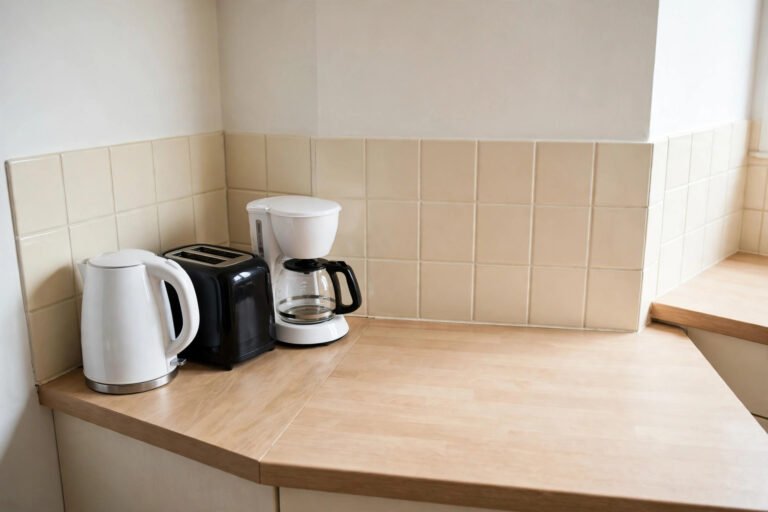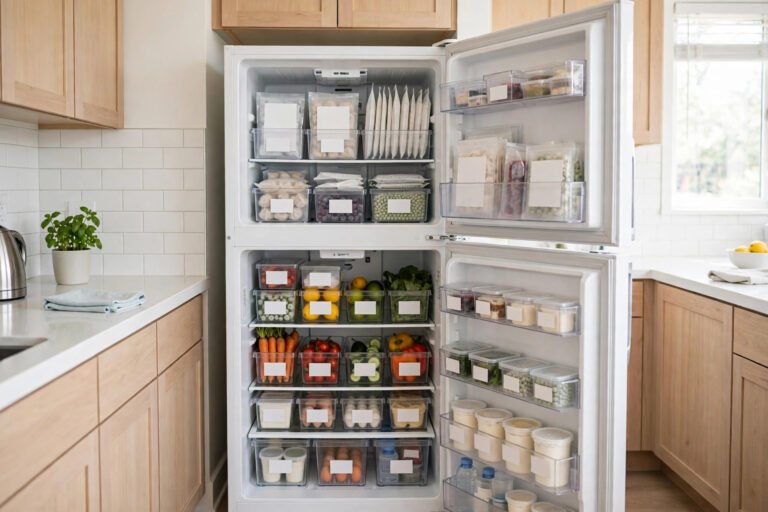


Spices are the smallest things in the kitchen and the first to take it over: jars two deep in a cupboard, packets in three drawers. These spice storage ideas for small kitchens work to one rule — every jar visible in a single layer, nothing stacked, nothing buried. All fifteen are renter-safe: no drilling, no screws, all removable on moving day.
You do not need all fifteen. Most tiny kitchens need one drawer or door fix, one cupboard fix, and one counter or gap fix. Start with the three below, and measure drawer depth and cupboard height before buying anything.
In this post
About 10 min read · 100% renter-friendly — no drills, no nails, no paint.
The 30-second version
- Do these 3 first, in order: a tiered drawer insert (idea 1), a turntable (idea 5), and magnetic tins for daily jars (idea 4). Combined cost: about $35 to $60 — most collections are sorted by those three alone.
- 15 ideas, zero drills. Every fix hangs, clips, sticks with removable adhesive, or simply stands.
- Typical cost: all 15 total about $140 to $260; most renters need 3 to 5 ($35 to $90). A free measurement worksheet is in our Free Renter Printables hub.
Drawers and doors do the work
1. Tiered drawer insert, jars lying at an angle

Give spices the shallow top drawer nearest the stove, lying at an angle on a tiered insert, lids facing you, so every jar reads at a glance. A standard insert holds 18 to 24 jars in the drawer most kitchens waste on gadgets — spices earn that prime spot.
Cost: ~$12 to $25 • Best for: one shallow drawer near the stove • Measure first: drawer depth and width; most inserts need at least 10 cm (4 in) deep and 30 cm (12 in) wide • Watch out: tall jars will not lie flat — keep oversize jars for the turntable (idea 5).
2. Adhesive gripper clips inside the cupboard door

Rows of small gripper clips stick inside a cupboard door and hold standard jars by the neck, two or three rows of four. The door becomes storage and the shelf behind stays clear. Test one loaded jar for a day before filling every row.
Cost: ~$8 to $15 for clips • Best for: flat inside doors with a clear gap to the shelf • Measure first: the door-to-shelf gap; you need about 6 cm (2.5 in) so loaded jars clear the shelf as the door closes • Watch out: clips loosen on greasy doors — degrease the door and let it dry before sticking.
3. Over-door rack that hooks on, no screws
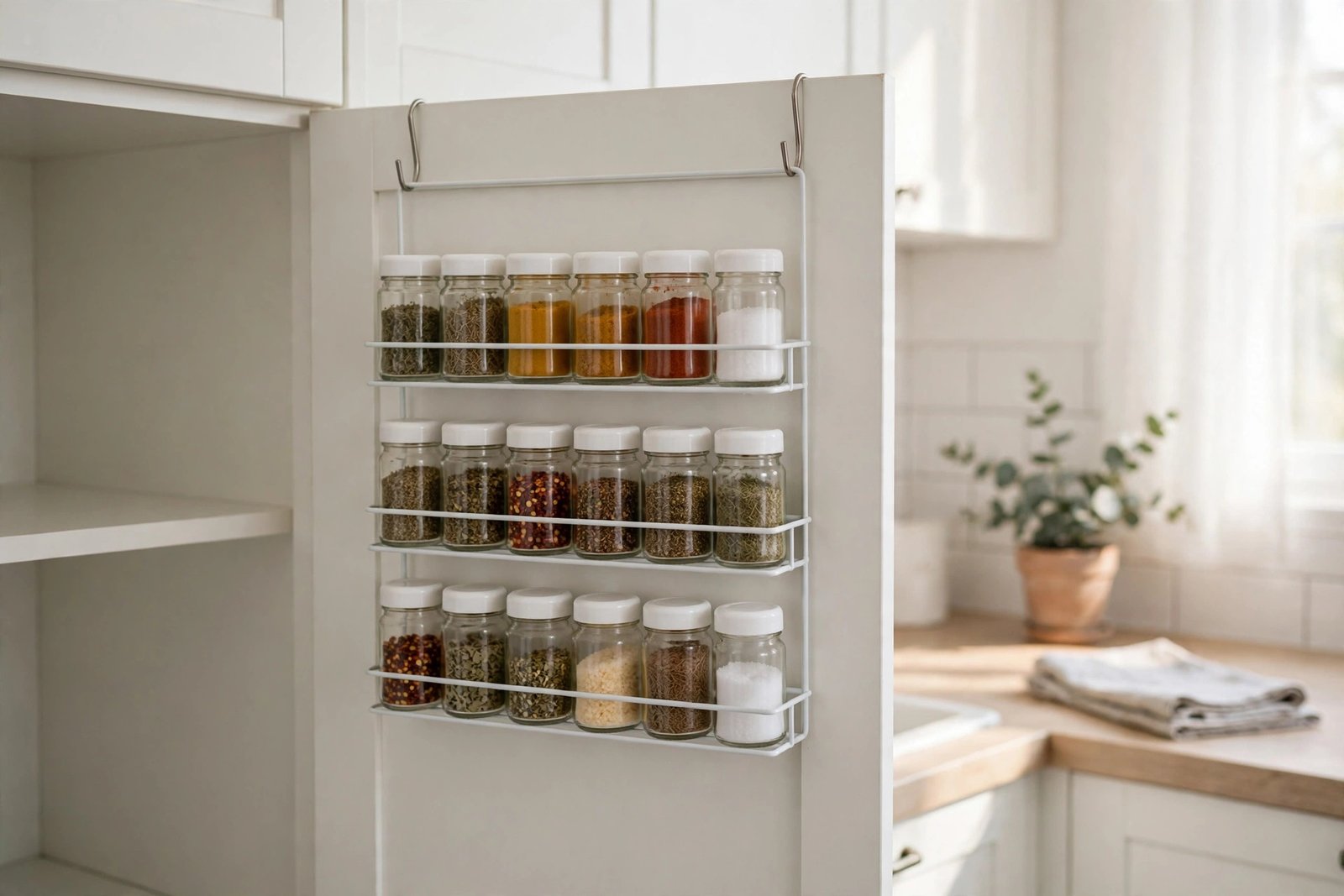
A narrow wire rack hooks over a cupboard door and holds two or three tiers of jars inside, like the racks in our cabinet-door storage ideas, sized for spices. It lifts off in seconds at moving time; felt pads on the hooks stop the rattle.
Cost: ~$15 to $25 • Best for: door storage with no adhesive at all • Measure first: door thickness (most hooks fit 2 cm / 0.75 in doors) and the same 6 cm clearance as idea 2 • Watch out: close the door gently at first; a slam can bounce a light jar out.
4. Magnetic tins on the side of the fridge

Small magnetic tins stick in a neat grid on the fridge side and hold the five to ten spices you use most, at eye level, on a surface that stores nothing else. The rest stays in the cupboard; the fridge is the front row, not the whole shop. See also our small fridge organization ideas.
Cost: ~$15 to $30 for 12 tins • Best for: daily spices, kitchens with an exposed fridge side • Measure first: the flat fridge area; 12 tins need roughly 40 by 30 cm (16 by 12 in) • Watch out: keep tins off a warm oven-side panel — heat fades spices fast.
Inside one cupboard, layered
5. Single-layer turntable, nothing behind anything
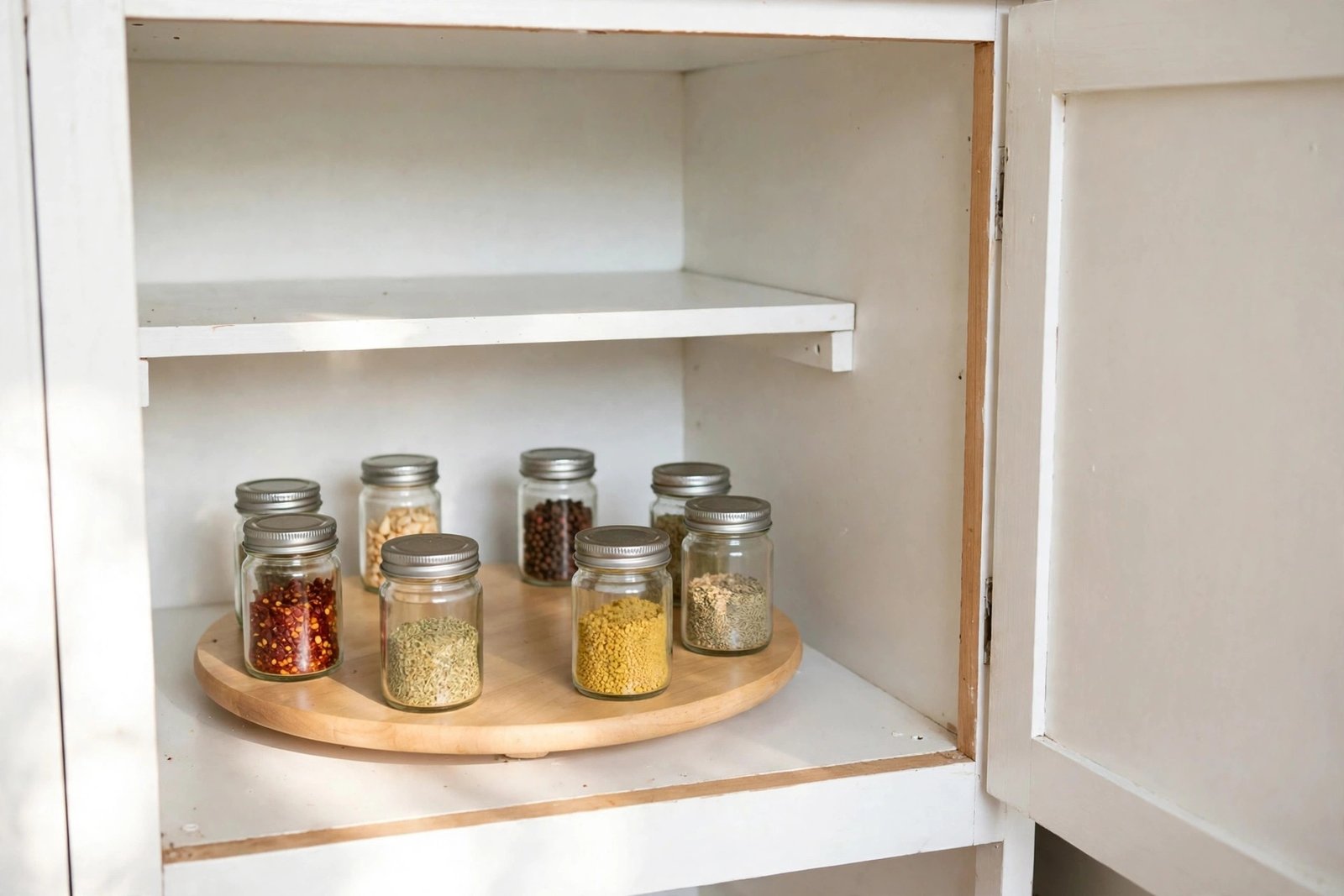
A turntable sized to the cupboard turns a deep, dark shelf into a single layer you spin, not excavate. One layer only: the moment jars stand behind jars, it has failed. A 25 cm (10 in) turntable holds about 12 standard jars.
Cost: ~$10 to $20 • Best for: deep cupboards where jars disappear at the back • Measure first: cupboard width and door opening; it must clear the frame as it spins • Watch out: skip two-tier turntables — the top tier hides the bottom one.
6. Three-tier step riser on the shelf

A stepped riser lifts the back rows so every jar stands visible over the one in front, like seats in a cinema, using the shelf you already have. Tallest jars on the top step, everyday jars at the front, and the whole cupboard reads in one look.
Cost: ~$10 to $18 • Best for: one wide shelf holding the whole collection • Measure first: shelf height; three tiers need about 25 cm (10 in) clear above the shelf • Watch out: expandable risers can bow under glass jars — choose solid or metal for glass.
7. Clip-on under-shelf basket for the overflow row
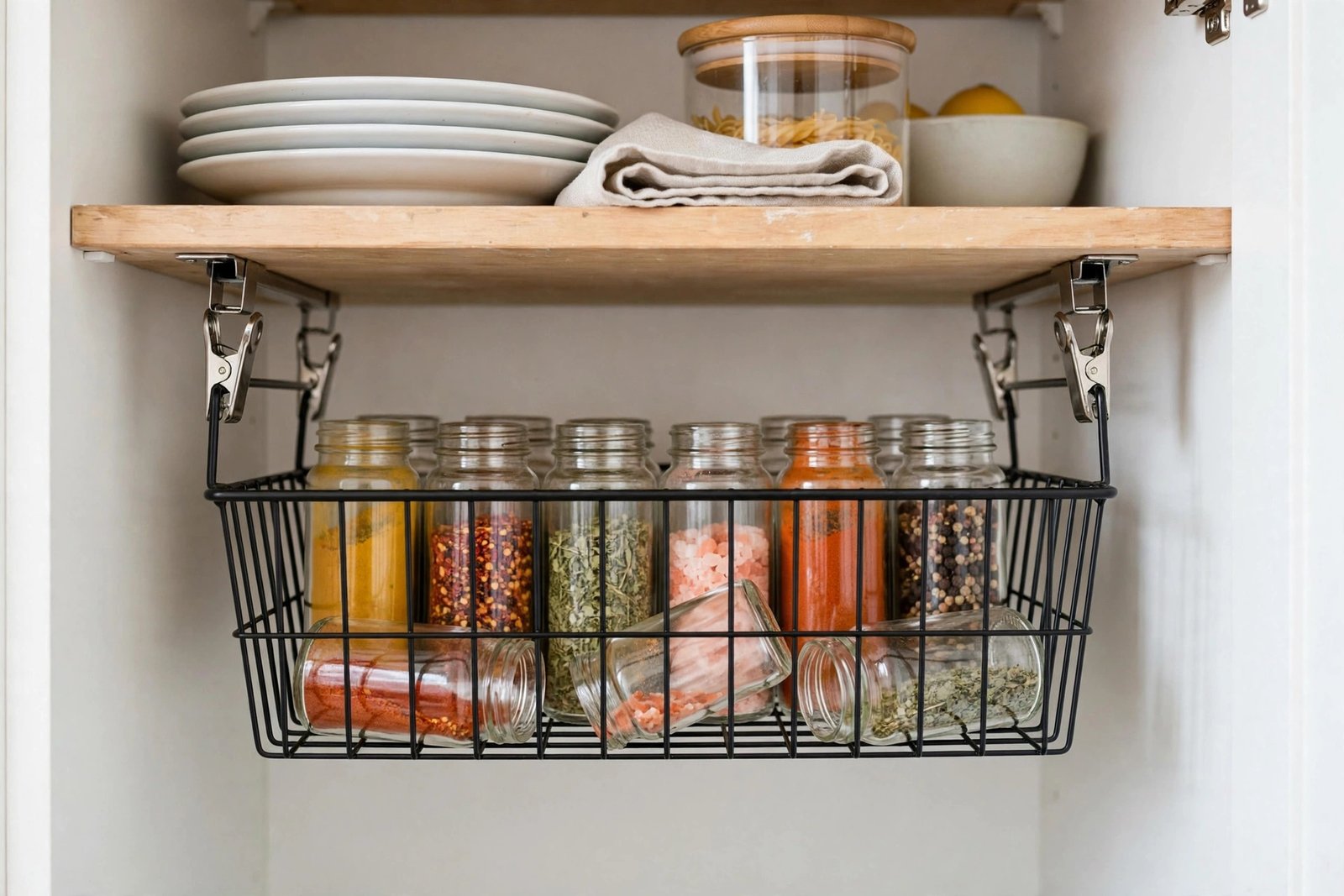
A wire basket slides onto a shelf and hangs underneath it, turning dead air into a row for packets and monthly jars — the under-shelf trick from our small kitchen storage ideas for renters, pointed at spices. Daily jars stay on the shelf itself.
Cost: ~$8 to $14 • Best for: packets and back-up jars that drift between drawers • Measure first: shelf thickness (most grip shelves up to 2.5 cm / 1 in) and clear height below • Watch out: keep heavy glass jars out; a loaded basket can flex a thin shelf edge.
8. Stackable mini drawers for packets and small jars

A small stack of clear pull-out drawers corrals spice packets, stock cubes and mini jars that never stand up properly on a shelf. Two or three high is plenty — and clear fronts matter, because a store you cannot see into is one you forget.
Cost: ~$12 to $22 • Best for: packet-heavy collections and odd-shaped jars • Measure first: one unit is roughly 16 cm (6.5 in) wide; check shelf width and height first • Watch out: overfilled drawers jam; half-full drawers open cleanly.
Shopping for these? Measure first.
Drawer depth, door clearance and cupboard height decide which of these will fit. The free worksheet in our Free Renter Printables hub walks the three in order.
Countertop, but only a hand’s width
9. Compact countertop step, back row raised
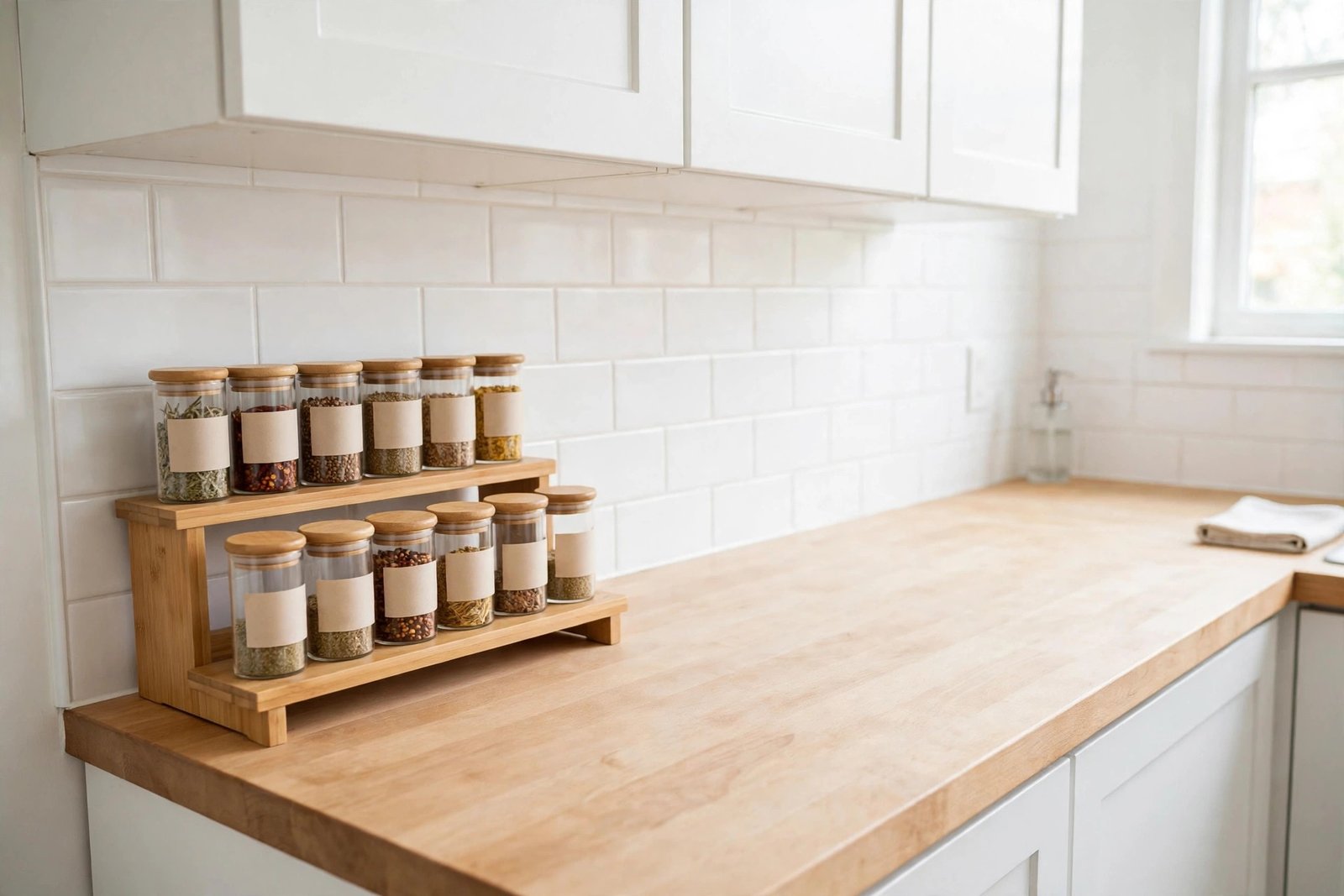
If cupboard space is truly gone, a small two-tier step beside the stove holds eight to ten daily jars in a footprint the size of a paperback book. Keep it against the wall, to two rows — and the counter earns its prep space back.
Cost: ~$12 to $20 • Best for: the daily set, no spare cupboard • Measure first: leave at least 60 cm (24 in) of clear prep counter beside it, as in our no-pantry storage ideas • Watch out: kettle steam fades spices; keep the step out of the steam path.
10. Slim rotating tower with a tiny footprint
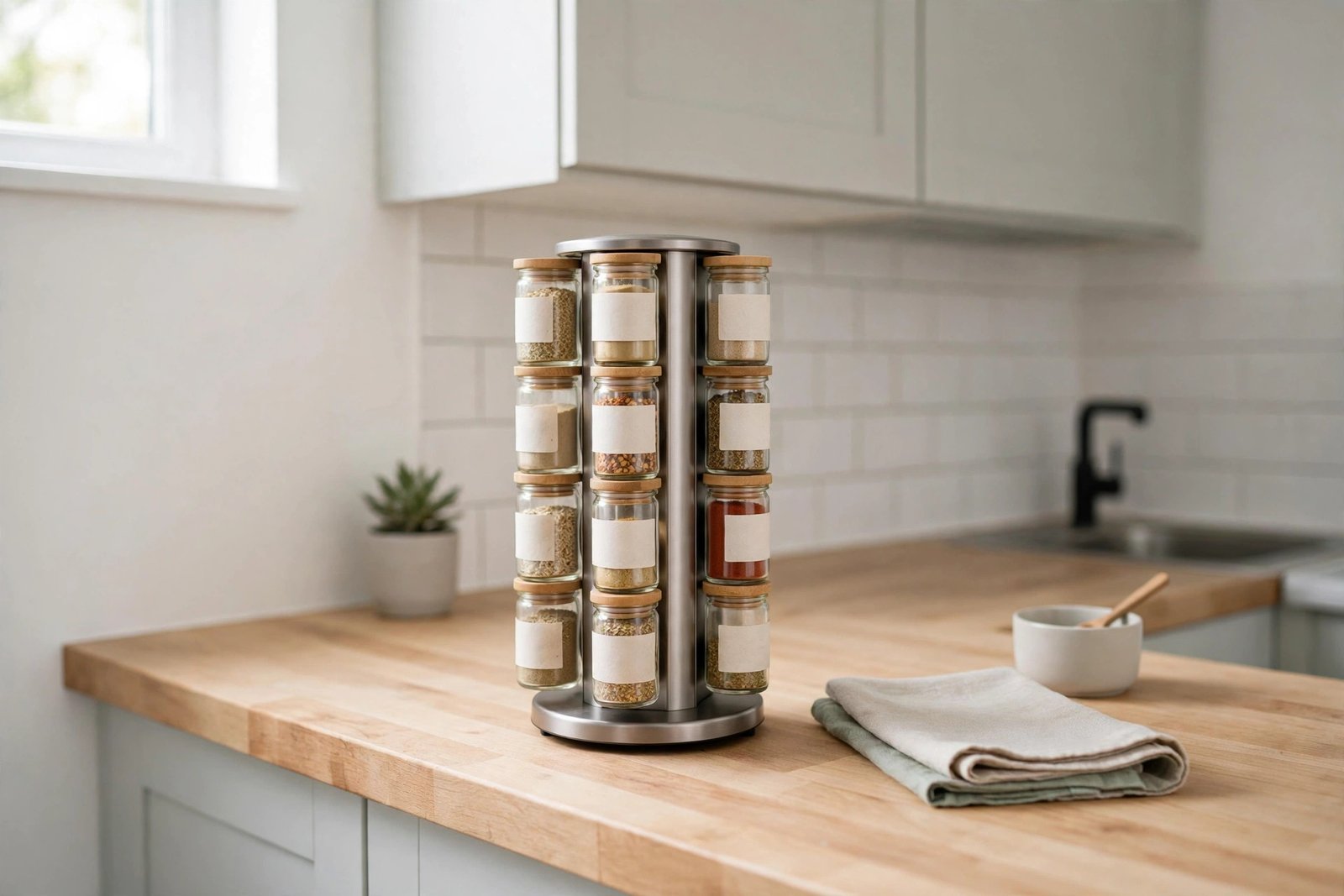
A narrow spinning tower holds 16 to 20 jars in a footprint of about 15 cm (6 in) square — the best jars-per-centimetre ratio here — and suits a dead counter corner. Buy the version with a lip or rails, so jars stay put as it turns.
Cost: ~$20 to $35 • Best for: larger collections, one free counter corner • Measure first: corner depth and height under wall cupboards; most need 30 to 35 cm (12 to 14 in) clear • Watch out: a tower by the hob collects grease; wipe weekly or use the far corner.
11. Handled spice caddy you carry to the counter

A handled caddy holds the cooking set — the eight or so jars nearly every meal uses — and lives on a shelf until you cook, when it comes out in one trip and goes back in one. Storage that travels beats storage that spreads.
Cost: ~$10 to $18 • Best for: kitchens where the counter is also the dining table • Measure first: a caddy about 25 by 18 cm (10 by 7 in) holds 8 jars and fits a standard shelf • Watch out: agree the caddy’s home; without one it becomes counter clutter.
Gaps and backstock
12. Slim rolling cart in the fridge gap
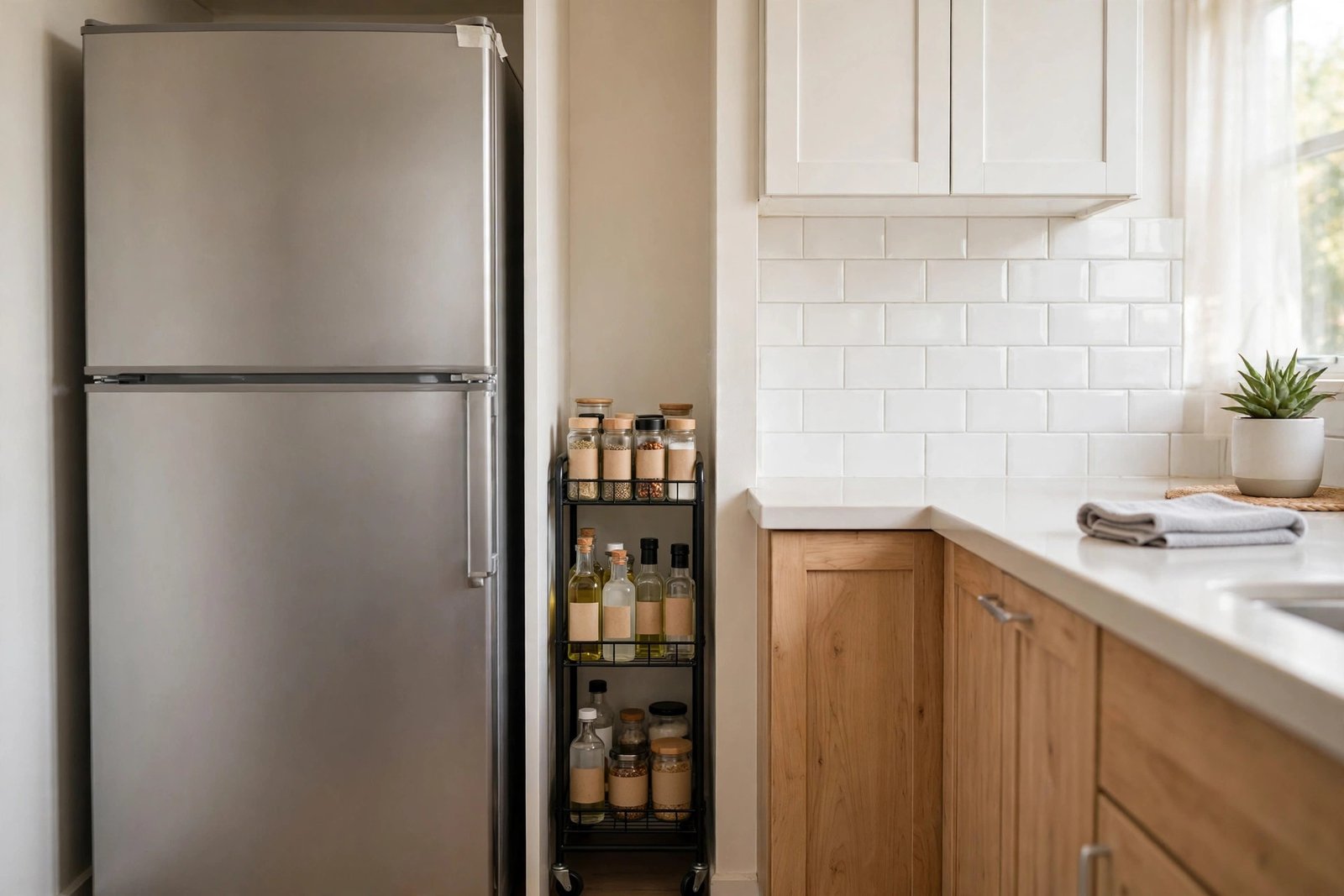
The 10 to 15 cm gap between fridge and counter fits a slim rolling cart, its top shelf a natural spice row at counter height. Roll it out to cook, roll it back to hide — the dead-space thinking of our under-sink storage ideas, stood upright.
Cost: ~$20 to $35 • Best for: a clean 10 to 15 cm (4 to 6 in) gap beside the fridge • Measure first: the gap at its narrowest point; skirting boards steal a centimetre • Watch out: vacuum the gap first; crumbs collect where the cart hides them.
13. Uniform jars, one shallow tray, one layer
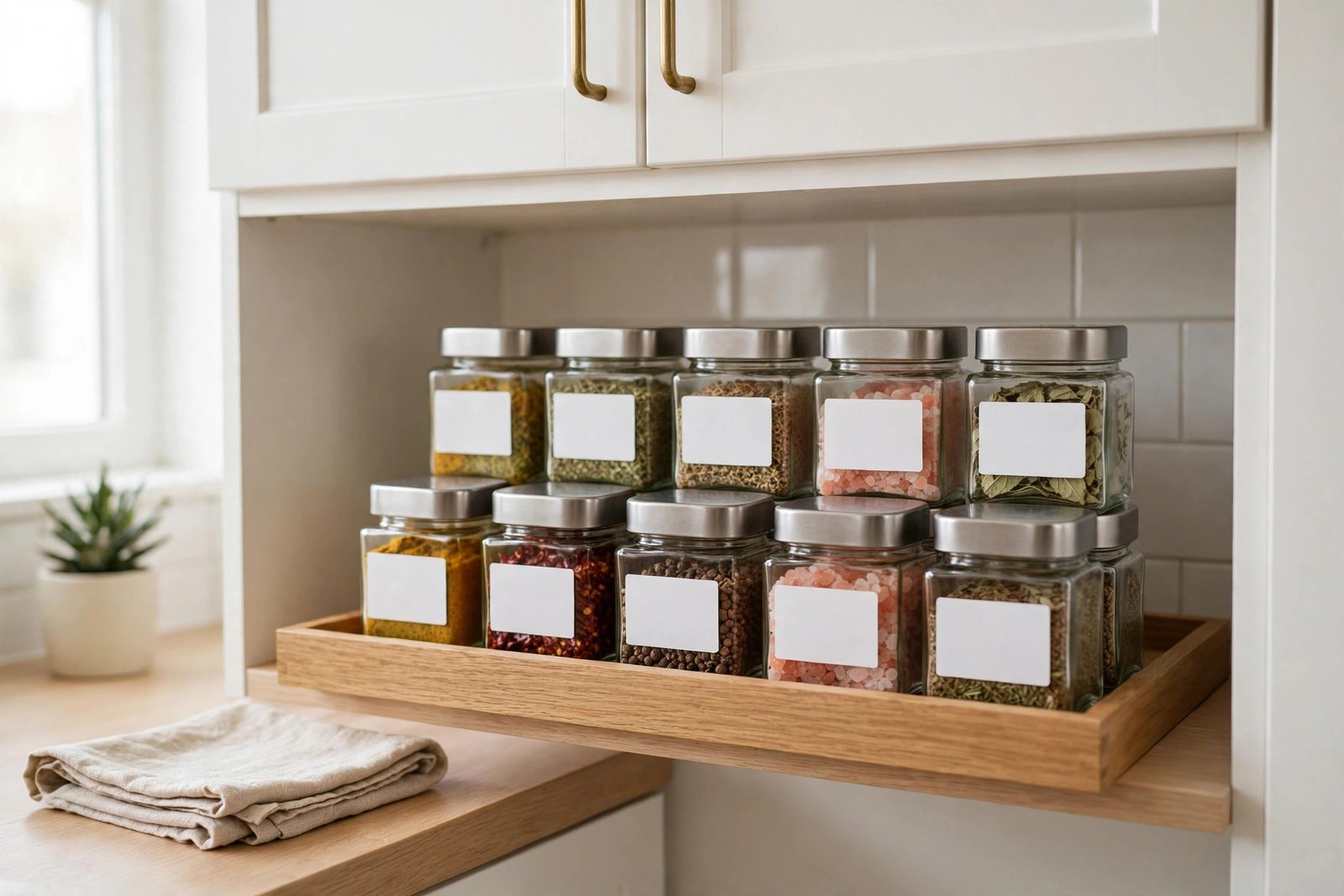
Decant into matching square jars standing in a single shallow tray that slides out of the cupboard like a drawer. Square jars waste no corner space, and one tray moves the whole collection as a unit. Label the lids, so names read from above.
Cost: ~$18 to $30 for jars and tray • Best for: a mixed, messy inherited collection • Measure first: a tray about 30 by 20 cm (12 by 8 in) holds 12 square jars; check shelf depth • Watch out: keep original packets until a jar empties once, for the use-by date.
14. Hanging rail under the wall cupboard
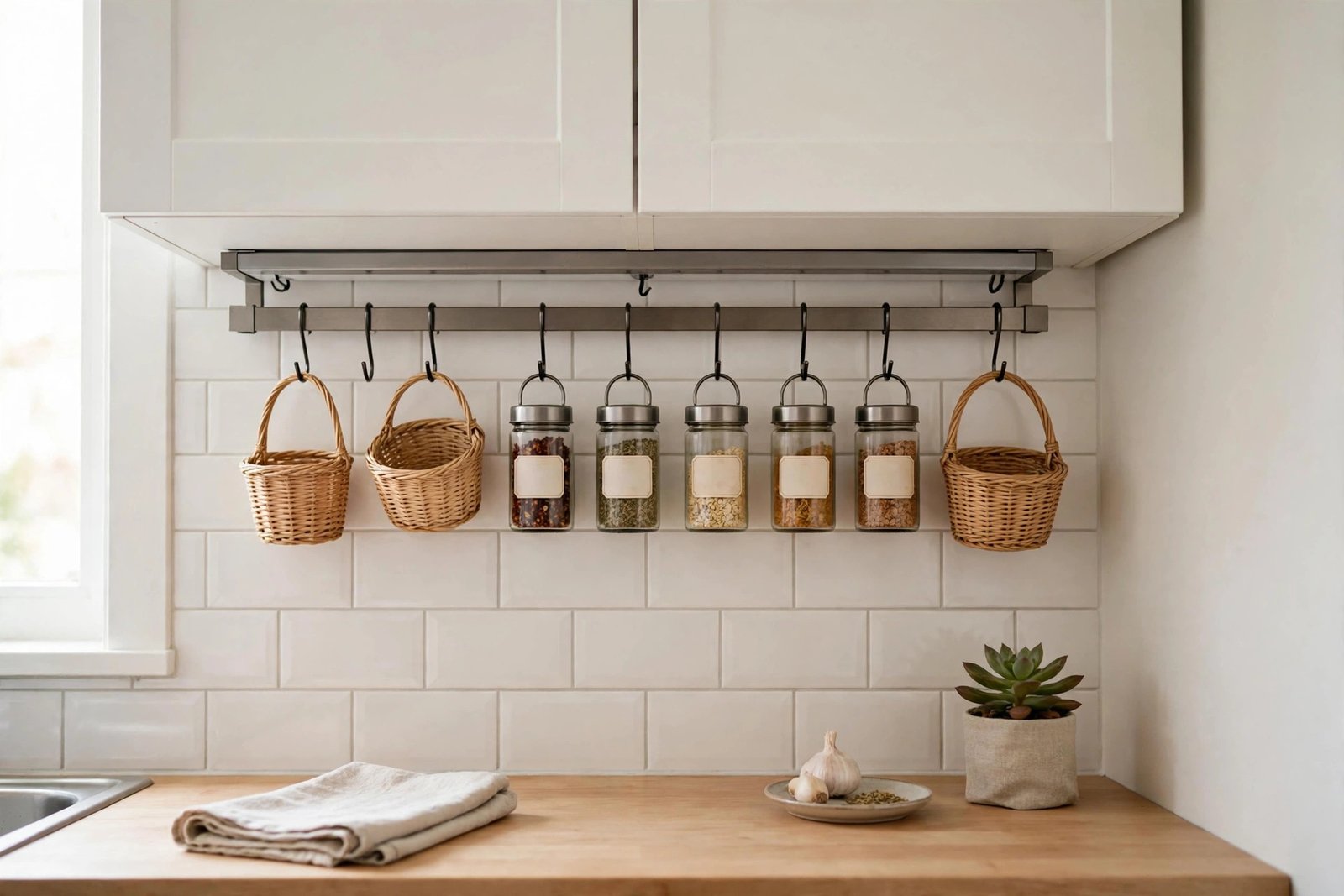
An adhesive or clamp-on rail under a wall cupboard holds small jars and baskets on hooks, in the strip of air above the counter nothing else uses. No screws go into the cupboard base. Keep it to one short rail: a daily-five station.
Cost: ~$12 to $22 • Best for: a short run of wall cupboard over your prep spot • Measure first: about 20 cm (8 in) of clear drop below the cupboard, so jars clear counter and hands • Watch out: steam rises into this rail; keep it from hob and kettle, and check pads monthly.
15. Fridge-top basket for refills and backstock

Refills, bulk bags and duplicates do not belong in the prime cupboard. One basket on top of the fridge holds all the backstock, and the working collection stays small enough for one layer.
Cost: ~$8 to $15 • Best for: bulk buyers with duplicate jars in three places • Measure first: height above the fridge; you need roughly 25 cm (10 in) for basket plus contents • Watch out: the basket must be the only backstock home — a second overflow restarts the sprawl.
Common mistakes we’d skip
- Storing spices above the hob. The most reachable spot is the worst: heat and steam fade ground spices within months. Reachable and cool beats reachable and hot.
- Buying storage before measuring. Drawer depth, door clearance and shelf height rule out half this list in most kitchens. Measure first, then shop.
- Two layers anywhere. A jar behind or on top of another decays into rummaging. Single layer, every jar visible, is the whole game.
- Keeping the full collection by the stove. Twenty jars by the hob means five you use and fifteen in the way. Daily jars by the prep spot, the rest in one system, refills in the basket.
The short version
Visible, single-layer and close to where you cook: that is the whole system. A drawer insert or door fix for the daily jars, a turntable or riser for one cupboard, magnetic tins or a caddy for the front row, and one basket for backstock.
Questions renters ask
How many spice jars should a small kitchen keep out?
Five to ten within reach of the prep spot covers most weekly cooking. The rest belongs in one cupboard system, refills in backstock.
Do magnetic tins damage the fridge or lose their grip?
No. They do not mark the fridge and lift off cleanly on moving day. Choose tins whose magnets hold a full tin firmly on a flat panel, and keep them from direct heat, which weakens magnet and spice alike.
What is the cheapest fix that actually works?
The step riser (idea 6), at about $10 to $18. No fitting, almost any shelf, and the whole collection visible in one move. The drawer insert costs slightly more and is better still, if you have the drawer.
How do I label decanted jars safely?
Write the name and use-by date from the original packet on the lid before discarding the packet, and keep allergen notes — celery salt and mustard powder are common ones — with the jar. Never decant into a used jar without washing and fully drying it first.
Pin this post for later
Save it to Pinterest for later, or tell us your smallest-space problem in the comments — the best posts here started as a reader’s awkward cabinet.
📌 PIN THIS FOR LATER