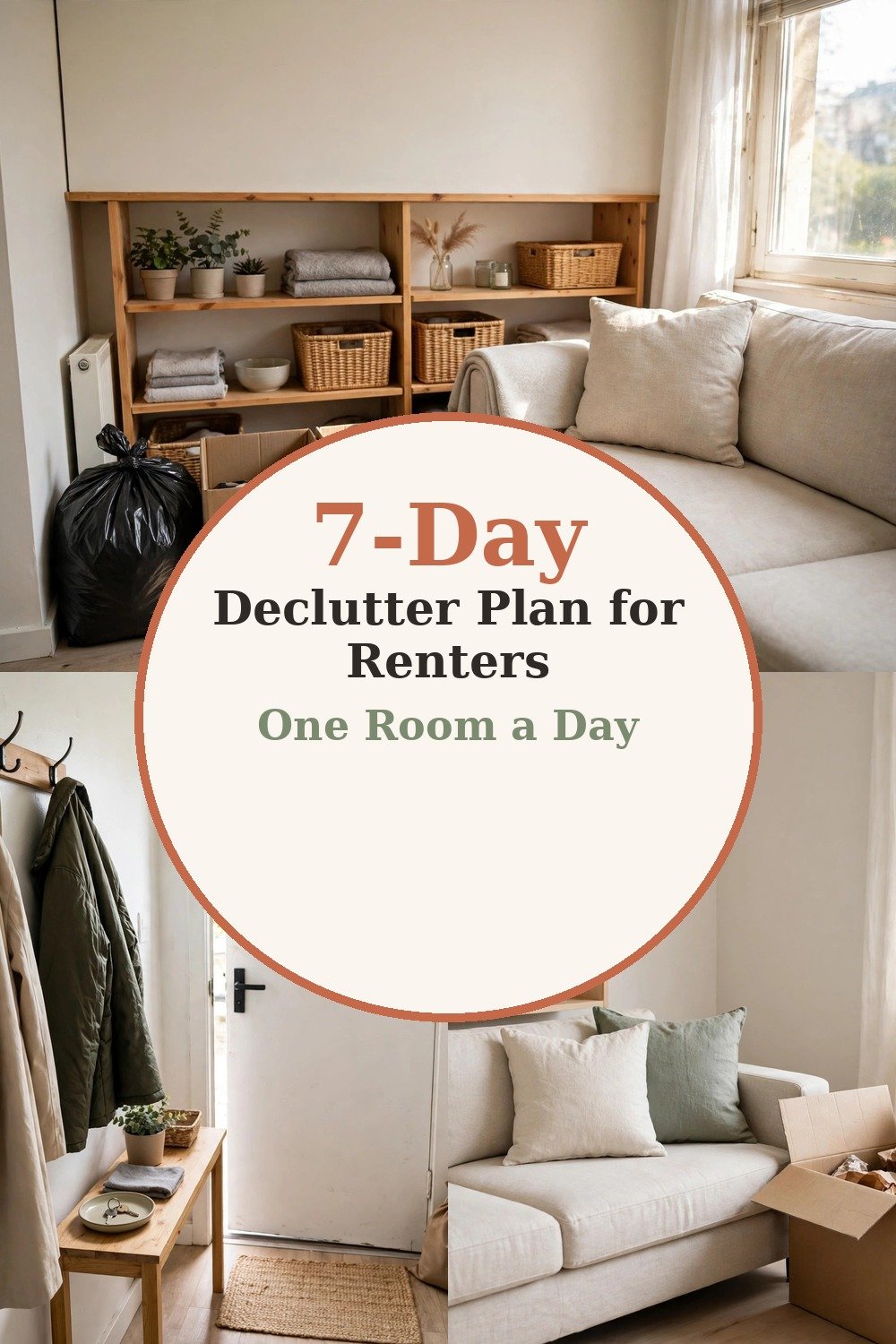

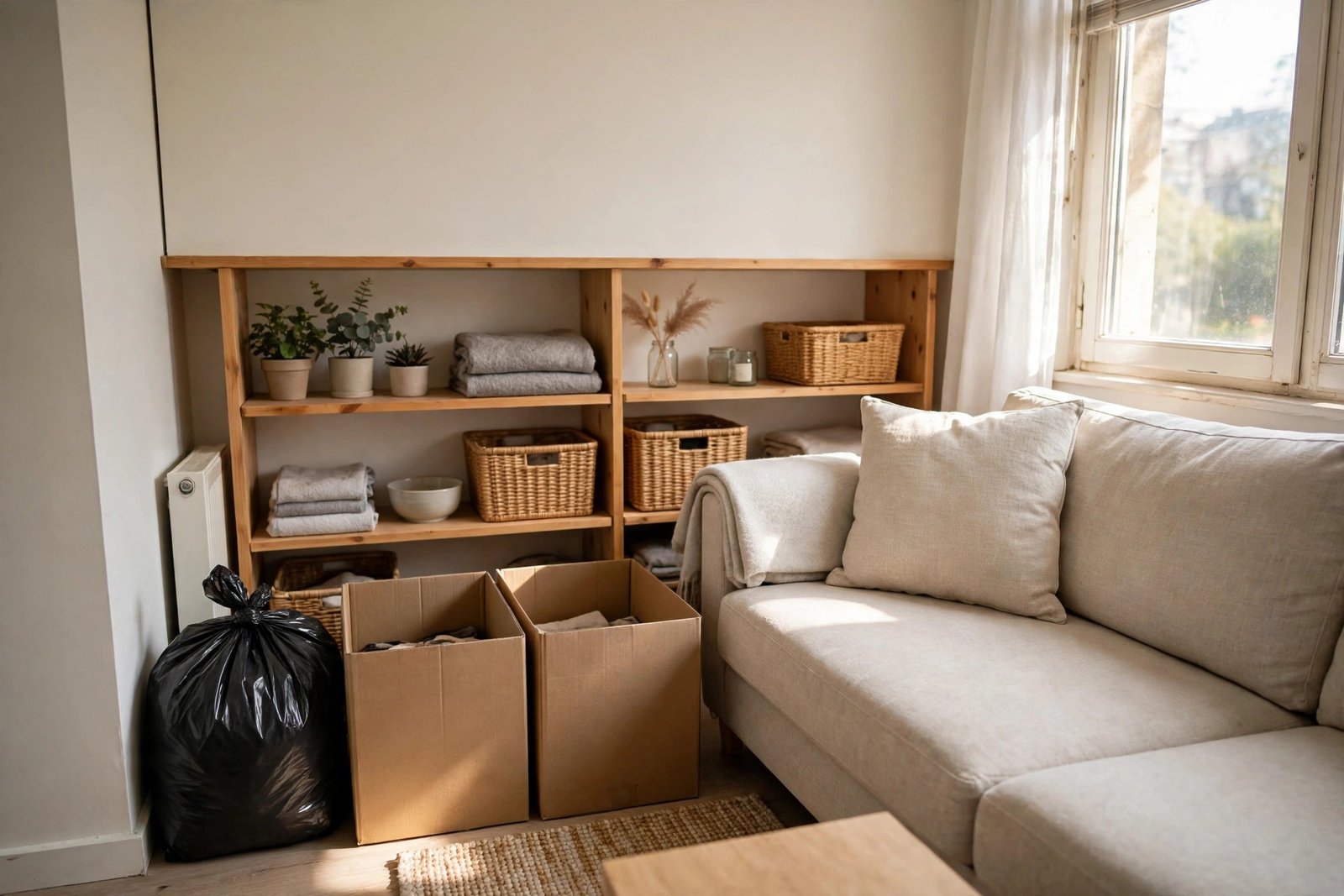
The whole flat feels full, but no single cupboard is the problem. That is the particular frustration of a small rental: no spare room to shove things into, and no landlord permission to build your way out of it. A declutter plan for small apartments has to work inside those constraints, because the stuff has to earn its place or leave the front door.
Here is how this week works. One zone a day, 25 to 35 minutes at a time, for seven days. Nothing gets screwed to a wall, nothing is built in, and every system is landlord-neutral: if you move, the donation box, the bags and the labels move with you. Each day ends with things actually leaving the flat, not migrating from shelf to shelf.
One distinction decides whether the week succeeds. Decluttering is deciding what stays. Cleaning is what happens to what stays. They are two different jobs, so we do not mix them. When the seven days are done, our monthly cleaning schedule for apartments takes the baton for the deep-clean.
Two rules run all week. The one bag a day rule: a small bag of rubbish or recycling leaves the flat every single day. The donation station: one sturdy box by the front door, and anything you will not use again goes straight into it. By Day 7, that box is walking out with you.
In this post
- The 30-second version
- Days 1–2: The rooms everyone sees
- Days 3–4: Kitchen and bathroom
- Days 5–6: The private rooms
- Day 7: The out-door and the weekly reset
- Common mistakes we’d skip
- The short version
- Questions renters ask
The 30-second version
- Do these 3 first, in order: Day 1’s entryway audit with the donation station box, Day 7’s donation run and maybe-box dating, and Day 4’s bathroom shelf clear-out. Combined cost: about $3 to $12 for bags, labels and one box.
- 7 days, zero drills. Bags, one box, labels and a timer, 25 to 35 minutes a day, and most renters need 5 to 6 of the days’ systems rather than every one.
- Typical cost: about $12 to $40 for the whole week, most of it bags and labels. The day-planner worksheet is in our Free Renter Printables hub.
Days 1–2: The rooms everyone sees
Day 1. The entryway and landing zone
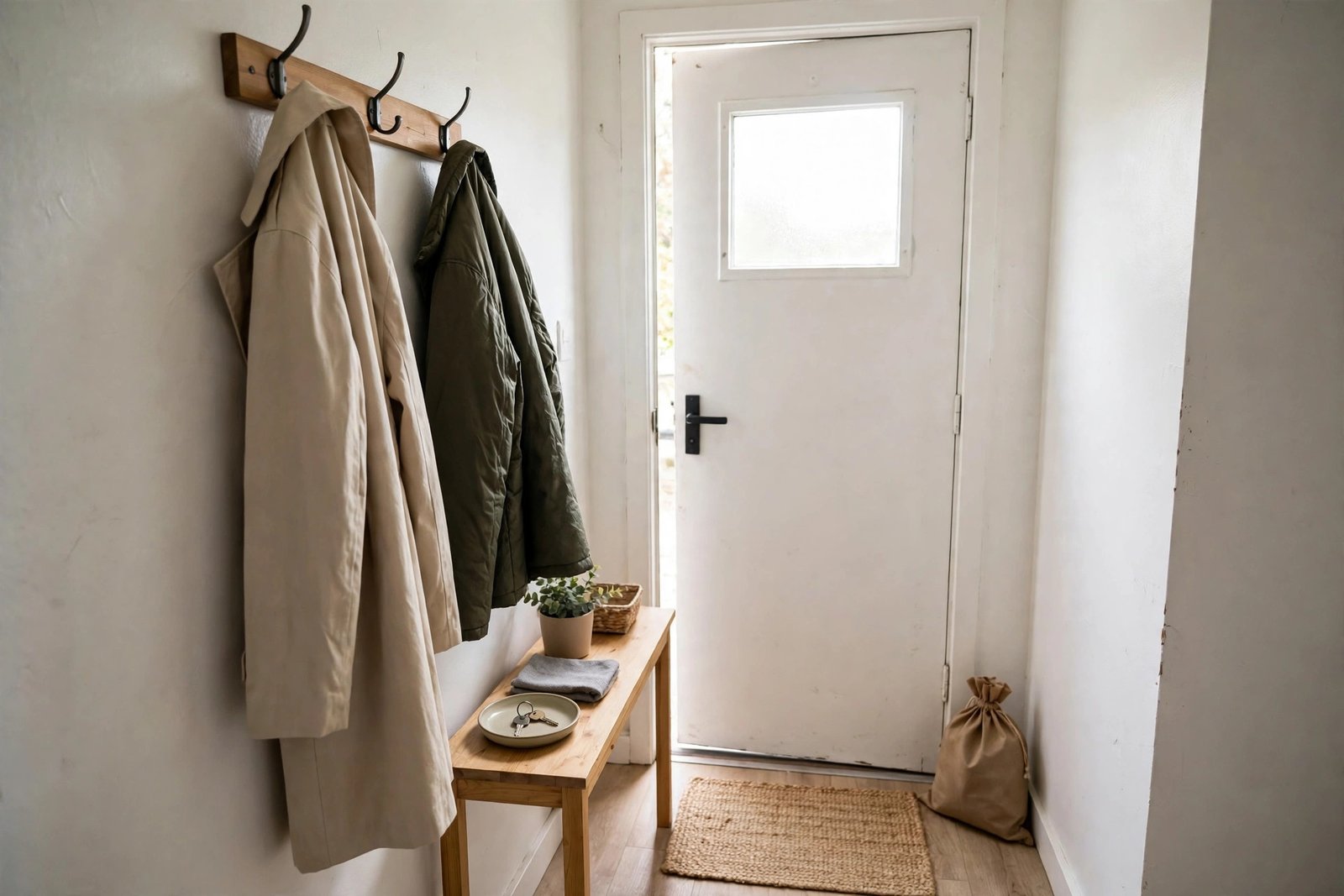
We start where clutter is born: the entryway. Set your timer for 30 minutes and audit the drop zone itself. Every item gets one question: does it live here on purpose, or did it land here? Anything that belongs in another room goes there now. Anything leaving goes straight into the donation station box you set up today: one sturdy box, flaps open, where you cannot miss it.
An entryway cannot hold everything a busy household drops, so pick what earns the hooks: the daily coat, the daily bag, the current-season shoes. The renter note: narrow rental hallways are often the only passage, so the box must not block the fire route. Flattish, against the wall, is the landlord-friendly version.
Cost: ~$3–8 for a sturdy box plus bags • Best for: the drop zone around the front door, hooks and shoe pile • Measure first: the box footprint against the hallway width — at least 60 cm (24 in) of clear passage past it at all times • Watch out: do not buy a console or shoe rack today; furniture is a storage decision for later.
Day 2. Living room surfaces and the flat-surface rule

The living room in a small rental is usually one multipurpose room, and its surfaces collect other rooms’ business: paperwork, chargers, the mug that lives on the shelf now. The flat-surface rule: clear every surface completely, and each item earns its way back or goes to the box, the bin or its real home. Shelves, the media console, side tables — one surface at a time, 30 minutes. Stop when the timer ends; a half-finished shelf is tomorrow’s 10 minutes.
The empty space you leave behind is the product of Day 2, not the box of discards. A shelf that is two-thirds full reads as calm; a packed one reads as storage. The homeless items get one labelled box, dated today, instead of creeping back onto the clean surfaces while you decide.
Cost: ~$3–6 for one box and labels • Best for: shelves, media console, side tables and any flat surface that has become a landing strip • Measure first: no buying today, so the only check is that the holding box fits in one cupboard or under one piece of furniture while it waits • Watch out: decorative items are decisions too; a shelf you love looking at empty is telling you something about the things you put back.
Days 3–4: Kitchen and bathroom
Day 3. The kitchen: counters, one drawer, top of the fridge
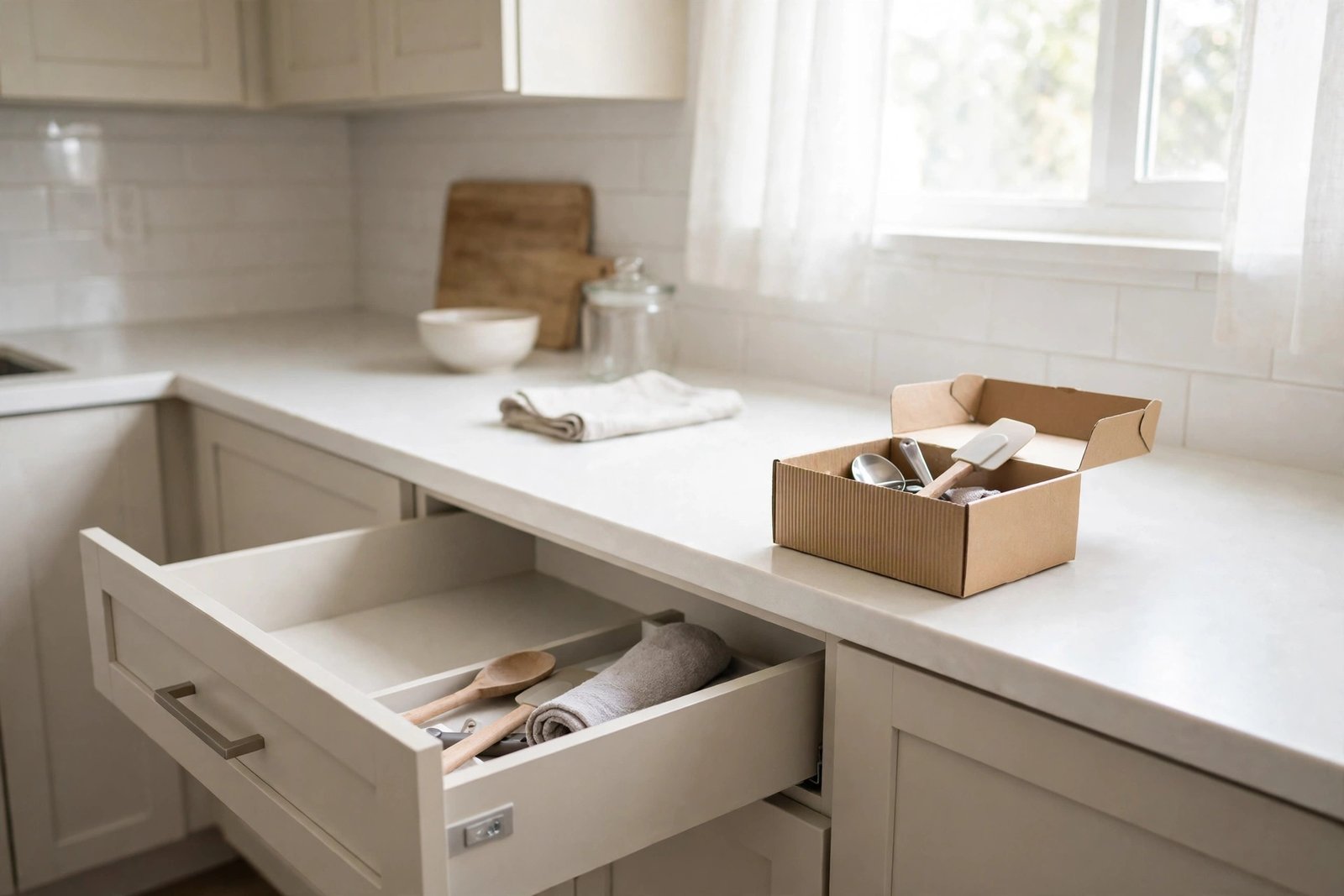
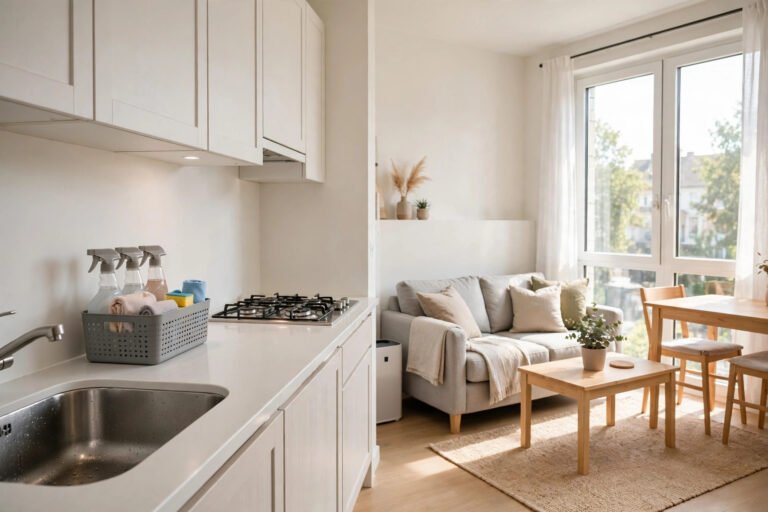
Rental kitchens are short on counters and long on gadgets, so Day 3 has three targets: the counters, one drawer, and the top of the fridge. Daily-use appliances stay; everything used less than weekly moves into a cupboard, and anything homeless goes into today’s sort box. Then empty one drawer completely: keepers back, the rest to the box, the bin or the donation station. The top of the fridge is the attic of the rental kitchen; treat it the same way.
The trade-off is duplicates: keep the best one, donate the rest. A second set is not a backup; it is the clutter. Decide first, measure later, and only then spend.
Cost: ~$5–12 for bags, labels and a small sort box if you need one • Best for: counters, one drawer and the fridge top in a rental kitchen with no pantry • Measure first: before buying any divider tray, measure the drawer depth — most rental drawers are 45 to 55 cm (18 to 22 in) deep and shallow ones swallow tall trays • Watch out: expired food and near-empty condiment bottles are Day 3’s easiest wins; do not keep a sauce you have not touched in six months out of loyalty.
Day 4. The bathroom and the linen shelf
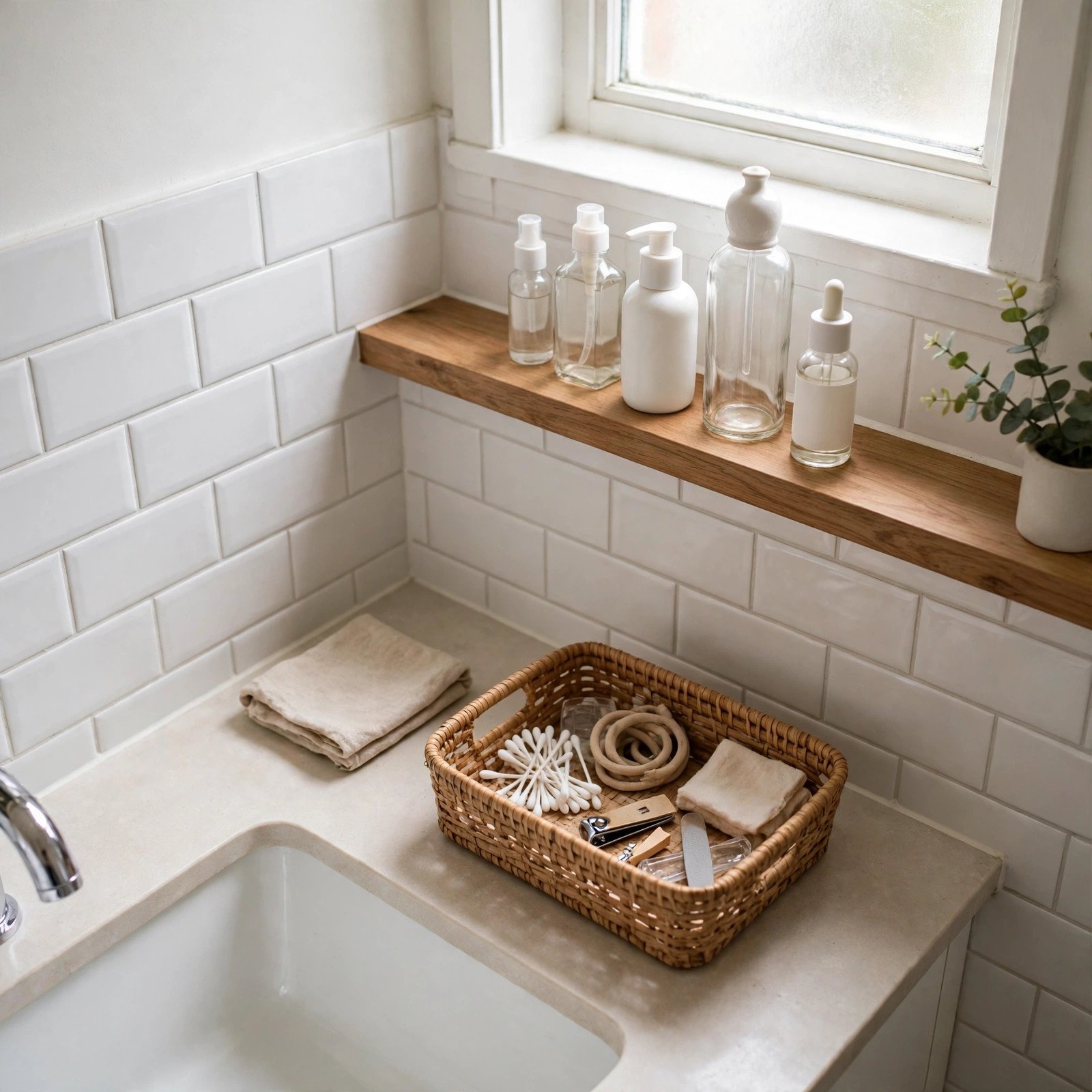
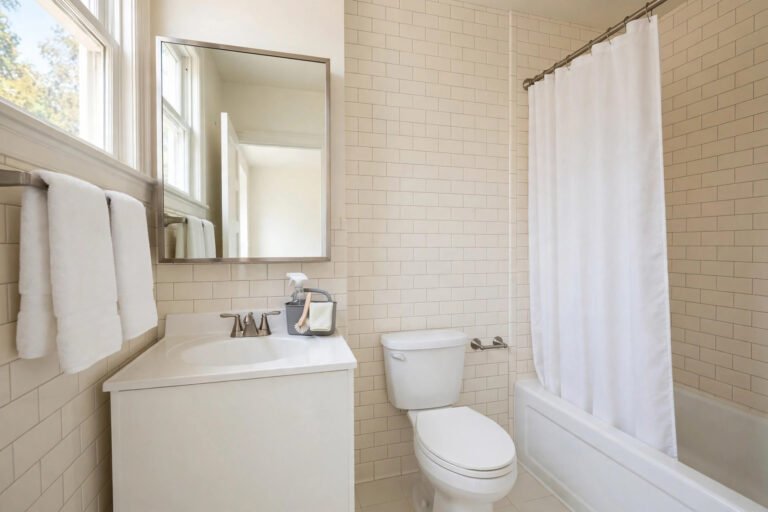
Day 4 is the confidence booster: bathrooms are small enough to finish fast. Set the timer for 25 minutes. Every bottle, tube and pot comes out, and each one answers: is it open, is it used, is it expired? Hotel shampoos from three holidays ago, the nearly-empty cleanser, last summer’s half-used sunscreen — into the bin, recycling, or the donation station only if unopened and in date. Then the linen shelf: count the sets. Two full sets per bed is enough; the thin grey towels you never reach for go.
Almost-empty is empty; the last pump of cleanser is not worth a permanent shelf slot. The renter note: under-sink cabinets are often warped or damp — our under-sink storage ideas for rental cabinets assume the water-damaged half-bottles are already gone.
Cost: ~$3–7 for bags and labels • Best for: bathroom shelves, cabinets and the linen shelf or cupboard • Measure first: if you plan a shelf riser or basket later, measure the cabinet inside height first — bottles commonly need 22 to 28 cm (9 to 11 in) of clearance • Watch out: medicines and old sunscreen have expiry dates that matter; decluttering is not the time to keep an expired product “just in case”.
Days 5–6: The private rooms
Day 5. The wardrobe and under-bed: clothes only
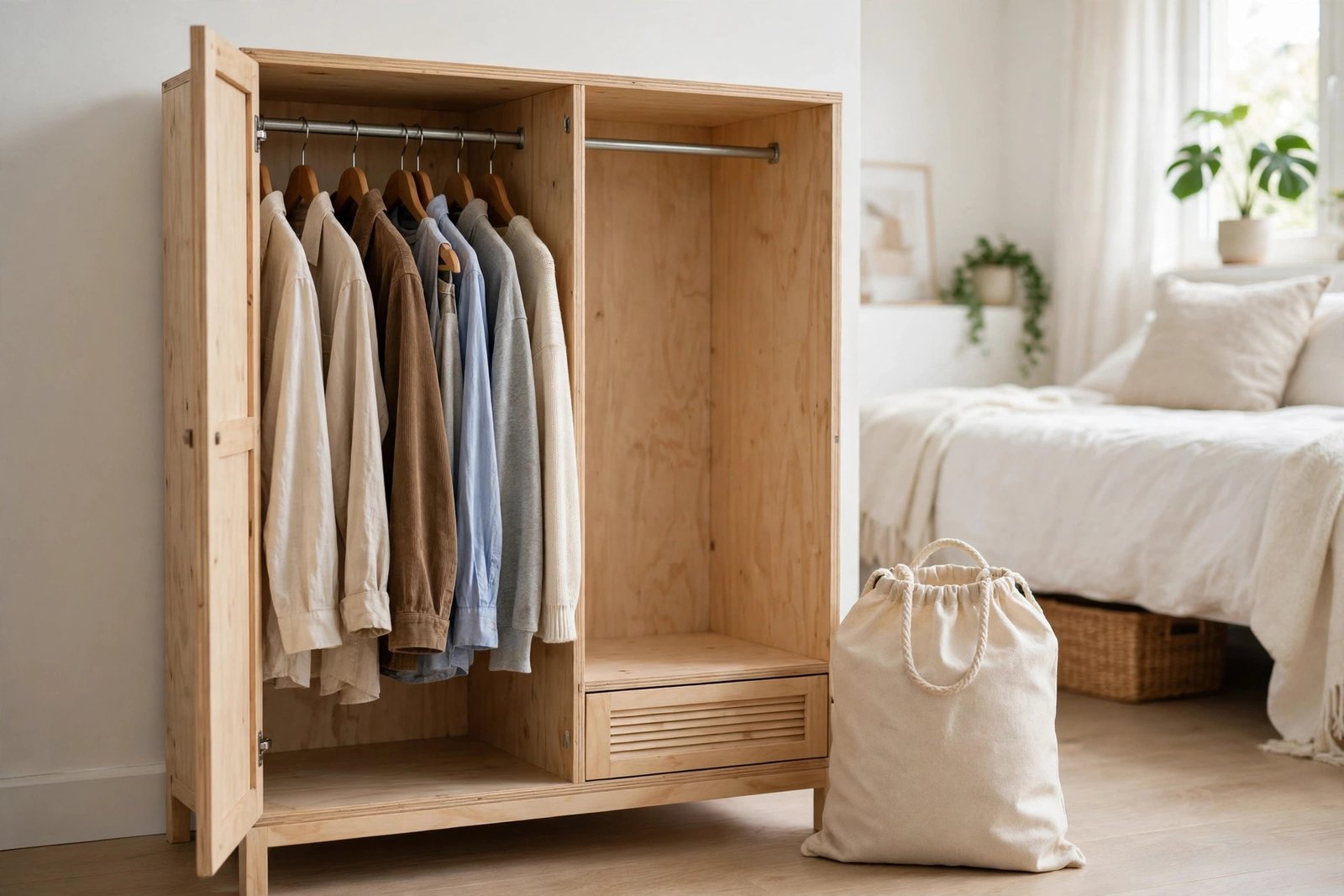
Day 5 is clothes only — nothing else from the bedroom gets touched, because wardrobes expand to fill the time you give them. Pull everything out in one go; a half-emptied wardrobe lets you keep things by accident. The rule: unworn in a year, does not fit, or damaged beyond the repair you will actually do — to the donation station or the textile bag. What stays goes back with visible space on the rail. Under-bed boxes get the same treatment: unopened since you moved in means the week’s easiest decisions.
Storage systems come next, not before: our tiny closet organization ideas and no-closet storage ideas are built for exactly the wardrobe you have after Day 5, not the overstuffed one you started with.
Cost: ~$0–6 for textile bags or labels; the declutter itself is free • Best for: wardrobes, drawers and under-bed storage in the bedroom • Measure first: a full donation bag must fit through your front door and down the stairs — a bag wider than 55 cm (22 in) becomes its own problem • Watch out: do not start Day 5 tired or rushed; wardrobe decisions made in a hurry come back as regret, and the maybe-box (see Day 7) exists for exactly the items you cannot call today.
Day 6. The hidden zones: junk drawer, under-sink, paperwork and cables

Give each zone 8 to 10 minutes. The junk drawer gets the sorting-tray treatment: batteries with batteries, cables with cables, tools with tools; dried-out pens and mystery keys go in the bin. Paperwork gets two piles — keep and scan — the rest is recycling once tenancy documents are out. Cables get the one-cable rule: if you cannot name the device it charges, it goes.
Pull everything out from under the sink and check for leaks and damp. Anything water-stained goes, and the cabinet gets measured for later — our under-sink storage ideas for rental cabinets start where Day 6 ends. Old keys back on the entryway hooks? Our small entryway storage ideas keep the drop zone honest.
Cost: ~$4–10 for a sorting tray and labels if you want one • Best for: junk drawers, under-sink cabinets, paperwork piles and cable drawers • Measure first: check the drawer depth before buying a sorting tray — rental drawers are often only 5 to 7 cm (2 to 3 in) deep and tall trays will not close • Watch out: tenancy paperwork, deposit documents and appliance manuals are never declutter candidates; keep those in one folder, always.
Day 7: The out-door and the weekly reset
Day 7. Donations out the door, returns done, the maybe-box dated

Day 7 is when the stuff actually leaves. The donation station box goes to the charity shop today, not “when convenient”. The returns — the parcel by the door for a month, the library books, the borrowed tools — leave with it. Then the maybe-box: anything undecided goes into one box, dated and stored somewhere inconvenient. Unopened in three months means the contents go to donation unopened. That date is the decision you could not make today, made by your future self.
The last hour of Day 7 is the maintenance hook, because a decluttered flat re-clutters in about three weeks without one. Our weekly reset routine for apartments is the 45-minute Sunday version that keeps the week’s work intact, and our Sunday reset cleaning routine adds the cleaning layer the week skipped. Pick one and put it in the calendar.
Cost: ~$0–5 for labels and the maybe-box if you need one • Best for: the donation run, returns, the maybe-box and setting the weekly reset • Measure first: the maybe-box must fit its storage spot — measure the wardrobe-top or cupboard gap before choosing the box, commonly about 40 by 30 cm (16 by 12 in) • Watch out: do not open the maybe-box “just to check” before the three months are up; peeking resets the clock and the whole point is the unopened donation.
Common mistakes we’d skip
- Buying storage before decluttering. New boxes arrive on Day 1 and get filled with undecided stuff. Decide first, then measure, then buy.
- Starting with the hardest room. The wardrobe on Day 1 burns out most renters by Tuesday. Easy, visible rooms first is what keeps the week alive.
- Cleaning as you go. Wiping the shelf before deciding what lives on it is the week working backwards. Decisions first, cleaning later.
- Skipping the donation run. A full donation box by the front door is clutter with a label. Day 7 exists because good intentions need a van.
The short version
One zone a day for seven days, 25 to 35 minutes at a time. Two rules underneath: one bag of rubbish leaves every day, and the donation box by the front door fills all week. Entryway and living room first for the visible win, kitchen and bathroom next, then the private rooms — and Day 7 walks the donations out the door. Nothing was drilled, nothing was built in, and everything you kept earned its place. The weekly reset keeps it that way.
Questions renters ask
Q: What is the difference between decluttering and cleaning?
A: Decluttering is deciding what stays; cleaning is caring for what stays. This plan does the deciding, and our monthly cleaning schedule gives the kept things the deep clean they deserve afterwards.
Q: Where does the stuff wait while I decide?
A: In the dated maybe-box from Day 7. One box, dated, stored somewhere inconvenient, unopened for three months. Anything still inside on the date goes to donation unopened.
Q: What if my flatmate or partner will not declutter?
A: Then the plan covers your zones only, and that is fine. Your shelf of the bathroom, your side of the wardrobe, your desk, your drop-zone hook. Shared spaces get the one-bag-a-day rule by agreement; nobody else’s things go in the donation box without their say.
Q: How do I keep it decluttered after the seven days?
A: With the weekly reset. Our weekly reset routine is a 45-minute Sunday habit that returns every surface to its Day 7 state, and the Sunday reset cleaning routine adds the cleaning layer on top. The maybe-box rule and one bag a day do the rest between resets.
📌 Pin this post for later
Save it to Pinterest for later, or tell us your smallest-space problem in the comments — the best posts here started as a reader’s awkward cabinet.