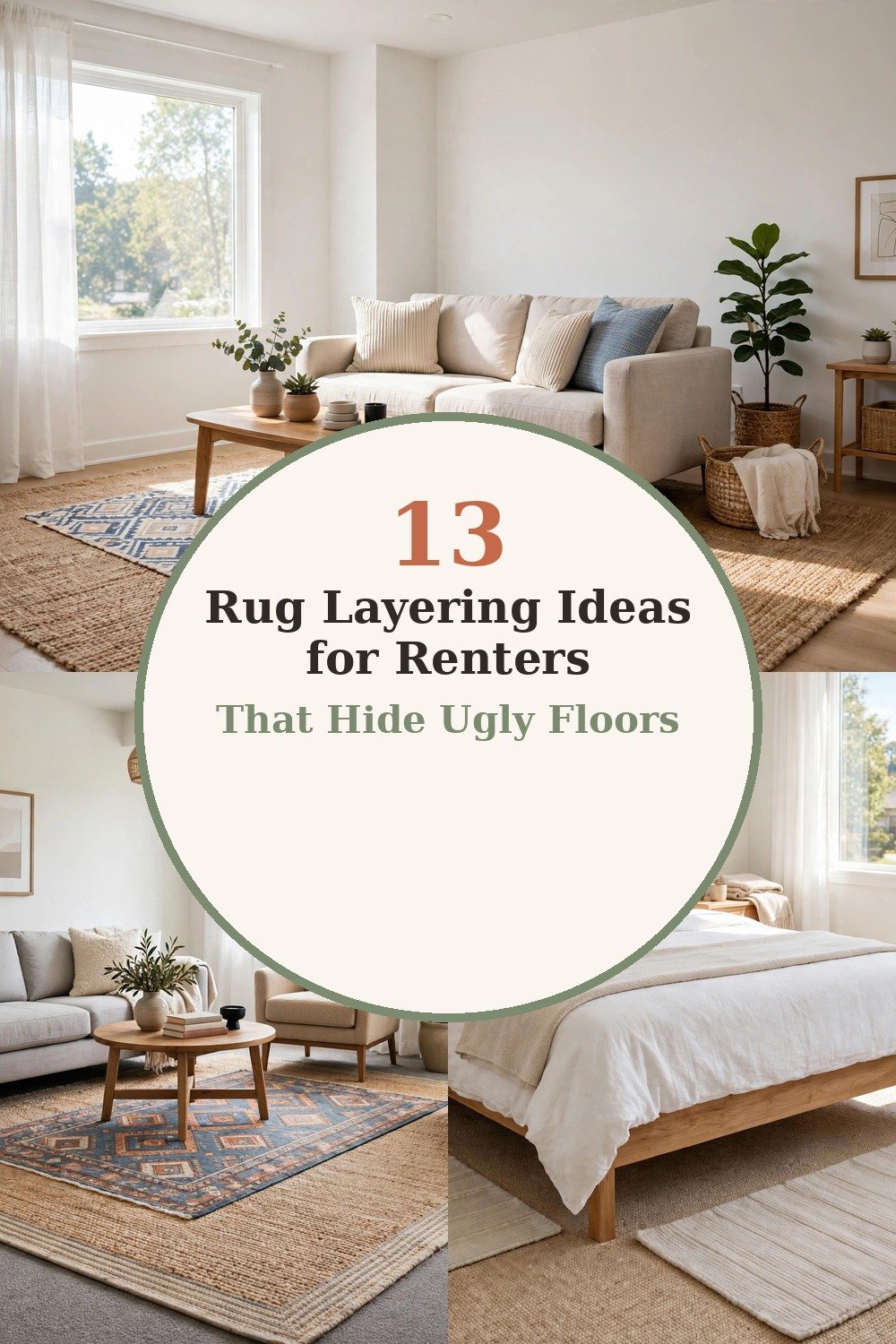

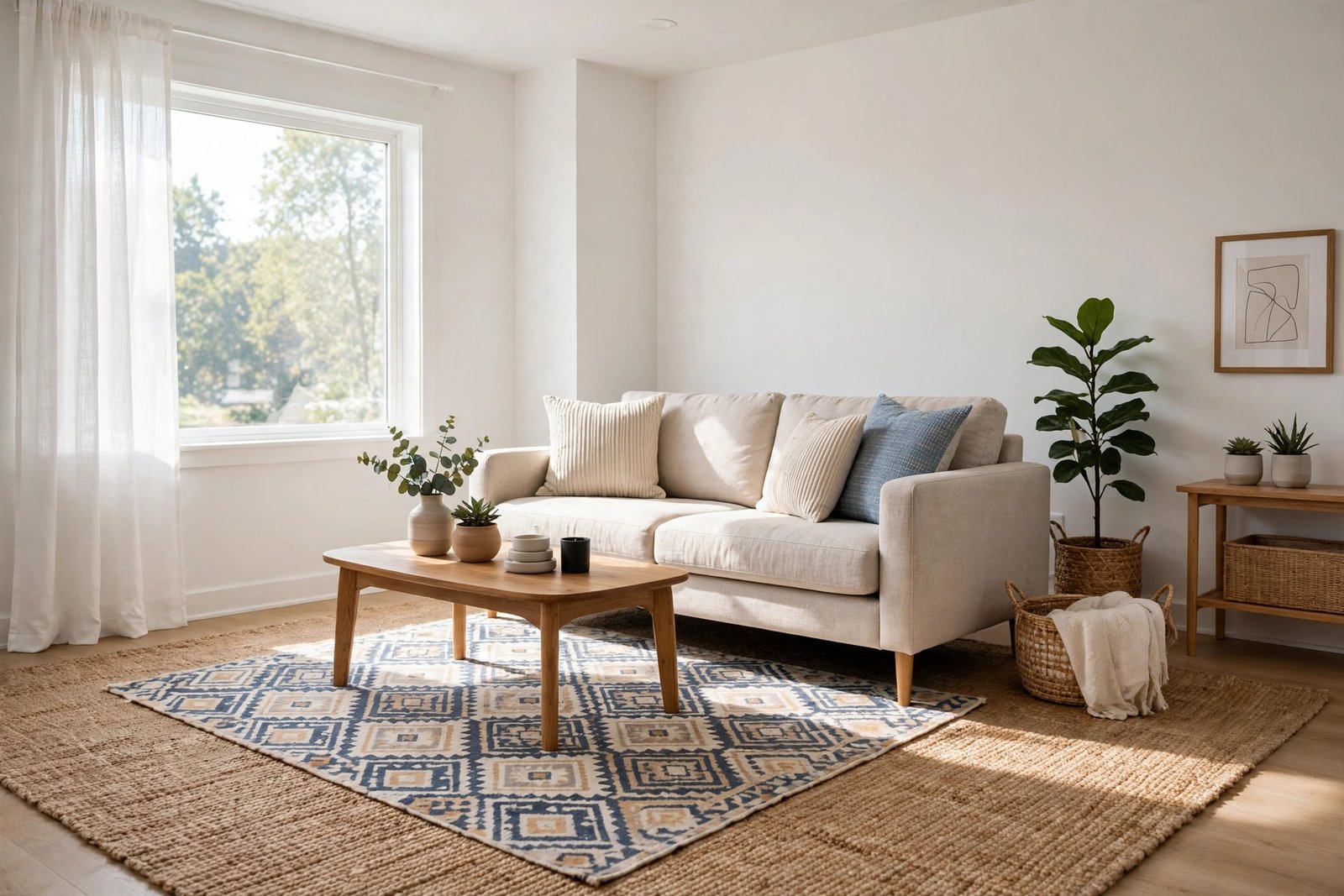
The floor is the one surface you cannot change in a rental: grey landlord carpet, tired vinyl, wood that has survived four tenancies. These rug layering ideas use two rugs instead of one: a larger base rug that covers the problem, and a smaller topper that carries the pattern and the personality.
Layering covers more floor for less money: the base can be plain cheap jute while the pretty rug stays small, and swapping only the topper changes the room’s whole look. Fully reversible: roll both up on moving day and the floor is exactly as the landlord left it.
One honest limit: layering hides the floor, it does not fix it. For the rooms around the rugs, our rental-friendly living room ideas and small bedroom decor ideas cover the rest.
In this post
- The 30-second version
- Living room layering
- Bedroom layering
- Hallway and entryway layering
- Pads, sizing and the system
- Common mistakes we’d skip
- The short version
- Questions renters ask
The 30-second version
- Do these 3 first, in order: the jute base plus patterned topper (idea 1), the pad between the layers (idea 10), and the size maths (idea 11, free). Combined: about $75 to $150 for the living room set.
- 13 ideas, zero drills, zero damage. Most renters need the living room and the bedroom only, about $100 to $180.
- The rug measuring worksheet is in our Free Renter Printables hub.
Living room layering
1. The jute base plus patterned topper
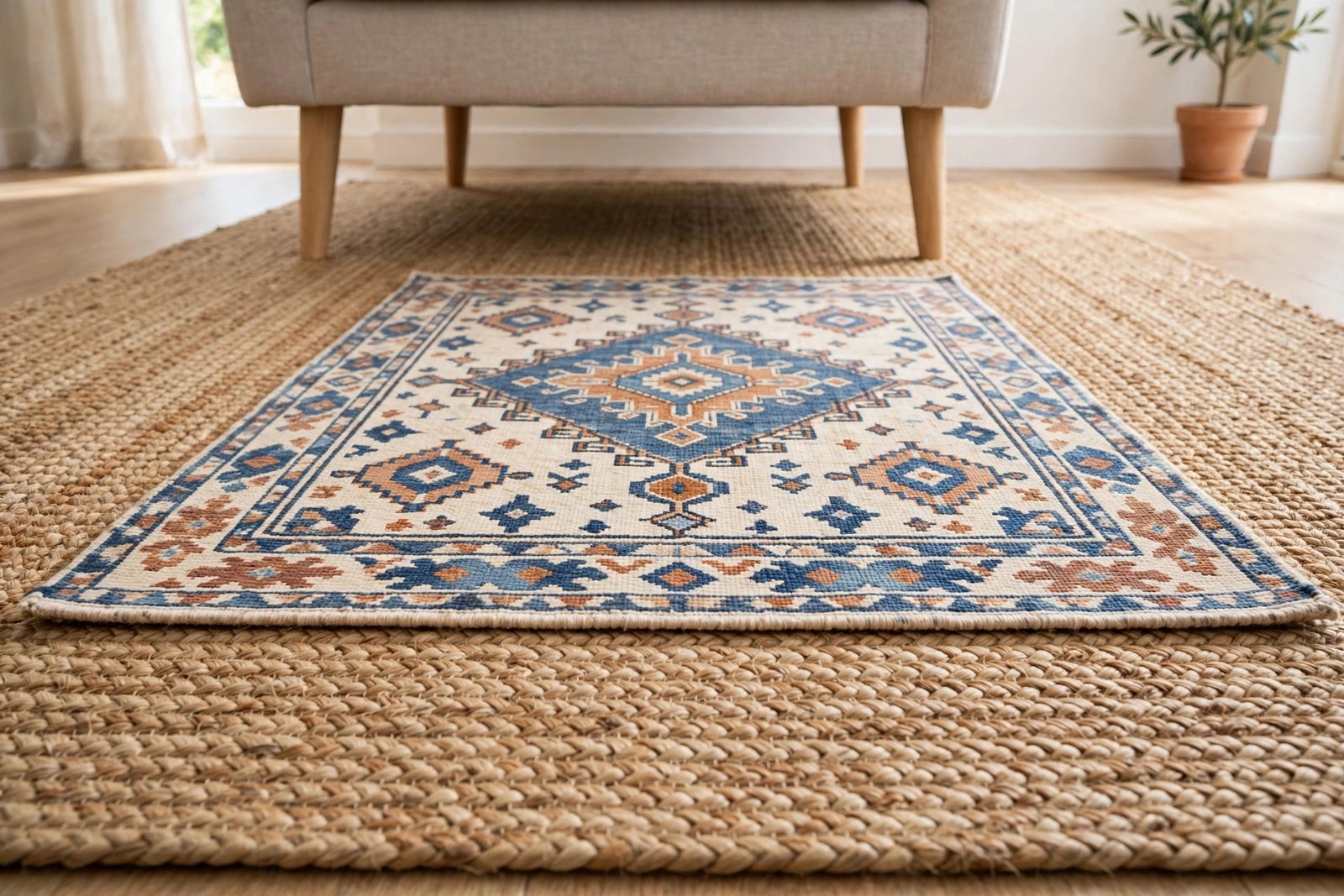
The classic layering move: a large jute or sisal base, with a smaller patterned rug centred on top. The base does the covering, the topper does the talking. A 2.4 by 3 m (8 by 10 ft) jute base with a 1.5 by 2.1 m (5 by 7 ft) topper dresses a whole seating area. Jute is coarse underfoot: put the topper where feet land.
Cost: ~$60-120 for both • Best for: the first room you layer, almost always the living room • Measure first: seating area footprint first, then the base; the topper comes last • Watch out: jute sheds for the first month, vacuum without the beater bar.
2. Layer over the rental carpet
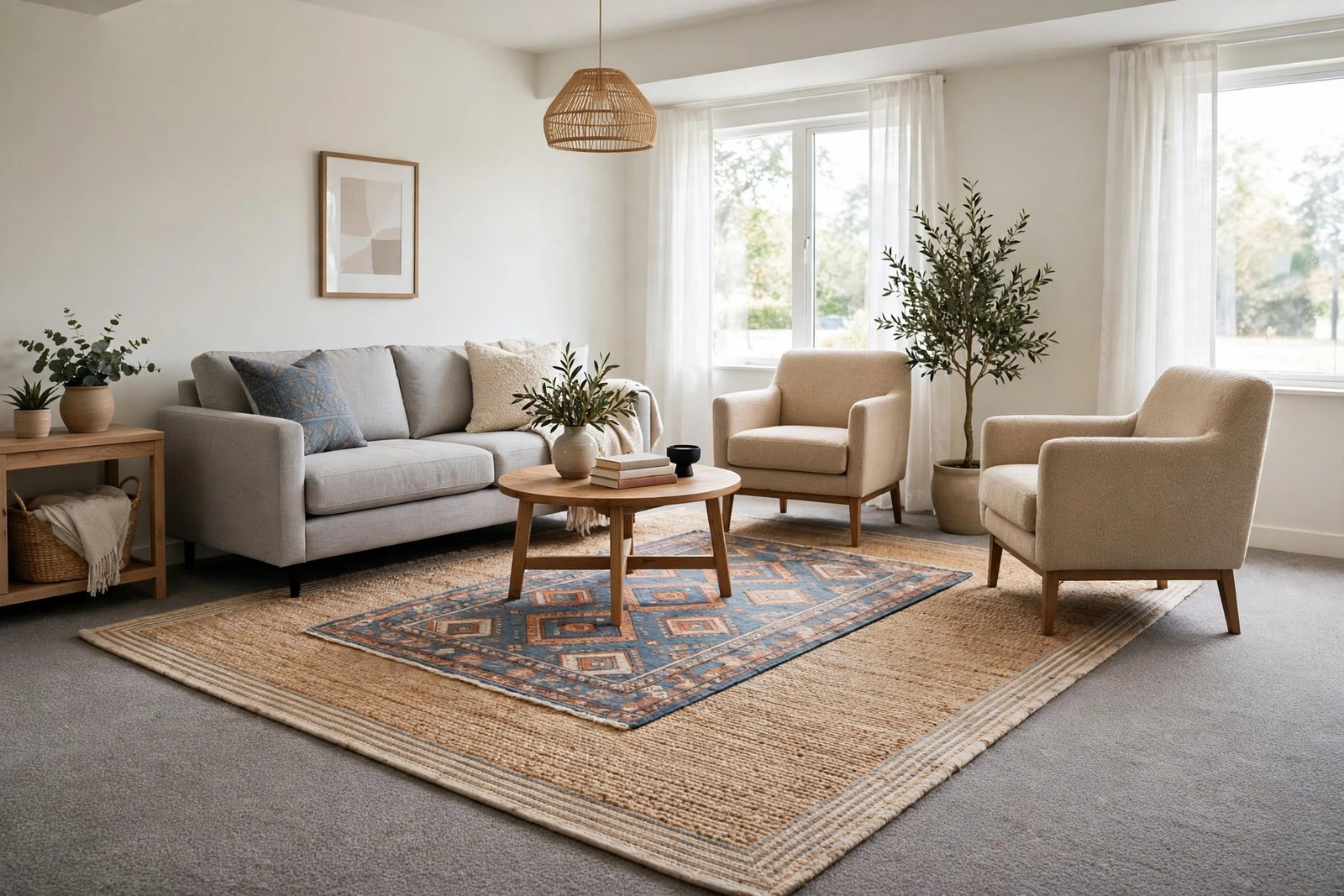
Grey landlord carpet is the easiest win: a flatweave or low-pile base goes straight over the carpet, and the patterned topper goes on that. The base hides the carpet’s colour completely; the topper gives you something you would actually choose. The base must be firm: a soft fluffy base lets the topper walk within days. Keep the total pile low, or chair legs will rock and doors will catch.
Cost: ~$50-110 for the pair • Best for: wall-to-wall rental carpet you cannot stand • Measure first: the carpeted area you want gone, plus door clearances (see idea 12) • Watch out: never layer over carpet thicker than about 1 cm (half an inch); it turns into a sponge.
3. The angled topper
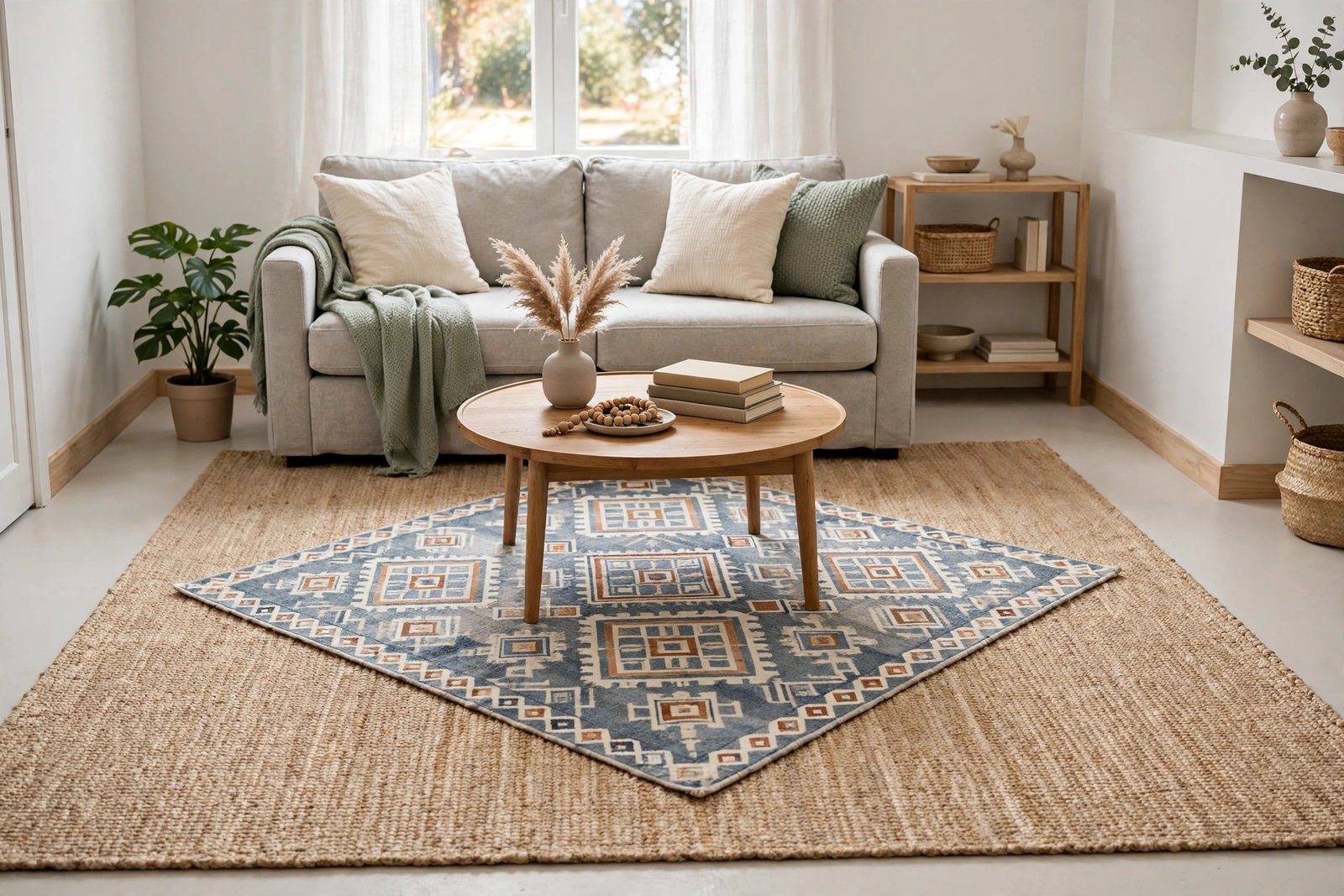
Turn the topper about 45 degrees instead of squaring it with the base. In a small living room this breaks the boxy feeling of furniture lined against walls, and it costs nothing. It works best under a coffee table. The base stays square with the room; only the topper turns.
Cost: ~$0, you already own both rugs • Best for: square living rooms that feel rigid • Measure first: none, but the topper must not trip the sofa legs • Watch out: high-traffic angles drift; the pad from idea 10 matters more here.
4. Two runners layered lengthwise
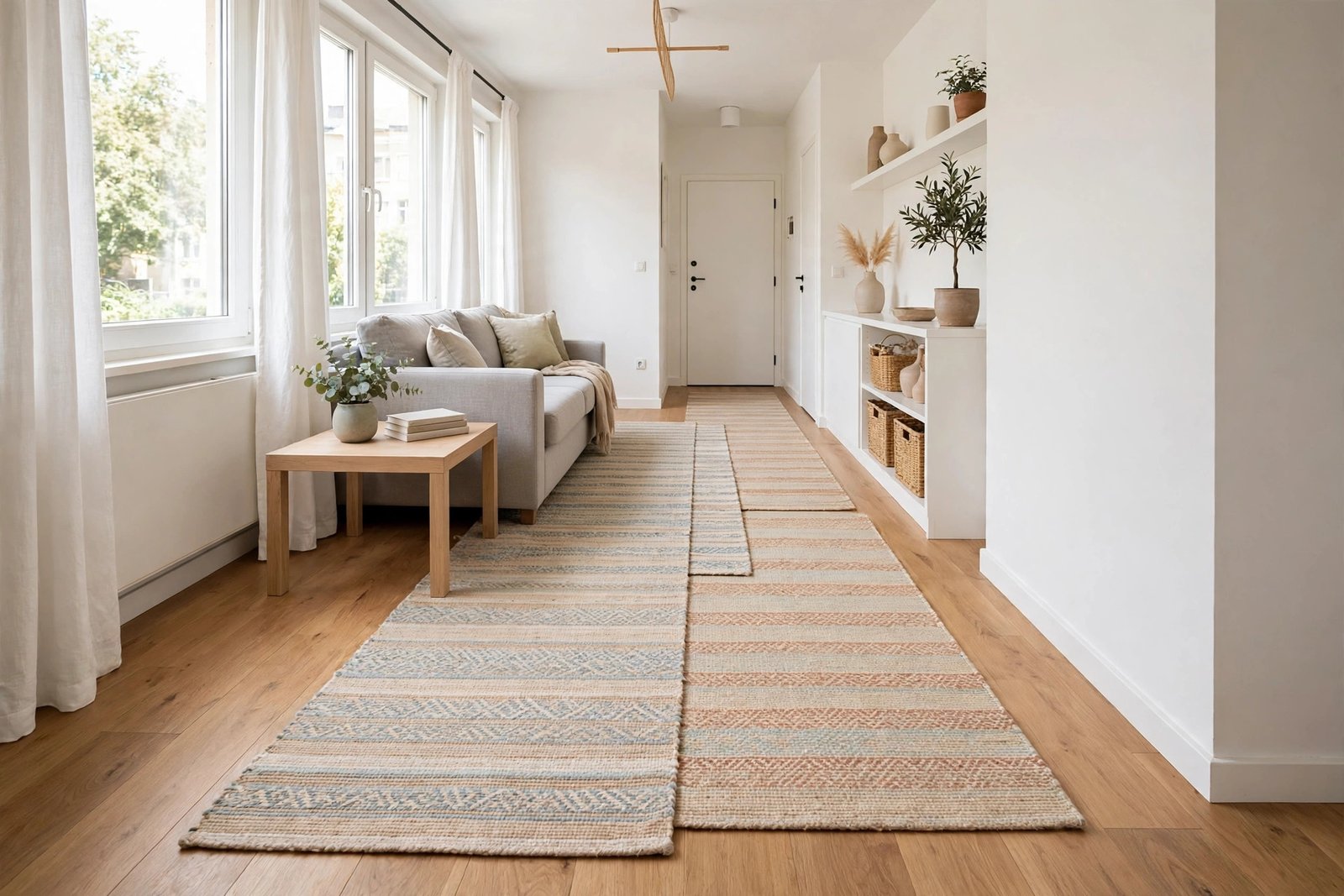
Two runners laid end to end with a 30 to 45 cm (12 to 18 in) overlap make one long runner for a long narrow living room. Offset them about 10 cm sideways so the overlap reads as deliberate. Two 2.4 m runners beat one overpriced 4 m runner.
Cost: ~$40-90 for two runners • Best for: long narrow living rooms and railway flats • Measure first: the full run length, minus the overlap you plan • Watch out: the overlap is a trip edge if the top runner is thick; keep both low-pile.
Bedroom layering
5. Beside-the-bed runners on a base rug
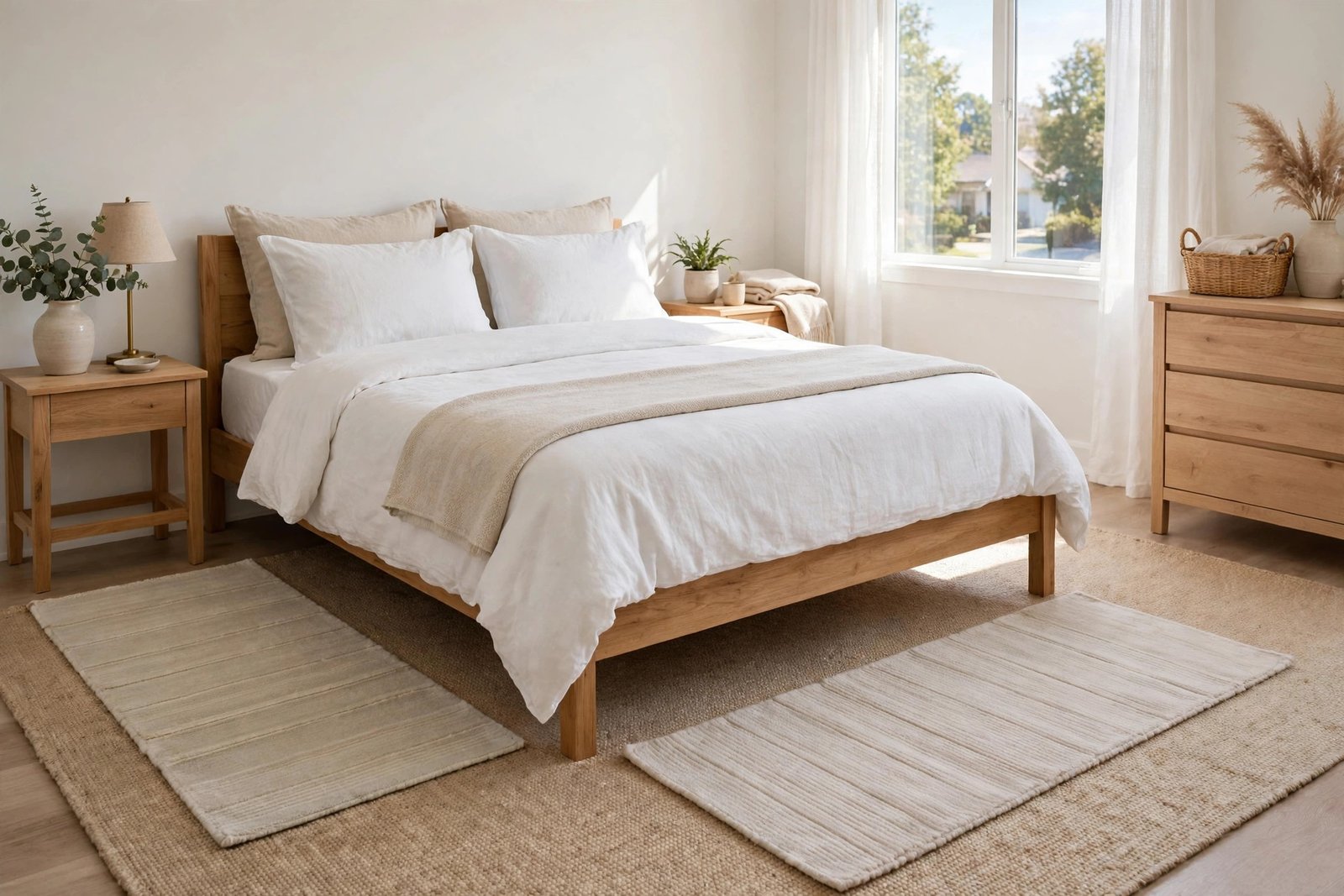
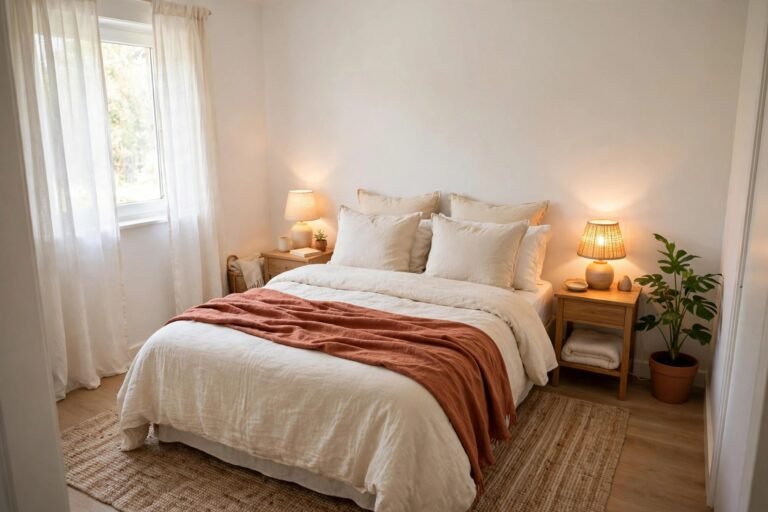
Two soft runners layered along each side of the bed, over a large plain base rug: the wake-up landing. The base can be cheap; the runners carry the softness. Two 70 by 200 cm (28 by 79 in) runners cost far less than one huge bedroom rug. Run them from the pillows past the foot of the bed, so feet land on softness.
Cost: ~$50-100 for base plus two runners • Best for: cold floors and early mornings • Measure first: bed length plus 60 cm (24 in), and the gap between bed and wall • Watch out: runners narrower than 60 cm (24 in) slide under the bed; go wider.
6. The round topper on a rectangular base
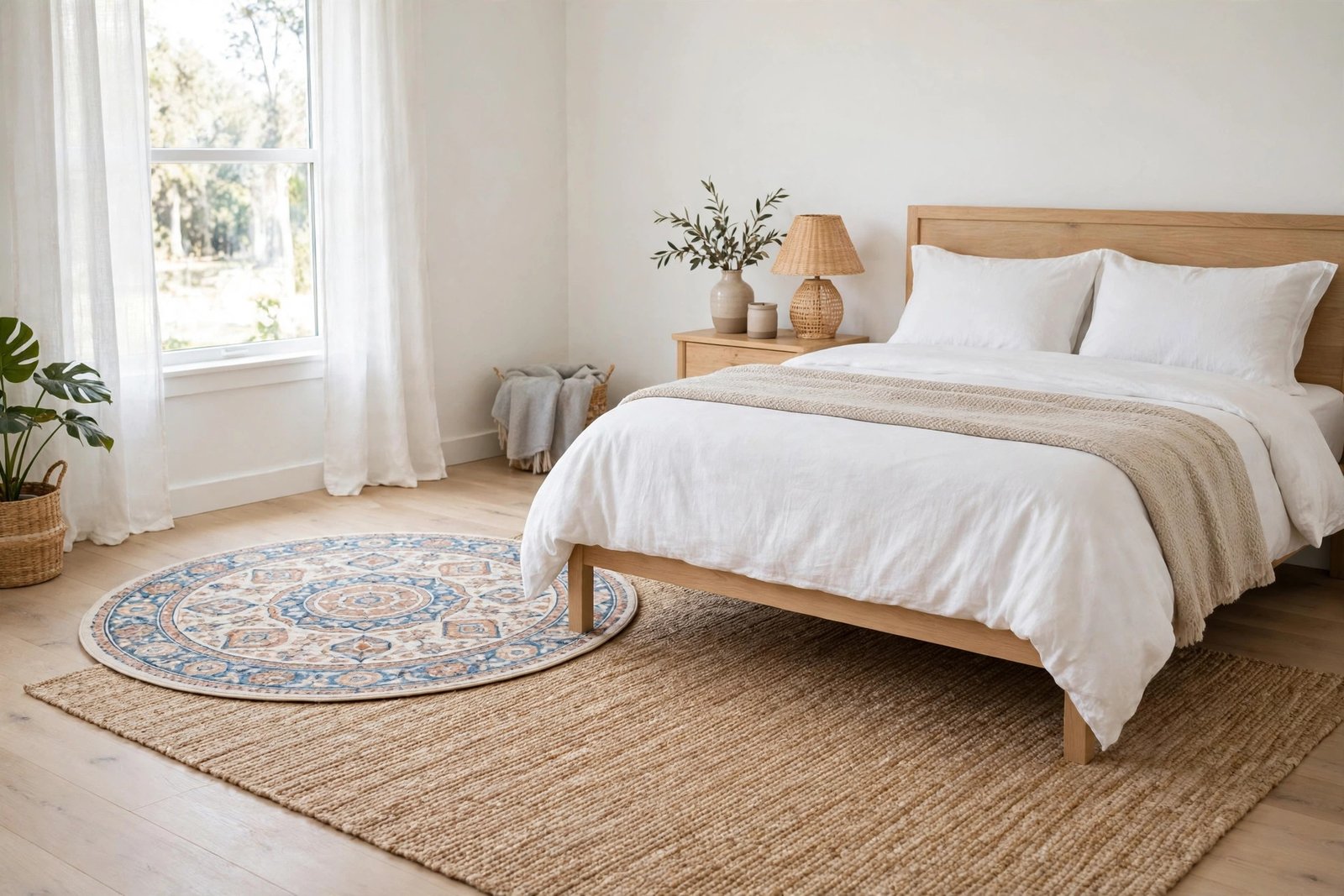
A round rug on the visible part of a rectangular base breaks every straight line in a small bedroom: the bed, the wardrobe, the walls. It is the fastest way to make a boxy rental bedroom feel softer. Centre it on the half the bed does not cover. A 1.6 m (63 in) round topper on a 2 by 3 m base is the sweet spot.
Cost: ~$40-90 for the topper • Best for: boxy bedrooms that feel rigid • Measure first: the visible base area, not the whole room • Watch out: round edges curl on thick bases; choose a flatweave topper.
7. The foot-of-bed runner stack

One runner across the foot of the bed, with a second shorter runner layered on top, slightly off-centre. It gives a styled bed the layered look of a throw without the throw sliding off every night, and it anchors the bed where the rug under the bed (see our small bedroom decor ideas) does not reach far enough. Keep the stack within the bed’s width and both low-pile, so the bed base does not snag them.
Cost: ~$30-70 for two runners • Best for: beds that need styling without a full new rug • Measure first: bed width; the stack stays inside it • Watch out: keep both low-pile or the bed base snags them when you make it.
Hallway and entryway layering
8. The doormat on a runner
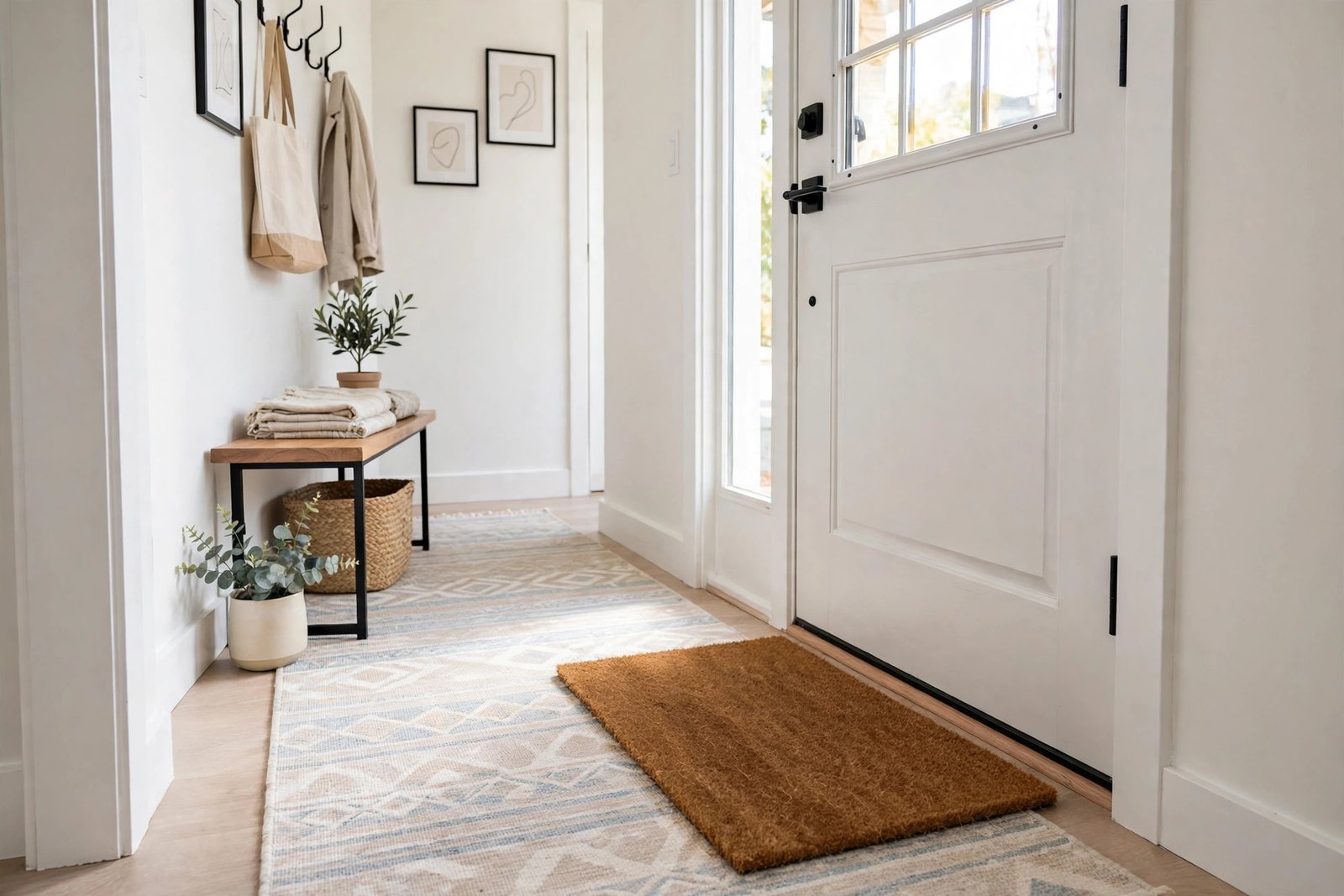
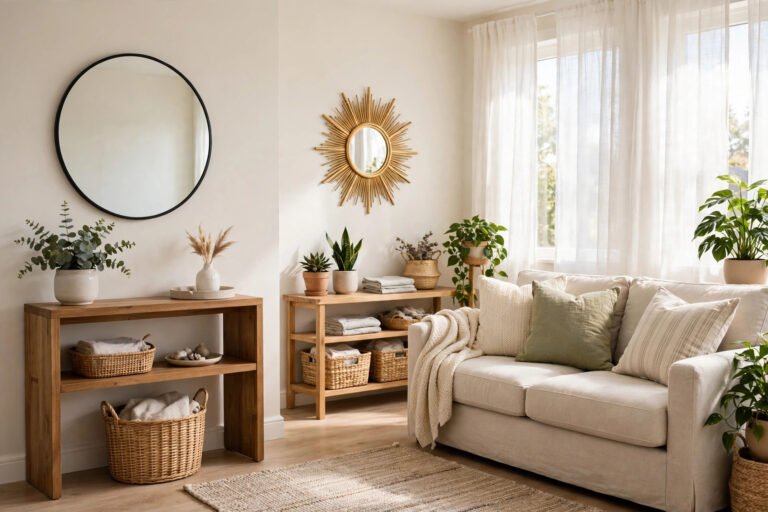
Layer the doormat on top of an indoor runner in the entryway, not beside it. The runner protects the floor along the whole entry; the doormat sits where shoes land and can be shaken out or replaced alone when it gets filthy. The doormat should be coir or another stiff scraping fibre; the runner underneath can be anything washable.
Cost: ~$25-55 for runner plus mat • Best for: entryways with no porch or mudroom • Measure first: the door swing, so the mat never traps the door (see idea 12) • Watch out: a curled doormat edge is a trip hazard; replace, do not flip.
9. The hallway overlap
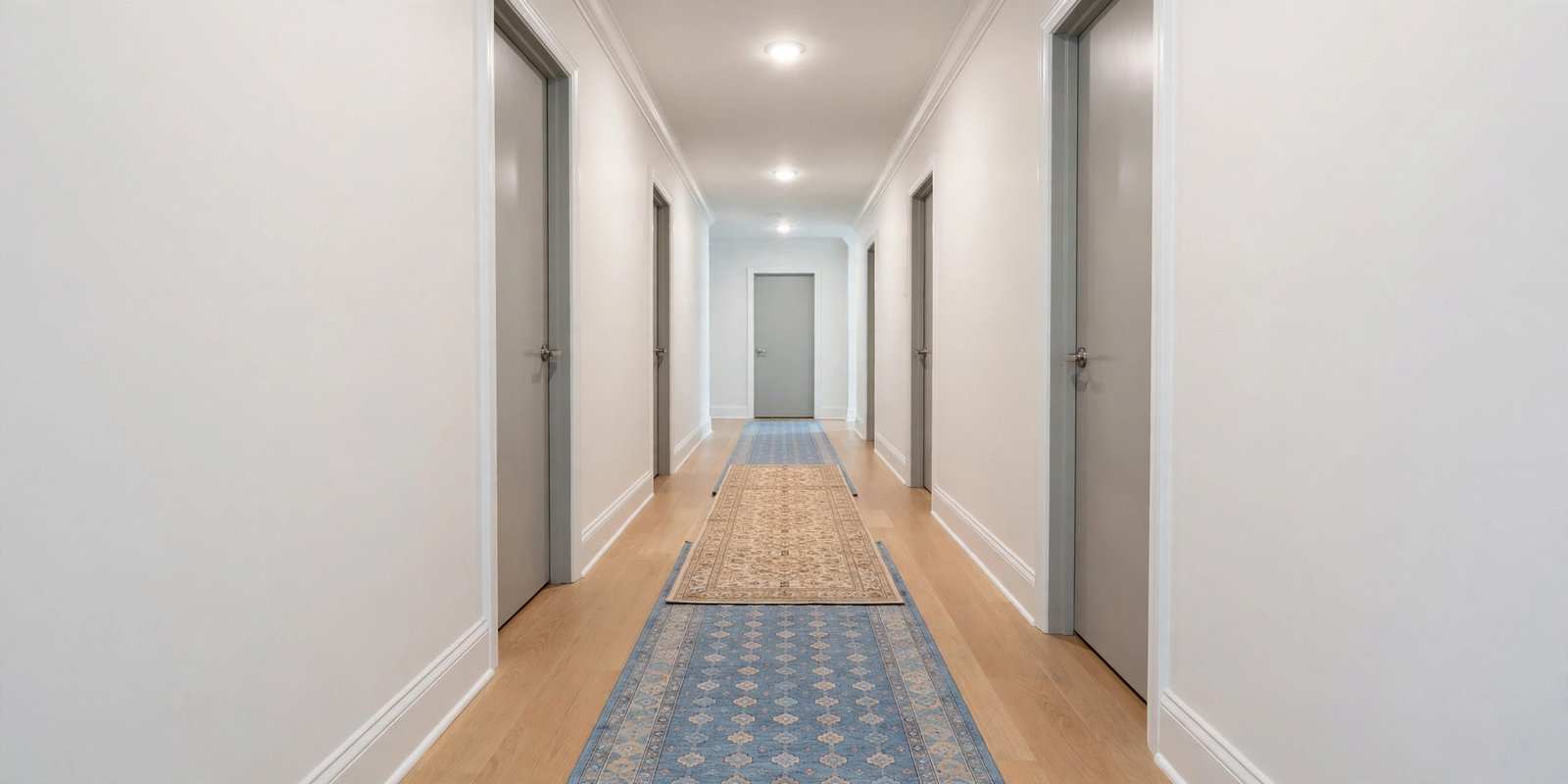
Rental hallways are rarely the length of a standard runner. Overlap two instead: the second starts 40 to 60 cm (16 to 24 in) before the first ends, layered on top. The overlap hides the join; the top runner can be the prettier one. Run the overlap against the wall with the door, and tape the leading edge down with rug tape if feet catch it.
Cost: ~$35-75 for two runners • Best for: hallways longer than 3 m (10 ft) • Measure first: the full hallway, then subtract the overlap from the combined length • Watch out: hallway layers walk more than any other; the pad rule in idea 10 is non-negotiable here.
Pads, sizing and the system
10. The pad between the layers
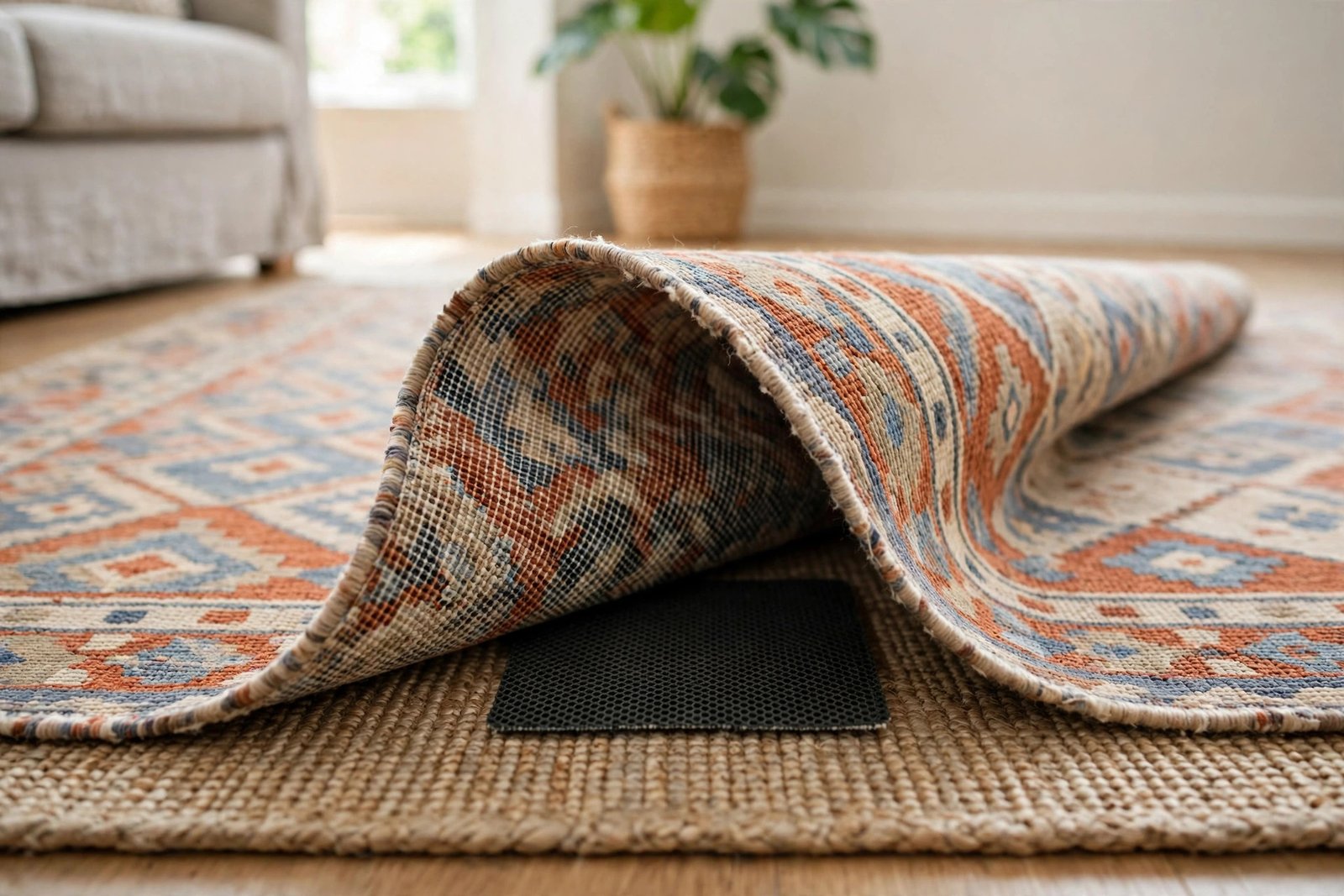
Every layered pair gets a non-slip pad between base and topper, cut 5 to 8 cm (2 to 3 in) smaller than the topper so no edge peeks out. It stops the topper walking and cushions the base against the floor, protecting your deposit from dye transfer and pressure marks. On hard floors add a second thin pad under the base too.
Cost: ~$15-30 per pad • Best for: every single layered pair in this post • Measure first: the topper, minus 5 to 8 cm (2 to 3 in) all round • Watch out: rubber pads on vinyl floors can react with the finish; choose felt-and-natural-rubber.
Shopping for these? Measure first. Every layer here is sized to a room, a doorway or a bed, and the tape measure is cheaper than the return trip. The rug measuring worksheet is in our Free Renter Printables hub.
11. The size maths
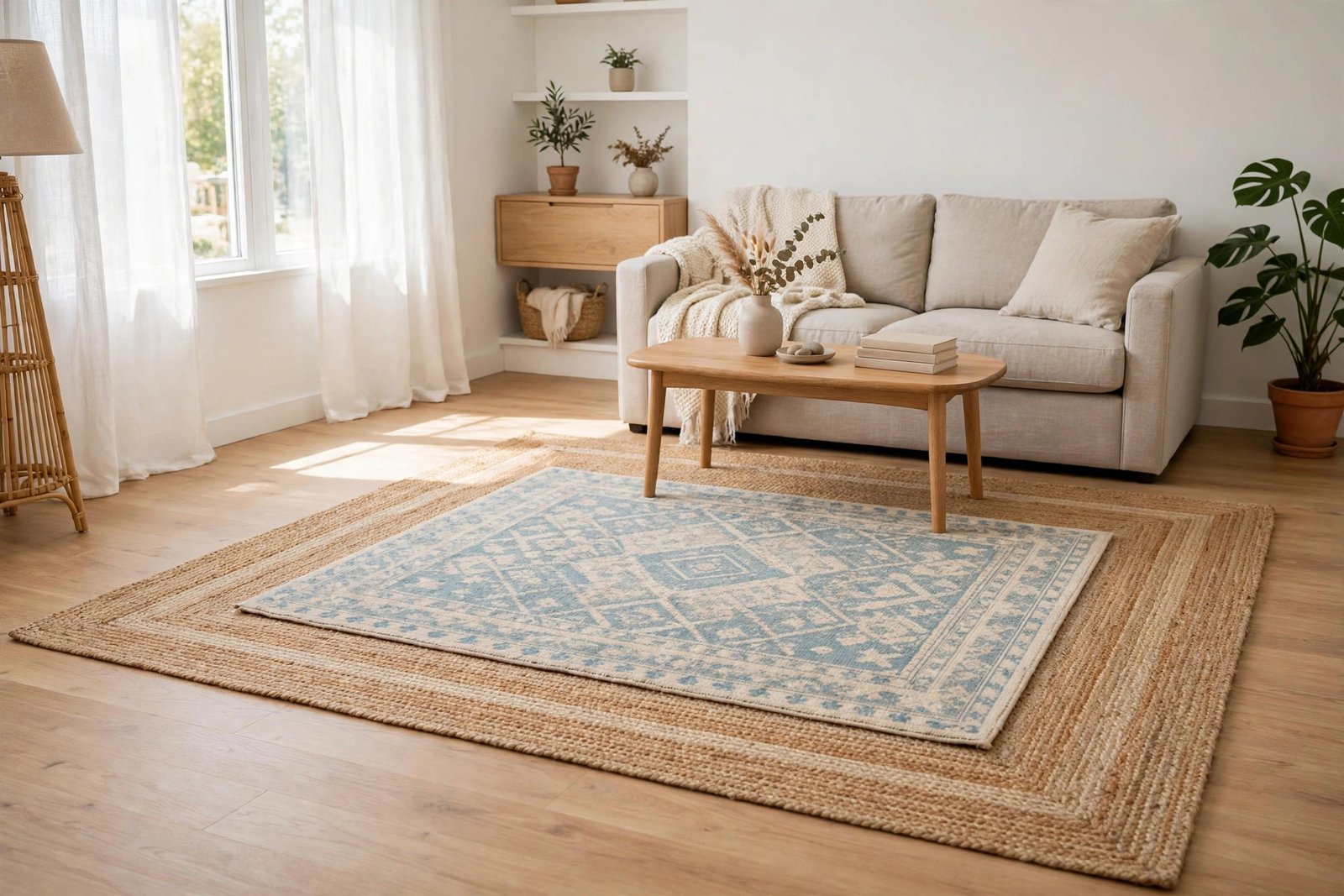
Proportions decide whether layering looks expensive or cheap. The base should show a border of 30 to 45 cm (12 to 18 in) around the topper on every visible side, and the topper should be roughly two-thirds the base’s width and length. Work backwards from the furniture: measure the footprint first, buy the base to exceed it, then the topper to sit inside that.
Cost: ~$0, the discipline is free • Best for: anyone about to buy • Measure first: furniture footprint, then base, then topper, in that order • Watch out: too-small bases are the number one layering failure; when in doubt, size up the base.
12. The door-clearance test
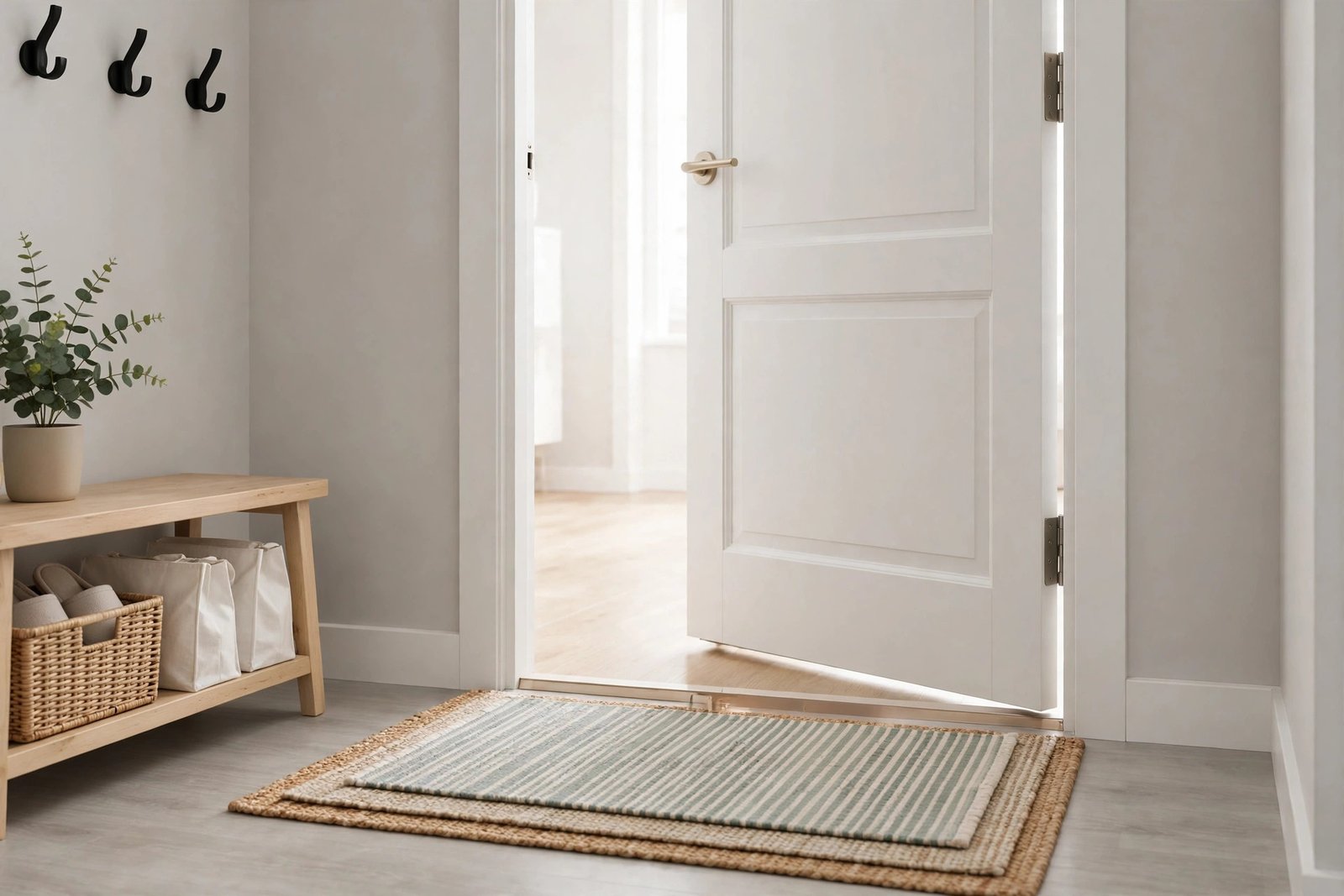
Layered rugs are thicker than single rugs, and rental doors hang low. Before any layer goes near a doorway, open and close the door over the exact spot and watch the bottom edge. If it catches, the layer does not live there. The fix is placement or pile: keep layers 15 to 20 cm (6 to 8 in) clear of the door’s swing arc, or choose a flatweave under 6 mm (quarter inch) for the door zone.
Cost: ~$0 • Best for: every rug near any door • Measure first: the door’s bottom clearance and the full swing arc • Watch out: doors settle and rugs compress; retest after a month.
13. The washable topper rotation
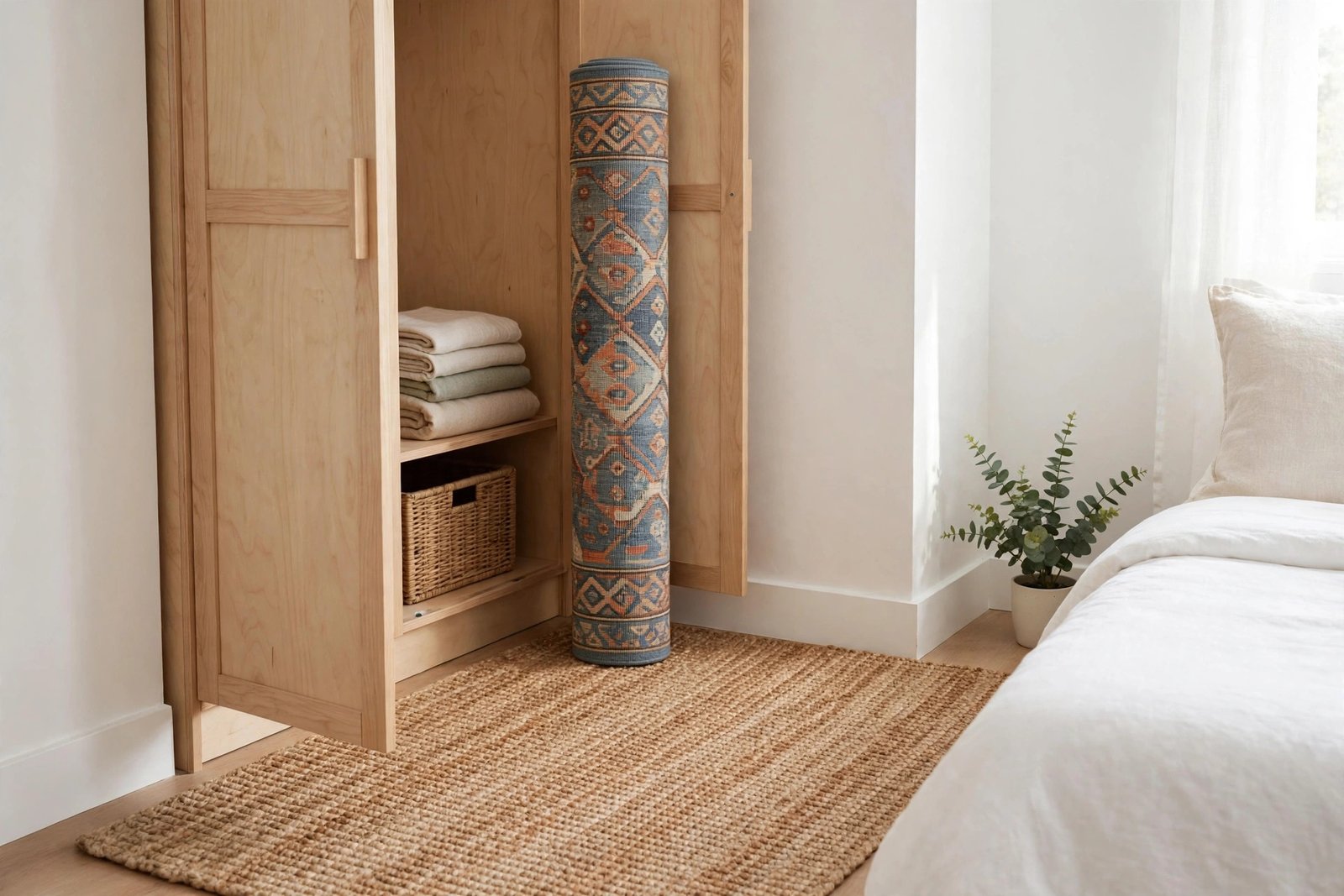
Make the topper washable and the base the heavy one. A machine-washable topper over a jute or flatweave base means the layer that takes the spills, the pet hair and the shoe dirt goes in the washing machine while the base stays put. It is also your seasonal system: roll the winter topper away and unroll a lighter one for summer, base unchanged. Store rolled toppers upright, never folded.
Cost: ~$30-70 for a washable topper • Best for: pets, kids, and anyone who eats on the sofa • Measure first: your washing machine drum; toppers over 1.5 by 2.1 m rarely fit • Watch out: washable does not mean indestructible; cold wash, no tumble dryer.
Common mistakes we’d skip
- A topper bigger than the base. If the top layer covers the bottom one entirely, you own two rugs and the look of one. The base must show a border all round.
- Skipping the pad. Unpadded toppers walk, bunch and ripple within a week. The pad is the layer that makes layering work.
- Layering over thick carpet. Carpet pile over about 1 cm (half an inch) plus two rug layers turns spongy and eats door clearance.
- Ignoring the door swing. A layered entry that stops the front door closing is the most expensive boring mistake. Test every doorway first.
The short version
Thirteen ideas, one principle: the base rug covers the problem, the topper carries the personality, and the pad between them does the quiet work. Get the sizes right with the 30 to 45 cm border and the two-thirds rule, keep every layer clear of door swings, and make the topper the washable, swappable one. Two rugs, zero drills, zero damage, and on moving day the floor is exactly as the landlord left it.
Questions renters ask
Q: Can you layer rugs on top of carpet in a rental?
A: Yes, with a firm dense base: a tight flatweave or thin low-pile rug over the carpet, then the topper. Keep carpet pile under 1 cm (half an inch) and all layers low-pile, or doors catch and chair legs rock.
Q: Do layered rugs slip?
A: Only unpadded ones. A non-slip pad between base and topper, cut 5 to 8 cm smaller than the topper, stops the walking.
Q: What sizes work for rug layering?
A: The base shows a 30 to 45 cm (12 to 18 in) border around the topper, and the topper is roughly two-thirds the base’s dimensions. Standard living room pairing: a 2.4 by 3 m (8 by 10 ft) base with a 1.5 by 2.1 m (5 by 7 ft) topper.
Q: Will layering rugs damage the rental floor underneath?
A: Not with the right pad: felt-and-natural-rubber between topper and base prevents dye transfer and pressure marks. Avoid pure rubber pads directly on vinyl.
📌 Pin this post for later
Save it to Pinterest for later, or tell us your smallest-space problem in the comments — the best posts here started as a reader’s awkward cabinet.