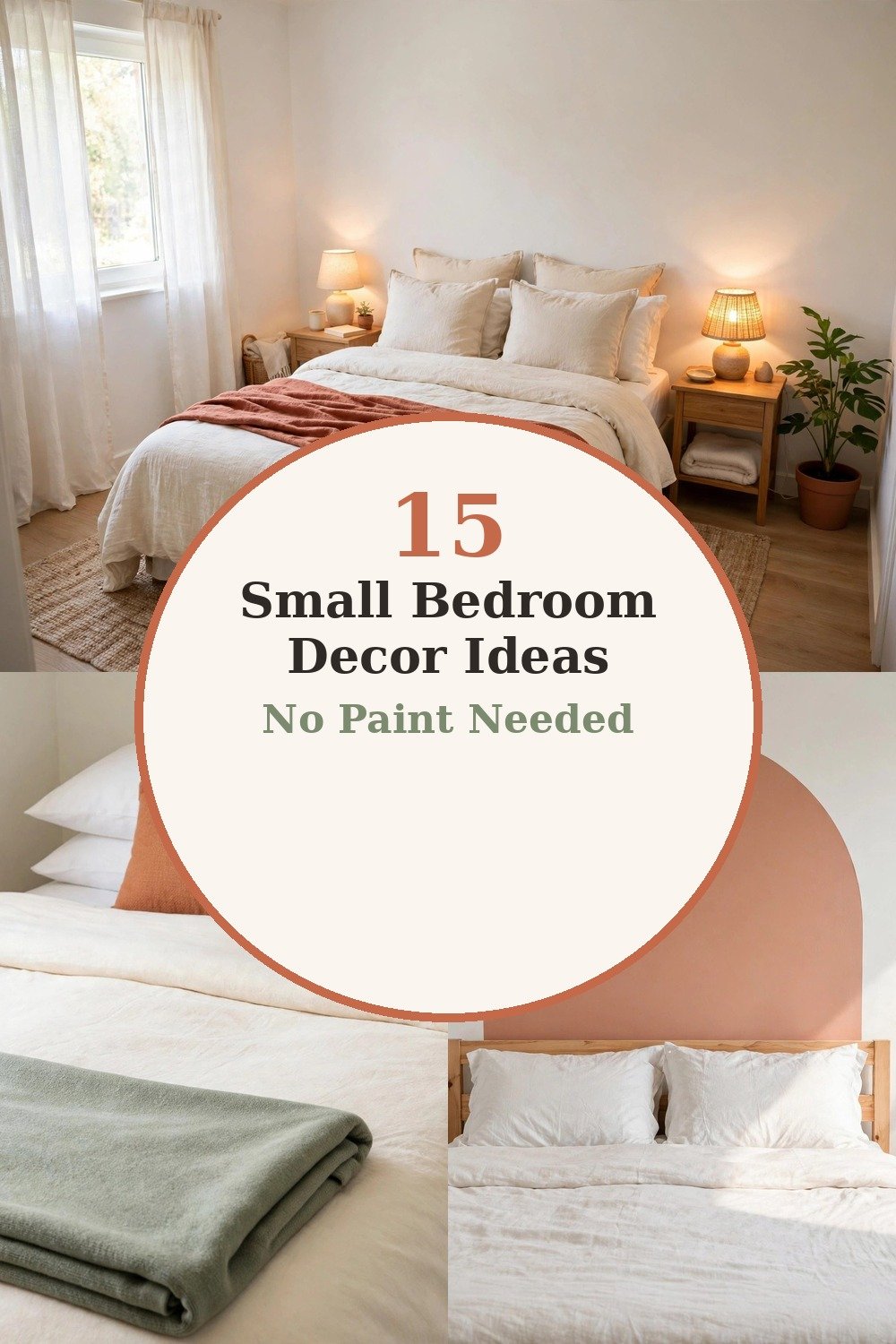

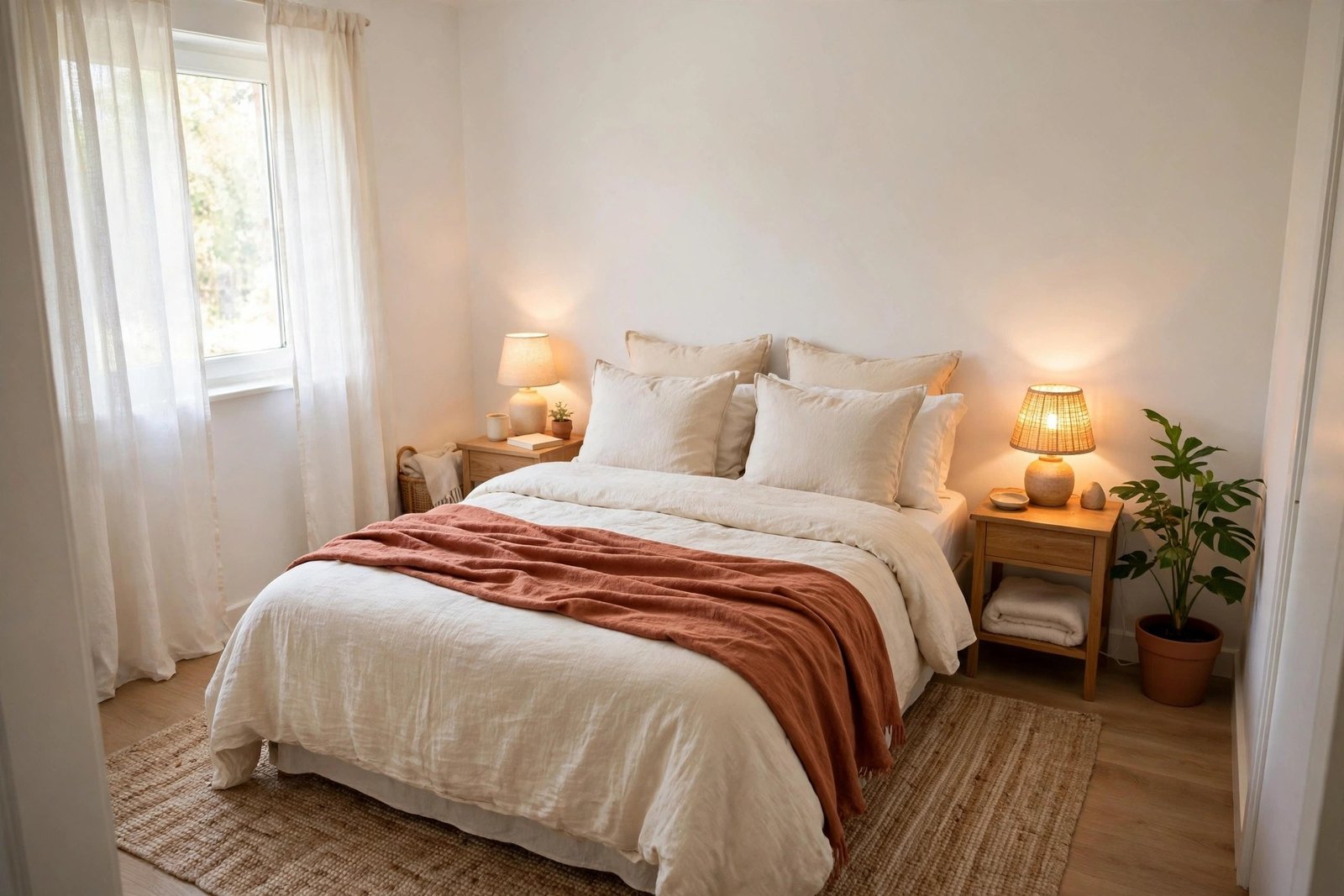
A small rental bedroom usually fails on one thing: the walls stay the landlord’s white, so the room never feels chosen. Paint is banned, so colour has to arrive another way. These small bedroom decor ideas for renters bring colour and warmth in through bedding, fabric, decals and light instead. Nothing here is storage: for clothes and overflow, see our no-closet bedroom storage ideas and under-bed storage ideas.
Every idea reverses on moving day. Decals peel, textiles wash and pack, and anything that leans can be lifted out in one trip. Start with the bed: in a small bedroom, the bed is most of the room.
In this post
- The 30-second version
- Colour without paint (ideas 1 to 4)
- The bed and the bedside (ideas 5 to 8)
- Walls, light and softness (ideas 9 to 12)
- Floor, layout and the finish (ideas 13 to 15)
- Common mistakes we’d skip
- The short version
- Questions renters ask
The 30-second version
- Do these 3 first, in order: layered bedding in one accent colour (idea 1), the arch decal behind the bed (idea 2), and paired bedside lamps (idea 6). Combined cost: about $70 to $130.
- 15 ideas, zero paint, zero drills. Everything peels, leans, stands, drapes or plugs in.
- Typical cost: most renters need 4 to 6 of these, about $90 to $180 total. The measuring checklist lives in our Free Renter Printables hub.
Colour without paint
1. Layered bedding in one accent colour

The fastest colour in a bedroom is the bed itself. Keep a plain cream duvet as the base, then layer one accent colour only: a folded throw across the foot and two cushions in the same family. One colour, repeated three times, reads as a scheme. Three colours read as clutter.
Cost: ~$35–70 for a throw and two cushion covers • Best for: instant colour with no wall change at all • Measure first: bed width; a throw should span the foot with about 20 cm spare each side • Watch out: wash the throw before first use; strong dyes mark pale duvets.
2. A removable arch decal behind the bed

A single large arch decal behind the headboard gives a plain wall a focal shape, like a painted arch with none of the paint. Peel-and-stick vinyl goes up in minutes and peels off in one sheet. It is one shape, not a full wall like our peel-and-stick wallpaper ideas.
Cost: ~$20–40 • Best for: a flat wall behind the bed with no headboard feature • Measure first: wall width and the height from mattress top to ceiling; centre the arch on the bed, not the wall • Watch out: test a corner first on weak paint, and skip textured walls; vinyl bridges texture and lifts.
3. A woven wall hanging above the bed
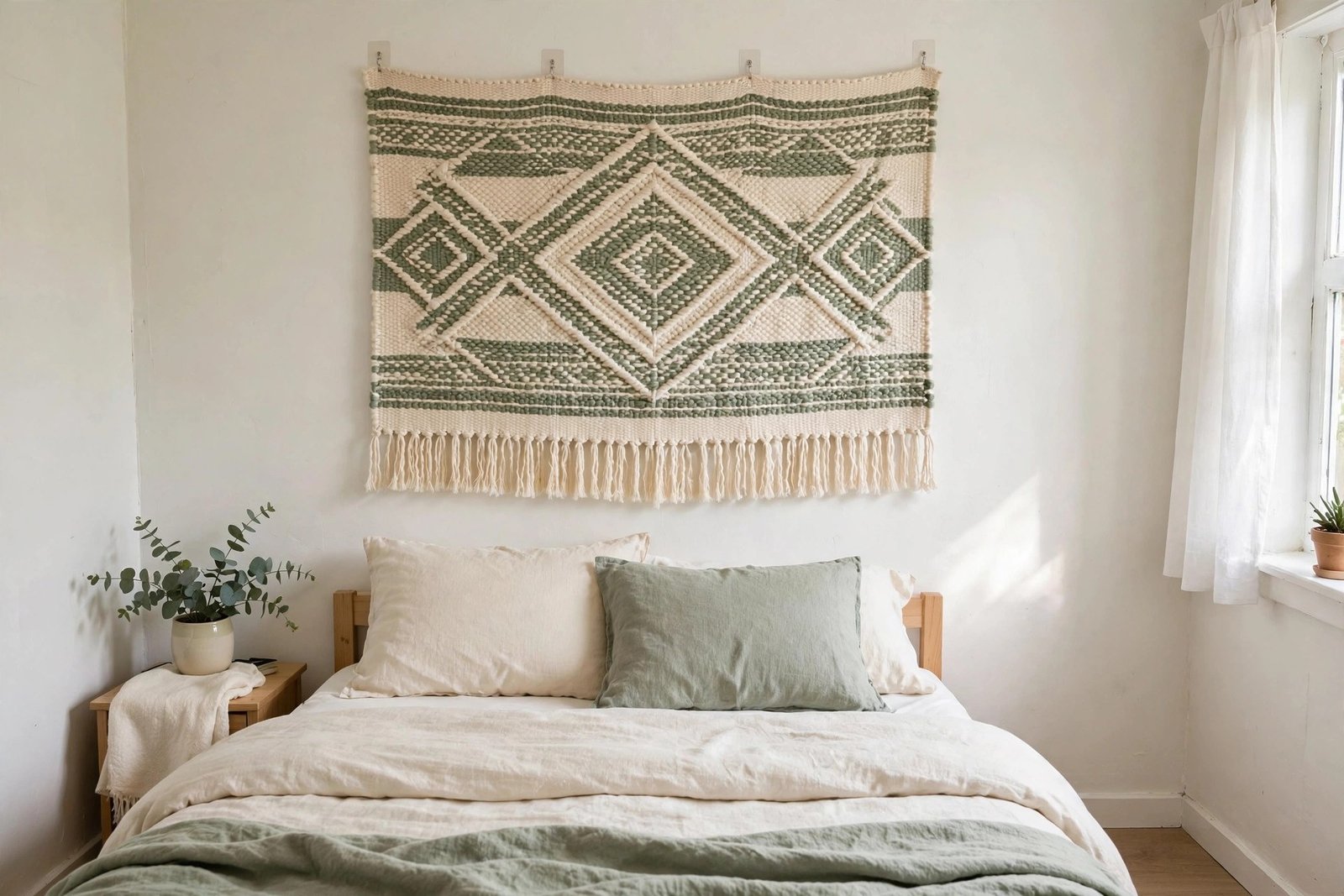
A soft fabric hanging adds colour and texture, weighs almost nothing, and hangs from two small removable hooks. Choose a woven piece in your bedding palette so the wall and the bed agree. It also softens sound in a boxy room.
Cost: ~$25–50 • Best for: colour and texture above the bed, safely light • Measure first: bed width; a hanging about two-thirds of the bed width sits best • Watch out: check the hook weight rating, and shake dust out monthly; fabric gathers it.
4. Full-length curtains in a warm colour
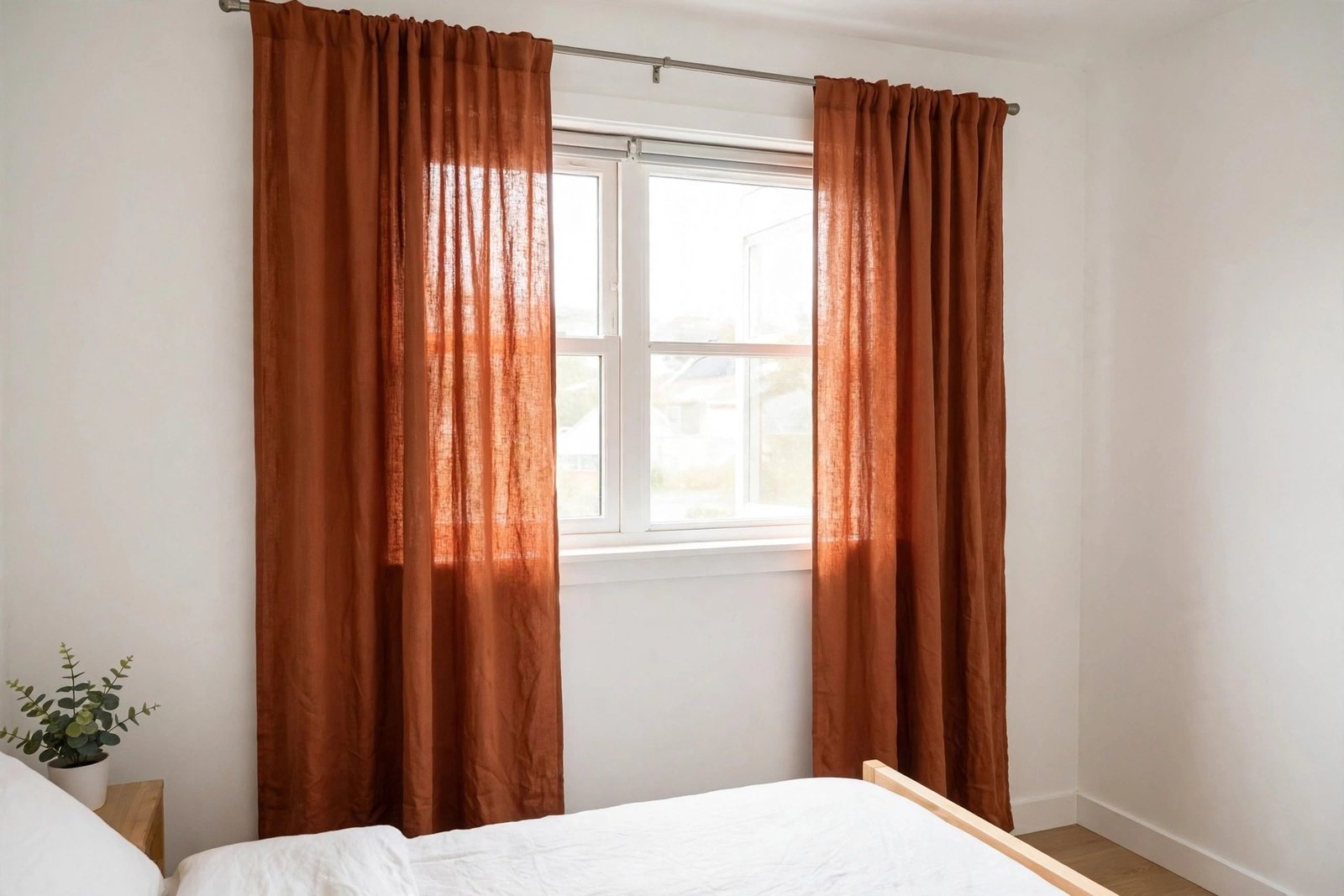
Landlord curtains are usually thin, grey and short. Swap them for full-length curtains in a warm solid colour on the rail already there, and the window joins the scheme. Fitting mechanics live in our no-drill window treatment ideas; here the point is colour and length.
Cost: ~$30–60 per window • Best for: replacing thin landlord curtains without touching fittings • Measure first: rail width and drop to the floor; curtains should just kiss the floor or pool by 2 cm • Watch out: store the landlord’s curtains flat and labelled, and refit them on moving day.
The bed and the bedside
5. Leaning padded headboard cushions

Many rental beds arrive with a bare frame or no headboard at all. Two large upholstered cushions, wedged between mattress and wall, fake a padded headboard with no fixings at all. They also make reading in bed comfortable, which a bare wall never does.
Cost: ~$40–80 for two large cushions • Best for: beds with no headboard or a cold metal frame • Measure first: bed width; two cushions should cover it edge to edge • Watch out: on deep mattresses the wedge can slip; a non-slip mat behind each cushion holds it.
6. Paired bedside lamps with linen shades

One ceiling light makes every bedroom feel rented. A matching pair of table lamps with warm linen shades drops the light to bed height and makes the room feel finished. Symmetry is the trick: two different lamps look borrowed, a pair looks planned.
Cost: ~$30–60 for a pair • Best for: killing the single overhead-light look • Measure first: nightstand width; the lamp base should leave room for a book and a glass • Watch out: match bulb colour temperature in both lamps, or the pair still looks odd.
7. An upholstered bench at the foot of the bed
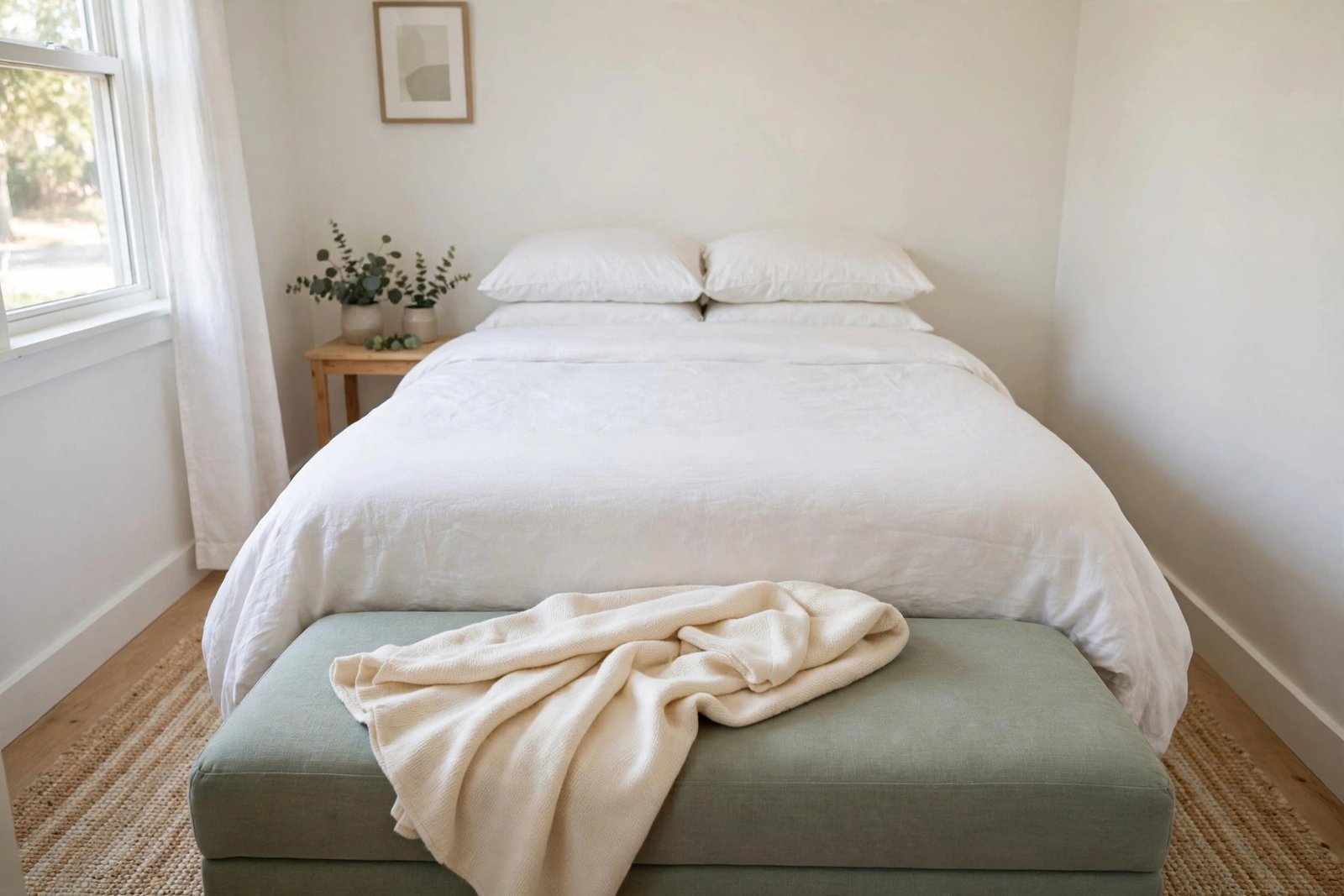
A low bench at the foot of the bed gives a small room a hotel finish and a place for the throw during the day. Choose upholstery in your accent palette and keep it low and narrow, so it frames the bed instead of blocking the walkway. It is decor first: a seat while you dress, not a storage box.
Cost: ~$50–90 • Best for: a finished foot-of-bed line in rooms with floor to spare • Measure first: bed width minus about 20 cm, and the gap from bed foot to wall or door swing • Watch out: skip it if the gap is under about 70 cm; a bench you sidestep daily becomes clutter.
8. The nightstand reset: tray, plant, book stack

A nightstand usually holds a charger, a glass and loose clutter. Corral it: one small tray for the essentials, a tiny plant for height, and a neat stack of two books. Nothing to buy beyond the tray, and the surface reads styled instead of spilled.
Cost: ~$10–20 for a tray • Best for: a cluttered nightstand that makes the whole room feel untidy • Measure first: tray against the nightstand top; leave a third of the surface clear • Watch out: real plants need light; a dark corner wants a good faux instead.
Shopping for these? Measure first. Bed width, wall height behind the bed, rail drop and the foot-of-bed gap decide most of these ideas. The one-page checklist is in our Free Renter Printables hub.
Walls, light and softness
9. One large leaning framed print

Instead of a spread of small frames, lean one large print on the dresser against the wall. Scale is what makes it work: a big piece calms a small room, while six small ones busy it. This is the single-piece version of our renter-friendly gallery wall ideas, with no strips at all.
Cost: ~$30–60 framed • Best for: one calm focal point with zero wall fixings • Measure first: dresser width or floor gap; the frame should fill about two-thirds of it • Watch out: add felt pads behind the top edge, or the frame marks the paint it leans on.
10. Plug-in sconces either side of the bed
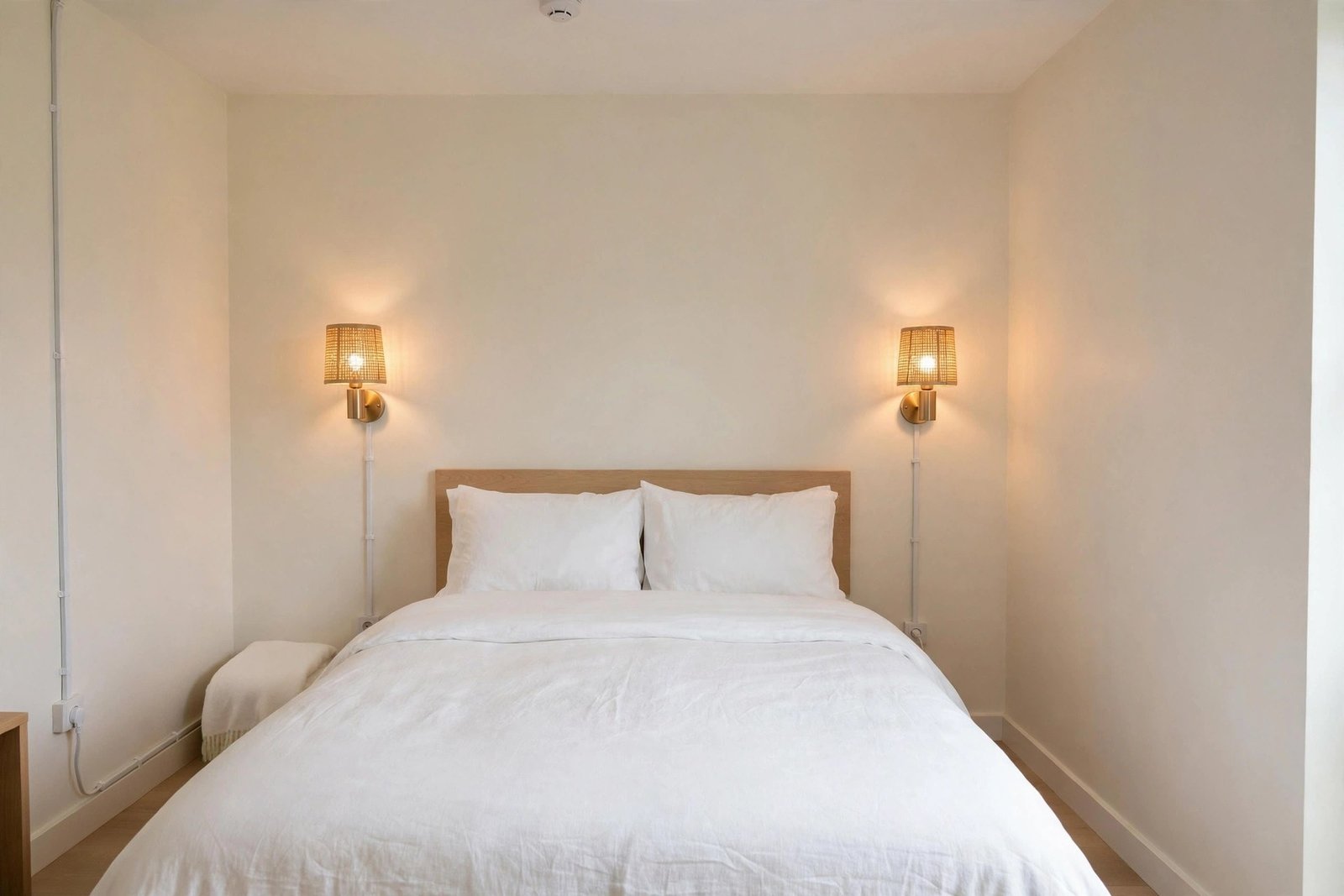
If nightstands are too small for lamps, plug-in sconces either side of the bed free the surface and frame the headboard zone. Adhesive cord covers run the cables neatly down to the sockets. The full system is in our plug-in lighting ideas.
Cost: ~$35–65 for a pair • Best for: tiny nightstands and a framed, symmetrical bed wall • Measure first: height about 50 to 60 cm above the mattress, and cord length to the nearest socket • Watch out: never run a cord under the mattress or rug; keep it in the cover, in the open.
11. String lights along the headboard, on a timer

A string of warm lights draped along the headboard turns the harsh evening light off entirely. Put them on a plug-in timer so they come on at dusk and off after you sleep, and they become routine rather than decoration you forget. Keep the string loose.
Cost: ~$12–25 with a timer plug • Best for: soft evening light with no lamp space at all • Measure first: headboard width plus drape; buy the next length up, not the exact one • Watch out: use LED strings only, check for damage before draping, and never leave them on bedding unattended.
12. A tall plant in the empty corner

Every small bedroom has one dead corner. A tall plant in a woven basket pot fills it vertically, adds the green no textile matches, and softens the box shape of the room. Height matters more than spread: draw the eye up, do not eat floor.
Cost: ~$25–50 with basket pot • Best for: a dead corner beside the bed or wardrobe • Measure first: corner width and ceiling height; leave about 30 cm of growing room above • Watch out: check light honestly; low-light rooms suit a snake plant or a convincing faux.
Floor, layout and the finish
13. A large washable rug under the bed

A rug placed two-thirds under the bed, extending at the sides and foot, anchors the room and covers a landlord floor in one move. Size is everything: a small rug makes the room look smaller, a large one makes it look planned. Washable matters: bedroom rugs collect dust fast.
Cost: ~$60–110 • Best for: cold or ugly floors and a room that feels unanchored • Measure first: bed width plus about 60 cm each side; the rug should reach the nightstands • Watch out: check door clearance over the rug pile, and use a thin non-slip underlay, not tape, on wood floors.
14. A leaning mirror opposite the window
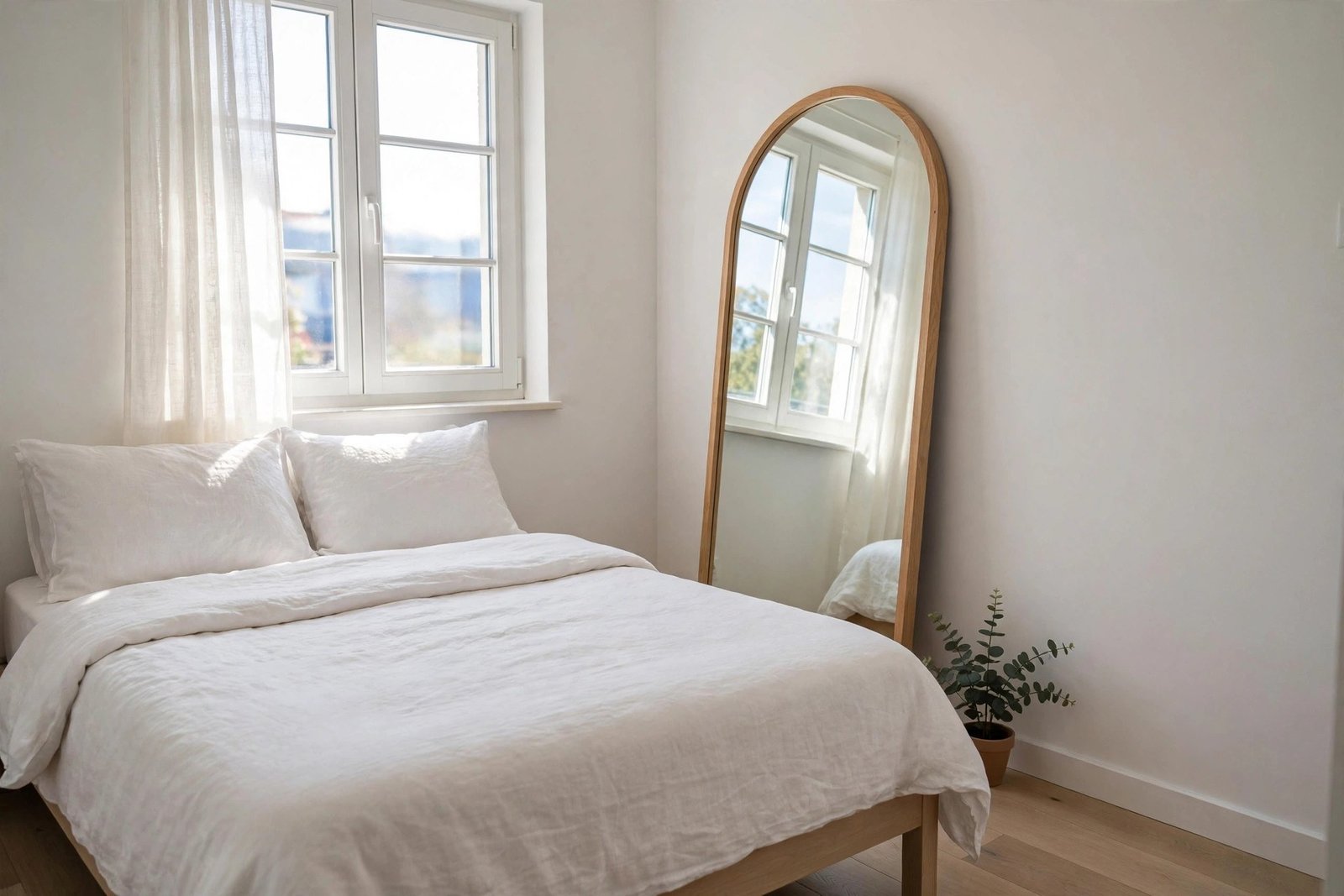
A tall mirror leaned opposite the window bounces daylight into the darkest part of the room. No fixings: it leans, with felt pads at the contact points and an adhesive anti-tip strap for safety. Angled slightly up, it reflects light rather than the unmade bed.
Cost: ~$45–85 • Best for: a dark bedroom with one small window • Measure first: wall height and lean space, about 15 cm of floor depth for the base • Watch out: always strap it; a leaning mirror without an anti-tip strap is a hazard, not decor.
15. The one-palette textile swap

Finish with the system that ties the room together: pick one palette, two colours plus a neutral, and swap every small textile into it at once. Cushion covers, the bed throw and curtain tie-backs should all answer to the same two colours. Covers swap in minutes and make earlier ideas look deliberate.
Cost: ~$25–45 for covers and tie-backs • Best for: a room of good pieces that do not match • Measure first: cushion pad sizes before ordering covers; covers should match the pad, not the old cover • Watch out: keep one neutral in the mix; two strong colours with no rest between them shout.
Common mistakes we’d skip
- Spreading colour everywhere. Five accent colours in a small bedroom cancel each other out. One palette, repeated, is what reads as decorated.
- Buying small. Small rugs, small art and small cushions make a small room feel smaller. Fewer, larger pieces calm it.
- Fighting the bed. The bed is most of the room. If the bedding, headboard zone and bedside light are unresolved, no accessory will save it.
- Hiding the landlord’s things badly. Curtains and fittings you remove must be stored flat, labelled and refitted. A deposit argument undoes a year of good decor.
The short version
Colour the bed first, give the wall behind it one shape, drop the light to a warm pair of lamps or sconces, anchor the floor with one large rug, and tie every textile to a single palette. No paint, no drills, and every piece leaves with you.
Questions renters ask
How do I add colour when I cannot paint and my furniture is mismatched?
Let textiles carry it. Bedding, curtains, cushion covers and a throw in one repeated palette cover more visible surface than a wall would, and mismatched furniture fades behind a consistent scheme.
Will a wall decal damage the paint when it comes off?
On sound, smooth paint, a quality peel-and-stick decal usually peels clean, especially warmed gently and pulled back slowly at a low angle. Weak or flaking paint can lift, so test a hidden corner first, exactly as you would with wallpaper.
My bedroom is too small for a bench and big rug. What matters most?
Ideas 1, 2 and 6: layered bedding, the arch behind the bed, and paired lamps. They need no extra floor at all and change what you see from the doorway, which is most of the room’s impression.
How do I make the room feel warm at night without the ceiling light?
Layer two low sources: bedside lamps or plug-in sconces for reading, plus string lights on a timer for background glow. Warm bulbs, around 2700K, in every source keep the layers agreeing.
Pin this post for later
Save it to Pinterest for later, or tell us your smallest-space problem in the comments — the best posts here started as a reader’s awkward space.
📌 Pin this post for later 🖨 Print this post