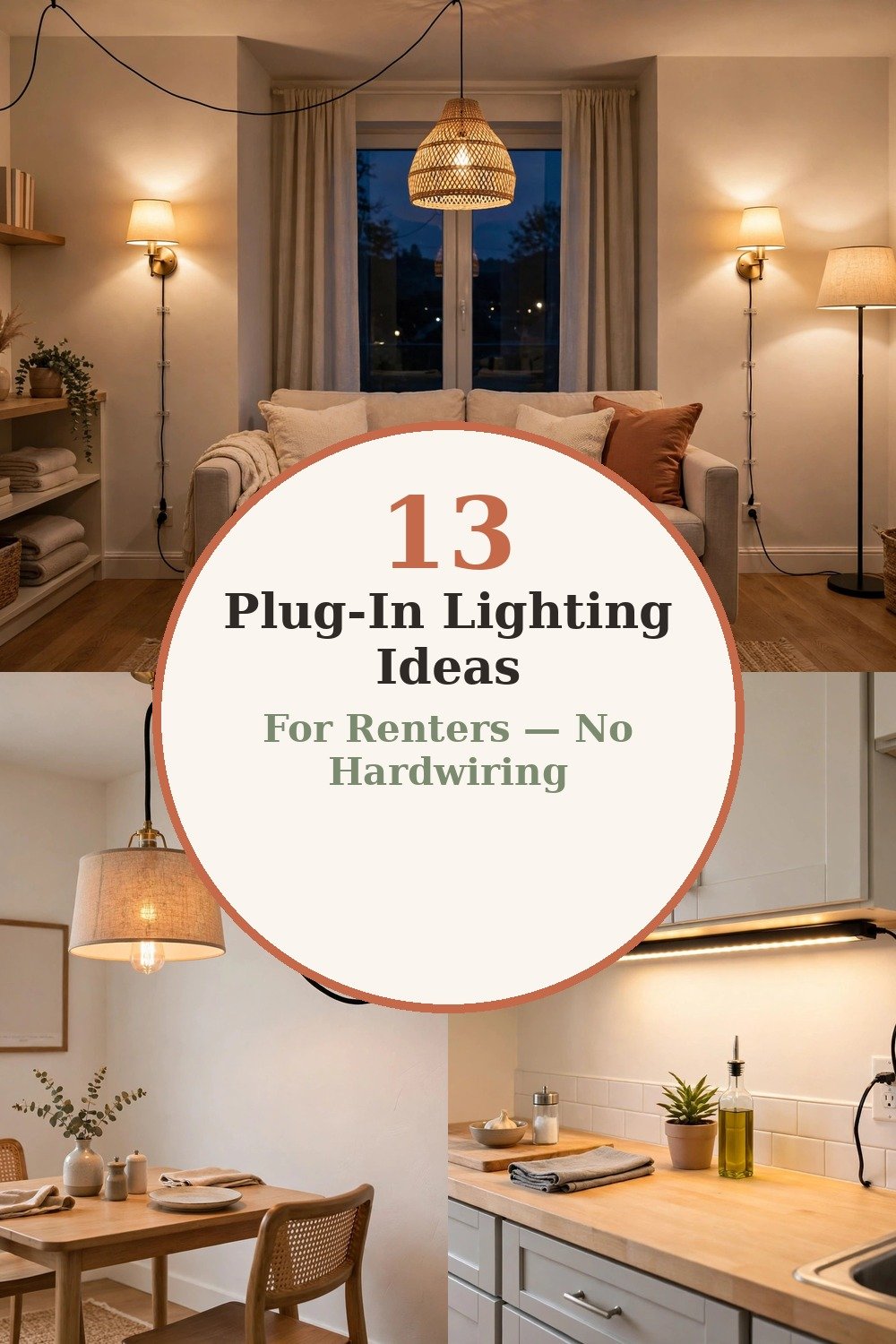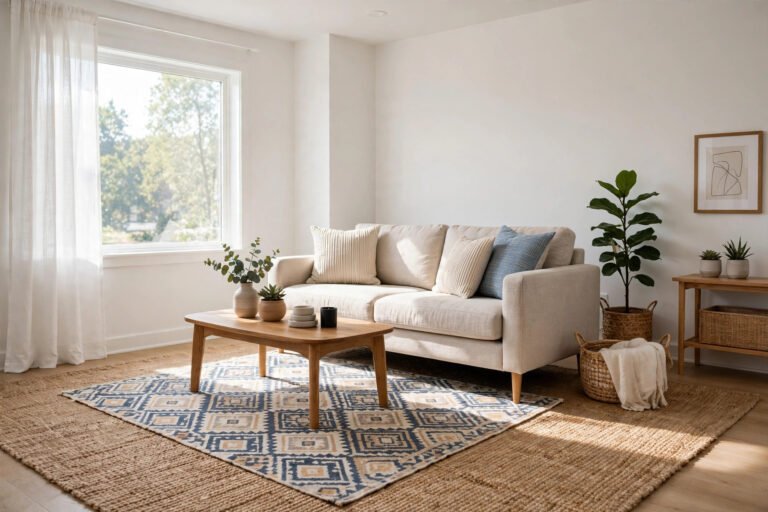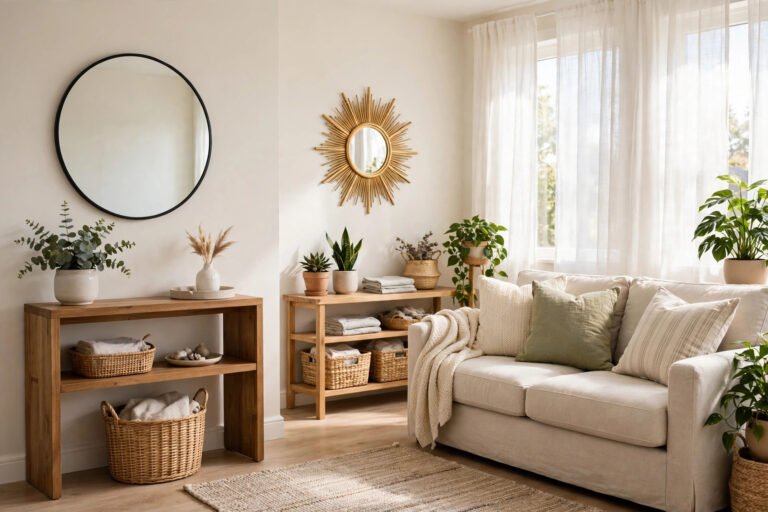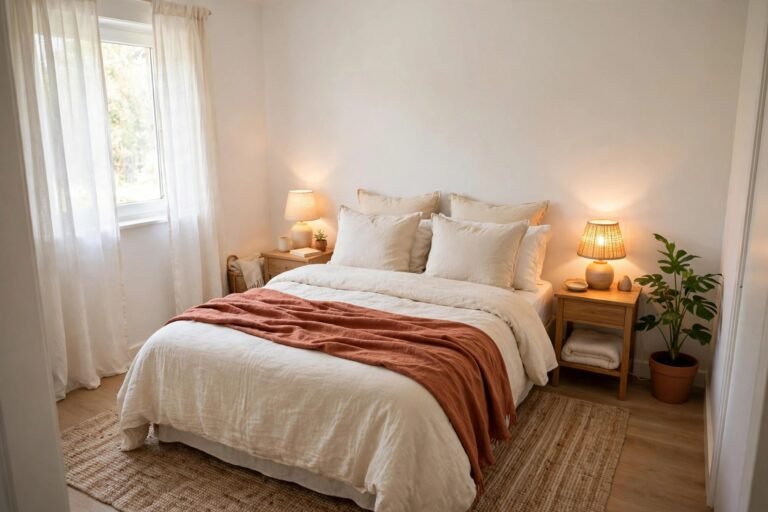


Most rentals have one harsh ceiling light per room and nothing else, which is why a tidy room can still feel cold and unfinished at night. These plug-in lighting ideas for renters fix that without touching a wire, a ceiling rose, or a landlord fixture. Every idea plugs into a socket you already have, and every cord is planned, covered, or hidden rather than trailed.
Start with bulb warmth, not fittings. Choose bulbs around 2700K wherever you relax, keep every bulb in one room at the same warmth, and measure the distance from the fitting to the nearest socket before you buy. Warm layered light is also the finishing step in our rental-friendly living room ideas and our no-drill decor ideas.
In this post
About 9 min read · 100% renter-friendly — no drills, no nails, no paint.
The 30-second version
- Do these 3 first, in order: a swag pendant over the table (idea 1), an under-cabinet bar in the kitchen (idea 4), then one corner uplight (idea 8). About $55 to $95 together.
- 13 ideas, zero hardwiring, zero drills. Everything plugs in, clamps on, sticks on, or stands on the floor, and leaves with you.
- Typical cost: most renters need three or four lights, about $60 to $120 in total. Measure socket distance first; our Free Renter Printables hub has the worksheets.
Replace the one harsh overhead light
1. A swag pendant over the dining table
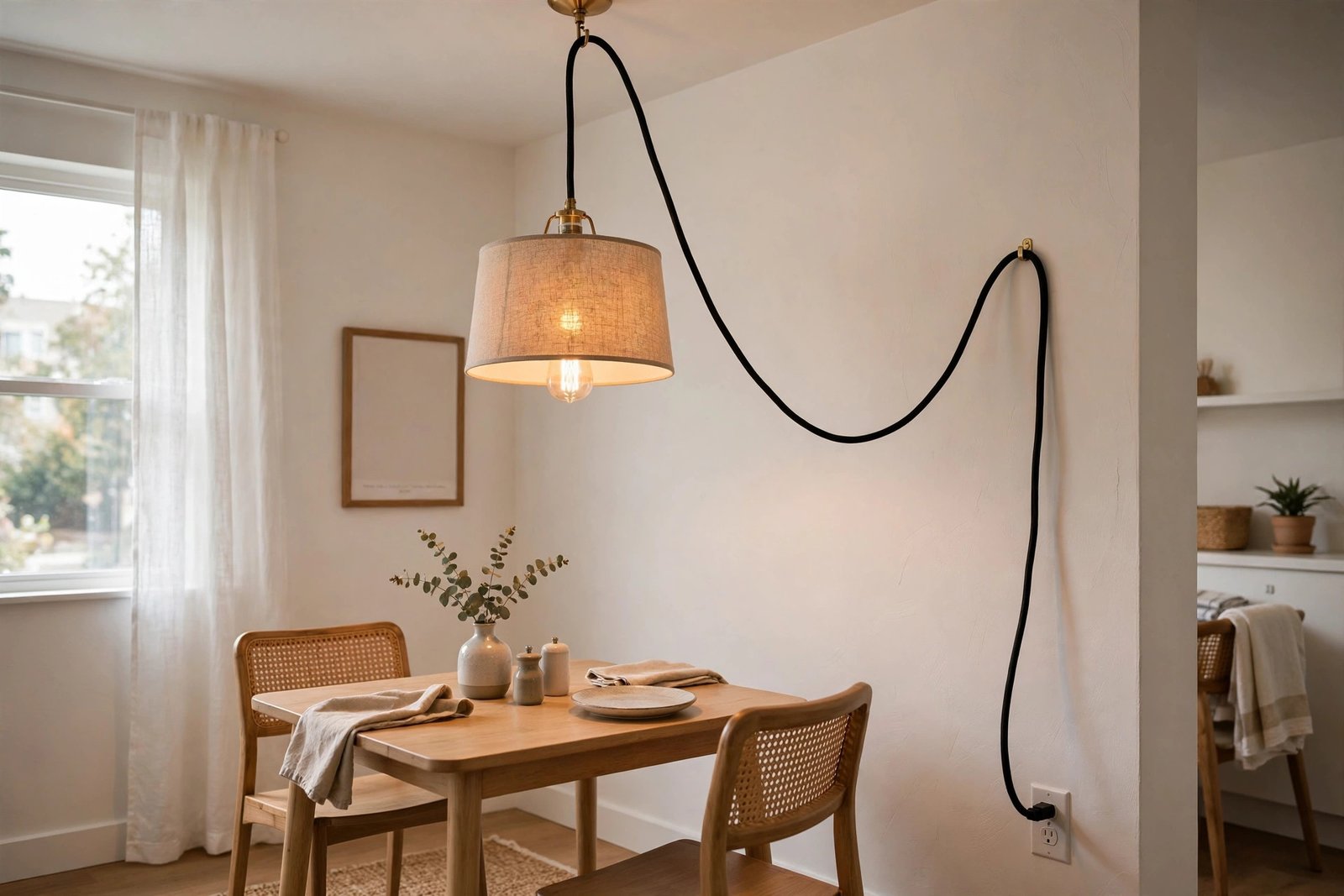
A plug-in pendant on a long cord hangs from one rated ceiling hook, swags across, and drops over the table where the light should be, not where the ceiling rose happens to sit. A shade about 30 to 40 cm (12 to 16 in) wide over a small table, hung about 75 cm (30 in) above the tabletop, makes even a corner dining set feel deliberate.
Cost: ~$25-45 • Best for: dining tables and kitchen islands stuck outside the ceiling light’s reach • Measure first: cord length from socket to hook to drop, commonly 4 to 5 m (13 to 16 ft), and shade height above the table • Watch out: the hook must be rated for the shade’s weight; glass shades are too heavy for adhesive hooks.
2. Plug-in swing-arm sconces beside the sofa
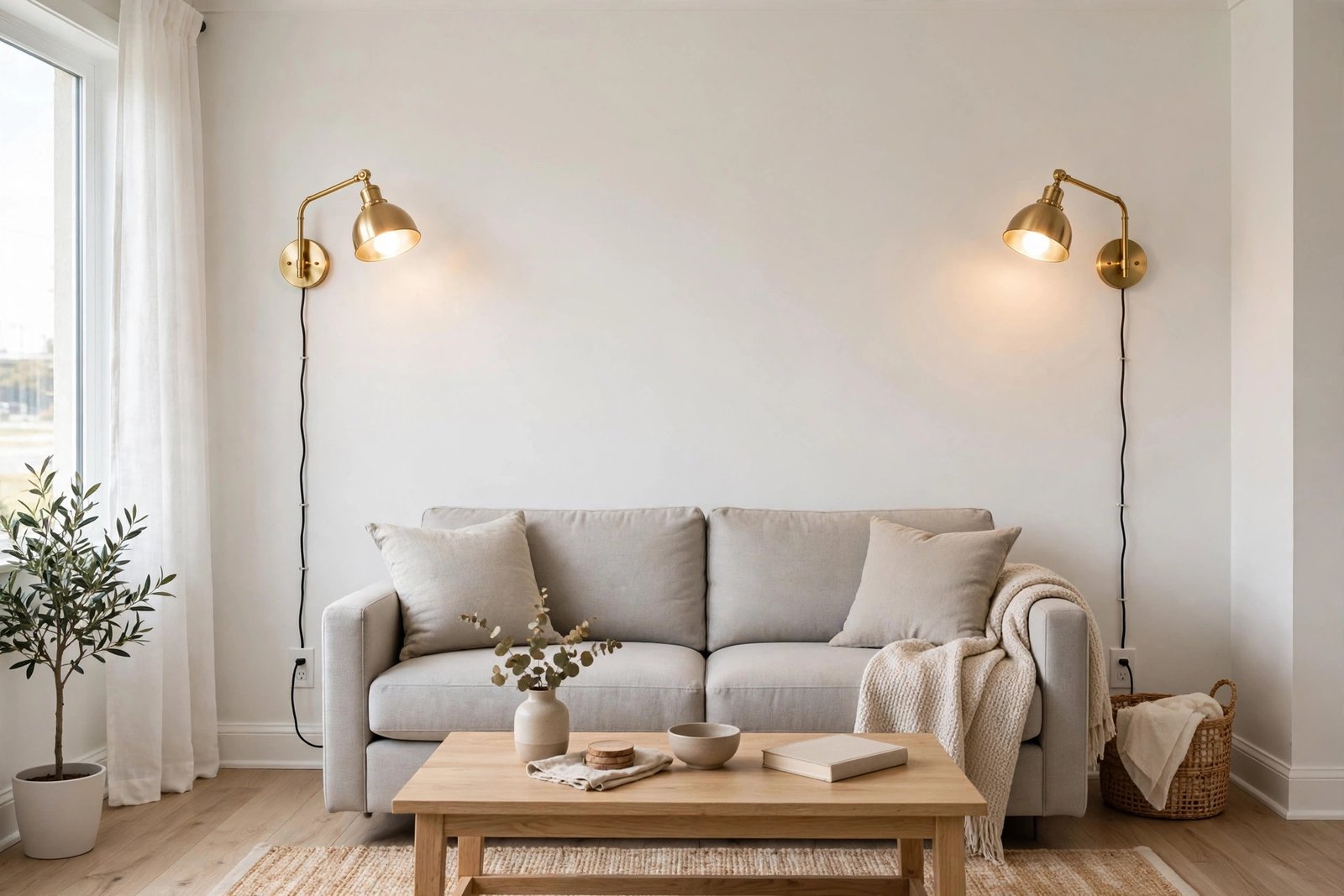
Two plug-in sconces flank a sofa or bed and give you the fitted look without an electrician. Mount the backplates only with fixings rated for their weight, run each cord straight down inside a paintable cover, and aim for shades at about eye level when seated, roughly 110 to 120 cm (43 to 47 in) from the floor.
Cost: ~$30-55 per pair • Best for: living rooms and bedrooms with no bedside or reading light • Measure first: cord reach to the nearest socket, and backplate weight against your fixing’s rating • Watch out: swing arms drift if the joint is loose; tighten it before you mount, not after.
3. An arc floor lamp over the reading chair
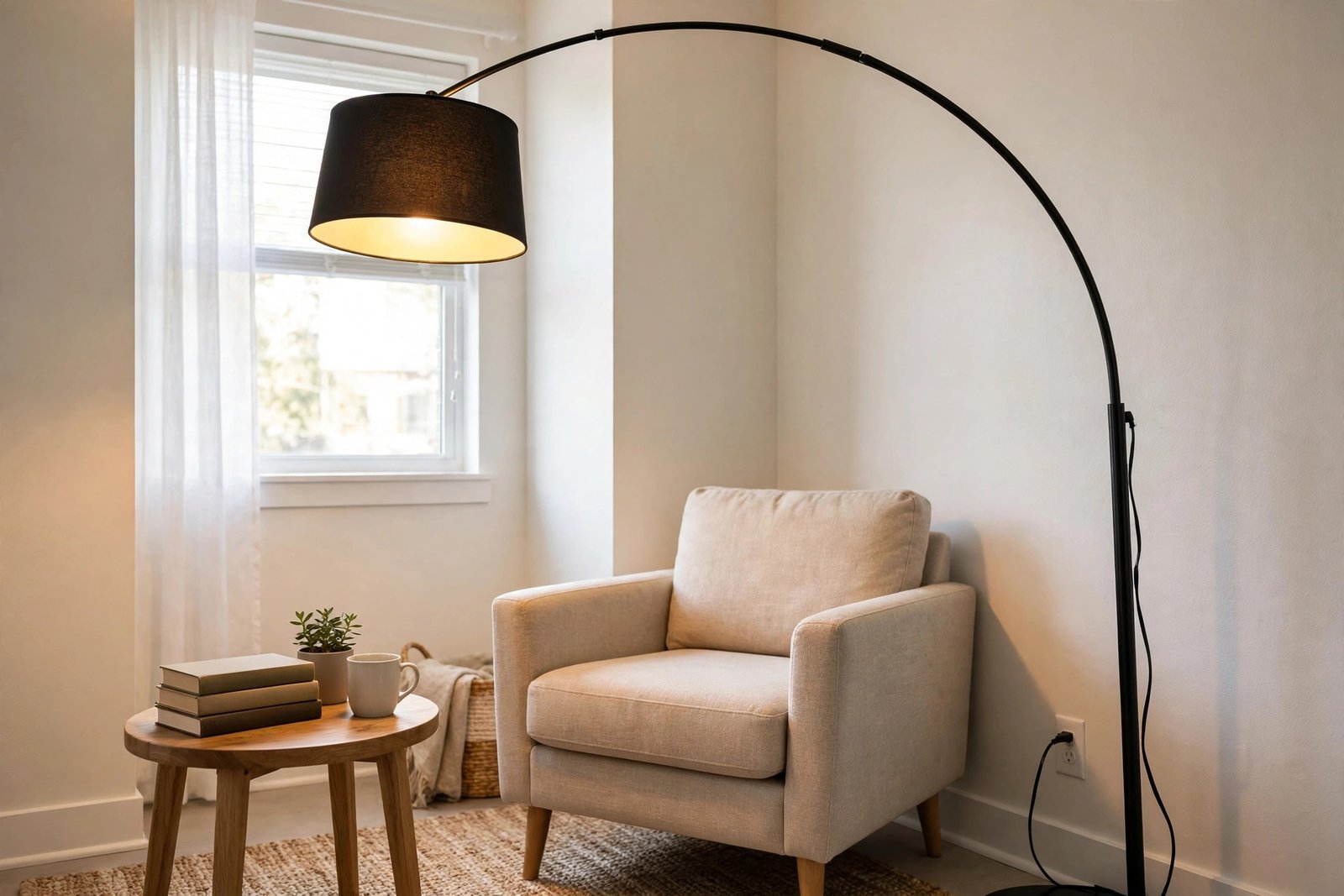
An arc lamp does the pendant’s job from the floor. The heavy base tucks behind a chair or sofa, the stem clears about 180 to 200 cm (71 to 79 in), and the shade lands over your book. It needs no hook, no fixing, and no permission, and it moves when the furniture moves.
Cost: ~$45-80 • Best for: reading corners and renters who will not touch a ceiling at all • Measure first: stem height against door swings and ceiling height, and base depth behind the chair • Watch out: cheap arcs lean over time; choose a base that feels heavy in the shop, ideally 8 kg (about 18 lb) or more.
Task light where rentals leave you dark
4. An under-cabinet LED bar in the kitchen

A slim plug-in bar under the wall cabinets lights the worktop you actually chop on, instead of casting your own shadow over it. Bars come in lengths around 30, 45 and 60 cm (12, 18 and 24 in), fit with adhesive pads or clips, and link in a run. It pairs with the door storage in our cabinet-door storage ideas.
Cost: ~$15-28 • Best for: dark worktops in small rental kitchens • Measure first: cabinet underside length, and the drop from cabinet to socket for the cord • Watch out: keep bars and cords clear of kettle steam; heat and steam loosen adhesive pads within months.
5. A plug-in picture light above your art

A slim picture light above a frame makes a plain print look gallery priced. Choose a bar about half to two-thirds the frame’s width, sit it about 15 to 20 cm (6 to 8 in) above the frame, and let the cord drop behind the frame inside a cover. It is the natural partner to our gallery wall ideas.
Cost: ~$18-32 • Best for: one hero print or the centre of a gallery wall • Measure first: frame width first, then cord reach down to a socket behind furniture • Watch out: light from too close makes a hot stripe across glass; pull the bar forwards on its bracket if yours adjusts.
6. A clamp lamp on the desk edge

A plug-in clamp lamp grips a desk or shelf edge about 2 to 5 cm (1 to 2 in) thick and puts task light exactly over the keyboard, with no desk space lost to a base. Aim the head about 40 cm (16 in) above the desk and angle it from the side opposite your writing hand.
Cost: ~$16-30 • Best for: work corners, study desks and craft tables in spare rooms • Measure first: desk edge thickness for the clamp, and cord reach to the socket without crossing your chair wheels • Watch out: clamps mark soft wood edges; slip a folded card inside the jaws before you tighten.
7. A plug-in vanity bar beside the mirror

Rental bathrooms usually light you from directly overhead, which shadows every face. A plug-in vanity bar or a pair of stick-on bulb strips at mirror height, about 150 to 160 cm (59 to 63 in), gives even light from the front. Keep fittings and cords well away from splashes, and see our small bathroom storage ideas for the rest of the room.
Cost: ~$20-35 • Best for: small bathrooms with one harsh ceiling light • Measure first: mirror width, and the distance from the mirror edge to the socket • Watch out: only use fittings rated for bathroom zones near a sink; a bedroom light bar does not belong beside a shower.
Shopping for these? Measure first.
Socket distance, cord length and shade size decide the light. Our Free Renter Printables hub has the worksheets.
Corners, cabinets and shelves
8. A corner uplight behind a plant
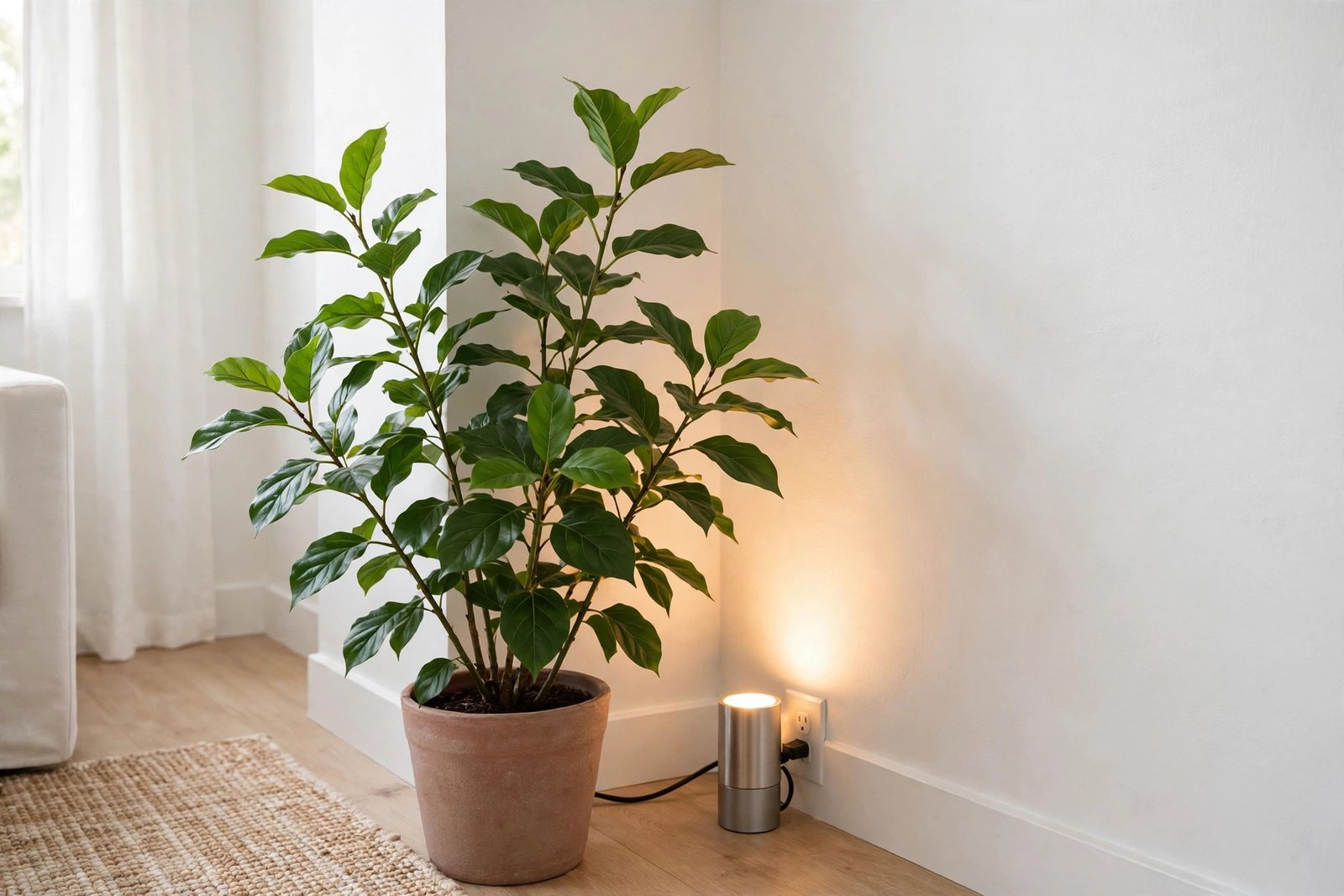
A small canister uplight on the floor, hidden behind a plant pot or a chair leg, washes warm light up a bare corner and up the wall. Corners are where rental rooms look emptiest, and this is the cheapest idea in the post. Use a bulb around 2700K and a can about 12 to 15 cm (5 to 6 in) tall.
Cost: ~$12-20 • Best for: dead living room corners and the space beside a media unit • Measure first: floor space behind the plant, and cord reach along the skirting to the socket • Watch out: keep fabric and trailing leaves at least 30 cm (12 in) clear of the bulb.
9. LED strips along a shelf edge

A plug-in LED strip under a shelf or along the top of a bookcase adds the soft background glow that makes a room feel layered rather than lit. Strips cut to length at marked points, commonly every 5 to 10 cm (2 to 4 in), and stick along the shelf’s front underside so you see the glow, not the diodes.
Cost: ~$12-22 • Best for: bookcases, media shelves and the top of kitchen cabinets • Measure first: total shelf run in one length, and where the strip’s power lead drops to a socket • Watch out: cheap strips peel in warm rooms; degrease the surface first and add the small clips most kits include.
10. Puck lights in dark cabinets and closets

Small round puck lights, about 7 to 9 cm (3 in) across, stick under a shelf or inside a cabinet and turn a dark cupboard into a usable one. Choose rechargeable or plug-in sets with a remote if the cabinet is deep. Our tiny closet ideas use the same trick for wardrobe rails.
Cost: ~$14-24 for a set of three to six • Best for: deep kitchen cabinets, wardrobes and under-sink cupboards • Measure first: shelf depth and the clearance above the tallest item the door must still close past • Watch out: pucks eat batteries; rechargeable sets cost more once and far less over a year.
After dark, and the finishing touches
11. Plug-in night lights for the hallway run
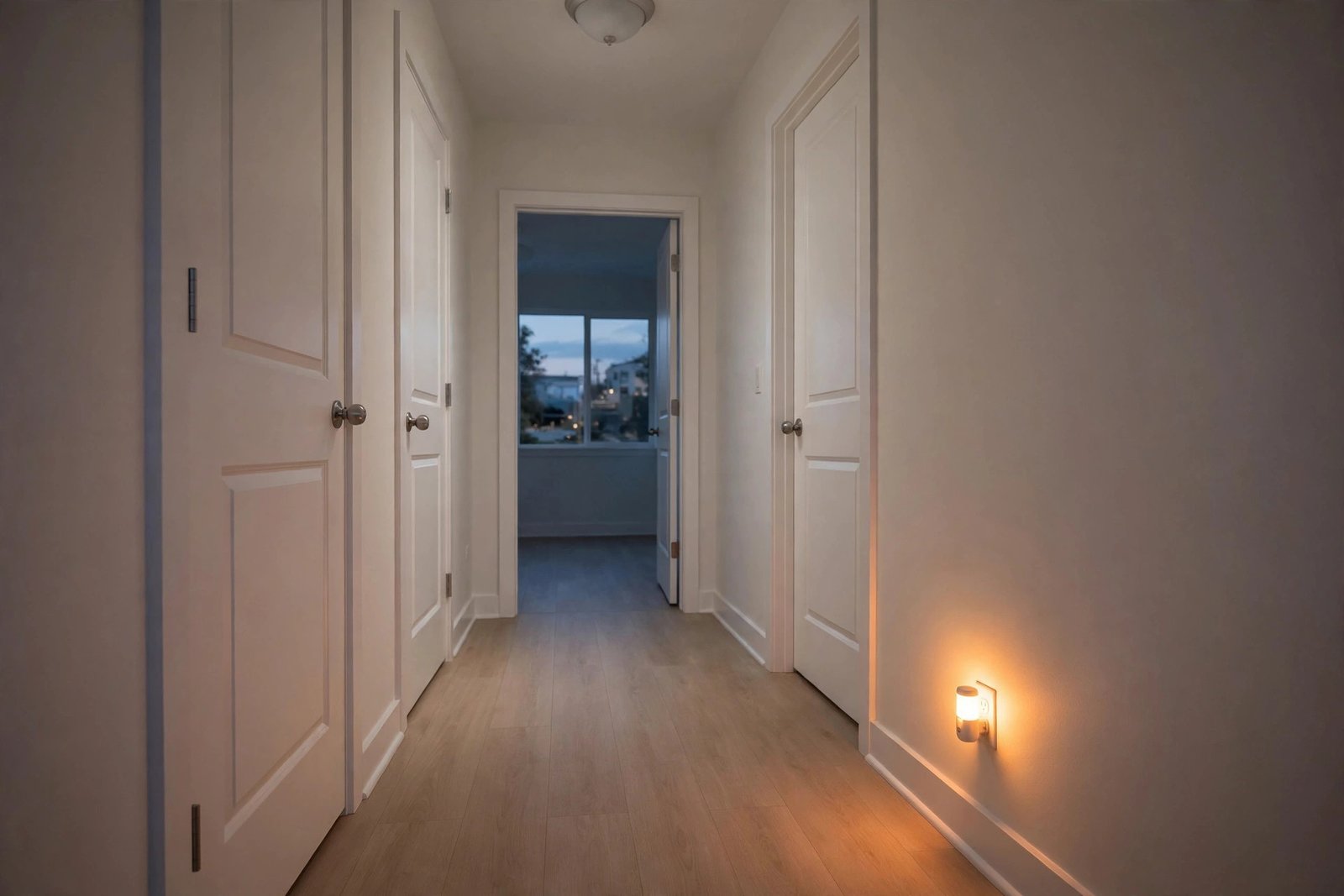
A warm plug-in night light with a motion or dusk sensor, low on a hallway socket, lights the route to the bathroom without a ceiling light at full blast. Output around 10 to 30 lumens is enough to see by and not enough to wake you fully.
Cost: ~$8-15 • Best for: hallways, landings and the socket outside a bathroom • Measure first: socket height and whether the fitting blocks the socket’s second outlet • Watch out: cool white night lights feel clinical at 3 a.m.; choose warm white, around 2700K.
12. String lights on a plug-in timer
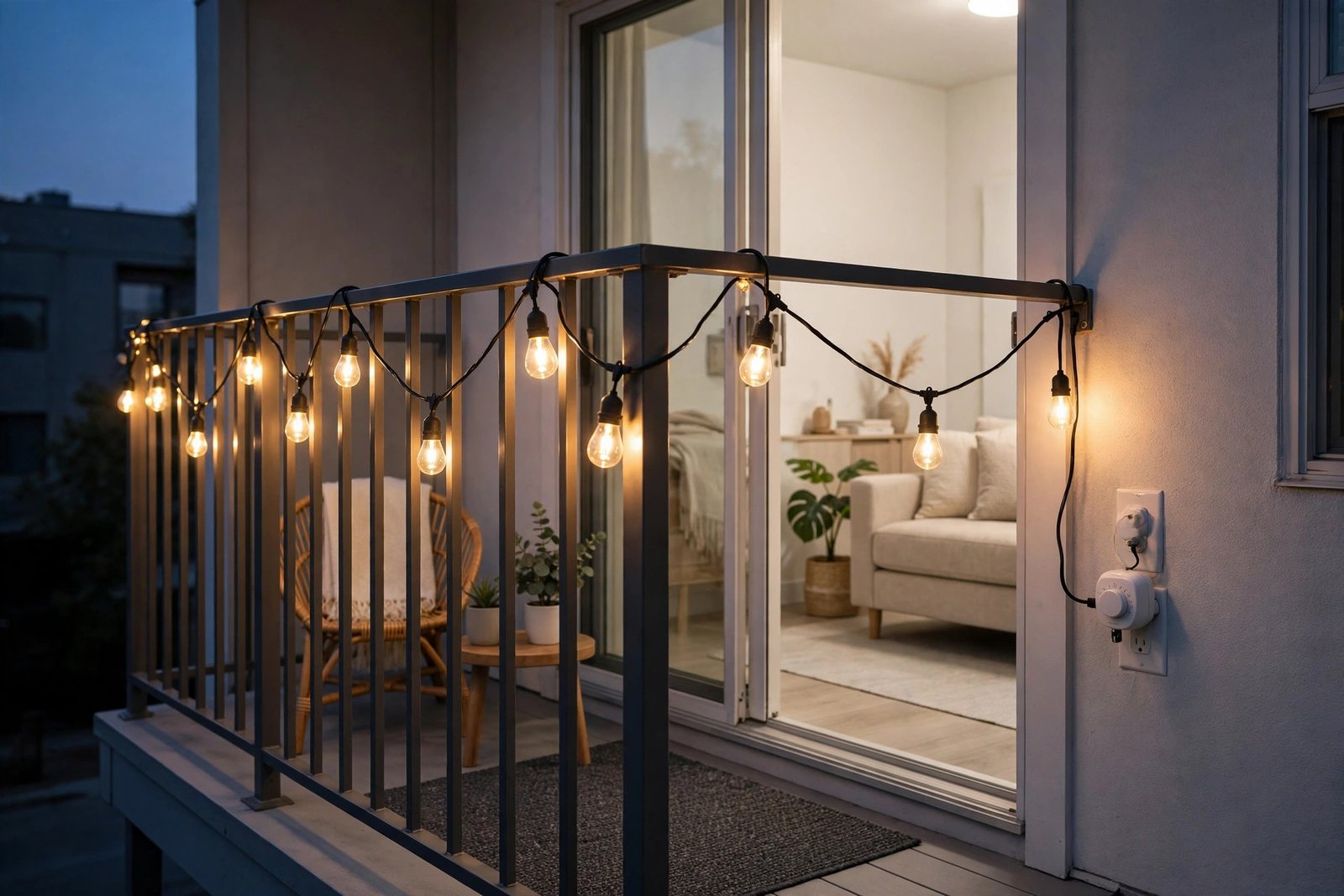
A warm string of lights along a shelf or a balcony rail is atmosphere for very little money, and on a plug-in timer it comes on at dusk and off at bedtime by itself. A 5 to 10 m (16 to 33 ft) string covers a small balcony rail or two shelves. For the balcony itself, see our small balcony ideas.
Cost: ~$12-25 • Best for: balconies, shelves and the top of a headboard • Measure first: the full run with slack for swags, about 20 percent more than the straight distance • Watch out: outdoor use needs an outdoor rated string and a weatherproof socket; indoor strings stay indoors.
13. Cord covers and one timer for the whole system
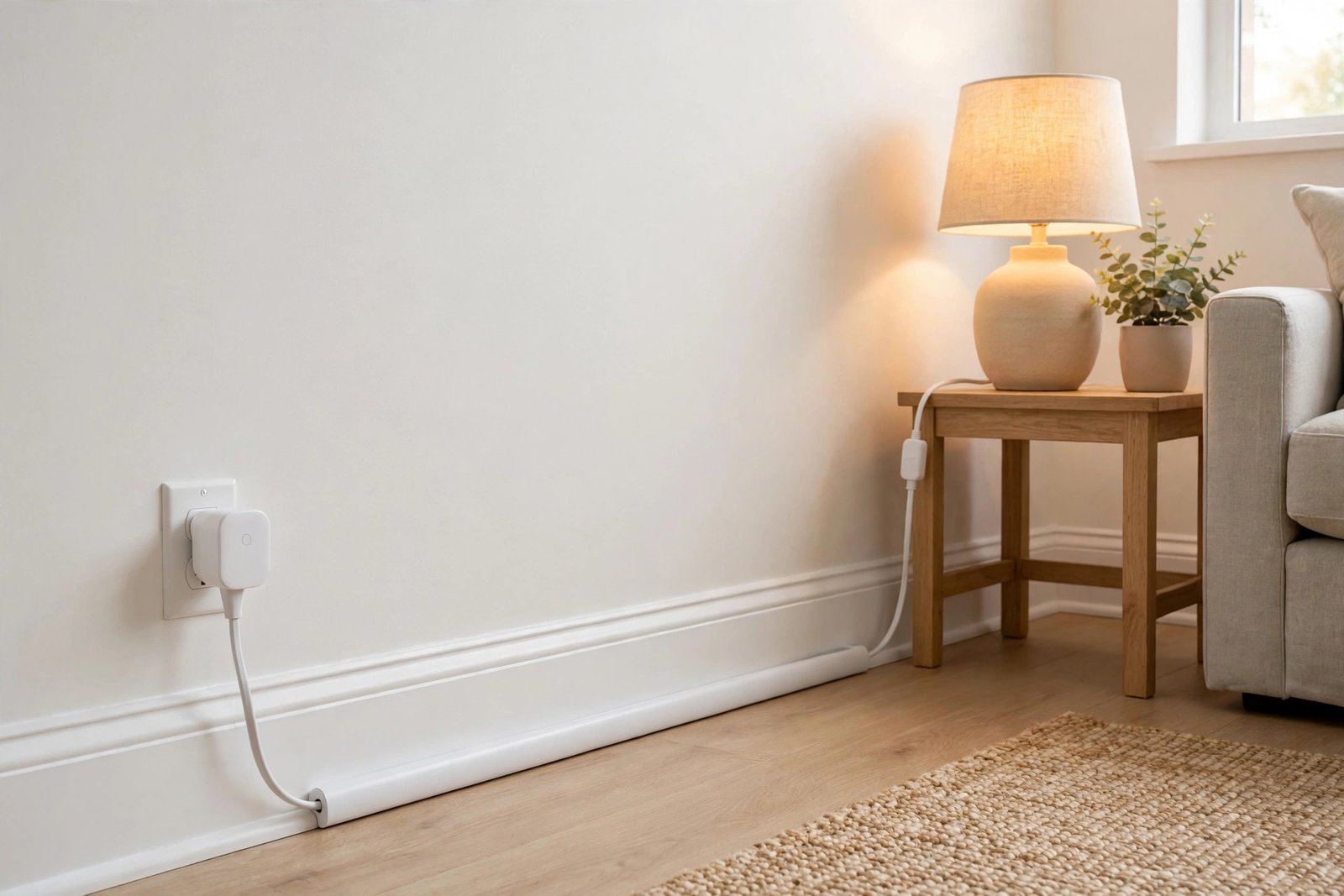
Plug-in light only looks finished when the cords disappear. Run cords straight down or along the skirting inside paintable covers about 1.5 to 2 cm (about 0.6 to 0.8 in) wide, then put the room’s lamps on one plug-in timer or smart plug so the whole layer switches together. This is the step that separates fitted from temporary.
Cost: ~$10-20 • Best for: every other idea in this post, especially sconces and pendants • Measure first: total cord run per room, and cover width against your thickest cord • Watch out: never run a cord under a rug where feet crush it, and never cover a cord that feels warm in use.
Common mistakes we’d skip
- Mixing bulb warmth in one room. A 2700K lamp beside a 4000K ceiling bulb looks like two different rooms. Match the kelvin number on every box, or swap the ceiling bulb for a warm one where your lease allows a bulb change.
- Buying the fitting before measuring the socket. Half of plug-in returns are cord problems, not light problems. Socket distance first, always.
- Lighting only from above. One ceiling light flattens everything. The finished look comes from three heights: low uplights, mid-height lamps and sconces, and one pendant.
- Letting cords trail. A visible diagonal cord undoes a good light. Covers, clips and skirting runs cost a few dollars and take ten minutes.
The short version
Warmth is a system, not a lamp. Hang one pendant where people gather, add task light where you work, wash one dark corner from the floor, then hide every cord and put the layer on a timer.
Questions renters ask
Can I really hang a pendant without an electrician or drilling?
A plug-in swag pendant, yes. It hangs from one rated ceiling hook, and its cord plugs into a wall socket. Use a hook and fixing rated well above the shade’s weight, choose a light fabric or paper shade, and test the hook’s hold before you hang anything glass, which this post advises against.
Are plug-in sconces safe on adhesive fixings?
Only within the fixing’s rated weight, on smooth, clean, fully dry paint, with margin to spare. Weigh the sconce, rate the fixing at least 1 kg (about 2 lb) above that, and give heavy metal sconces a proper rated fixing or choose a floor lamp instead.
What bulb warmth makes a rental feel warm, not yellow?
Around 2700K, matched across the room. Warmer, near 2200K, suits bedrooms and string lights. Daylight bulbs around 5000K are the usual reason a room feels like an office.
How do I hide cords without chasing walls?
Run them vertically or along the skirting inside paintable cord covers (idea 13), drop them behind furniture where you can, and clip them at the shelf edge for strips and bars. Never pin a cord through its insulation, and never run one under a rug.
Found this useful?
Save it to Pinterest for later, or tell us your smallest-space problem in the comments — the best posts here started as a reader’s awkward room.
📌 PIN THIS FOR LATER