

Your weekly reset already handles counters, floors and mirrors. What it never reaches is the inside of the oven, the grout, the window tracks and the mattress. This monthly cleaning schedule for apartments covers only those deeper jobs, split into one zone a week, so no single day carries them all. Four short sessions a month, each under an hour in a small rental, and nothing here is a landlord job or a deposit risk.
The rule is simple: if your 30-minute weekly reset or your nightly cleaning routine for apartments already does it, it is not on this list. This rotation sits underneath them, and underneath our one-off moving into a rental cleaning checklist, a deep clean you do once, not monthly.
In this post
- The 30-second version
- Week 1: kitchen deep (tasks 1 to 4)
- Week 2: bathroom deep (tasks 5 to 8)
- Week 3: floors, windows and air (tasks 9 to 12)
- Week 4: sleep and soft things (tasks 13 to 16)
- Common mistakes we’d skip
- The short version
- Questions renters ask
The 30-second version
- Do these 3 first, in order: clean inside the oven (task 1), scrub the bathroom grout (task 5), and rotate and vacuum the mattress (task 13). Combined cost: about $8 to $18 in basics you likely own.
- 16 deep tasks, zero drills, zero landlord jobs. One zone a week, 30 to 60 minutes a session in a small apartment.
- Typical cost: about $15 to $30 a month in refills if you start from nothing, near $0 once the kit exists. The printable rotation lives in our Free Renter Printables hub.
Week 1: kitchen deep
1. Clean inside the oven, the renter-safe way
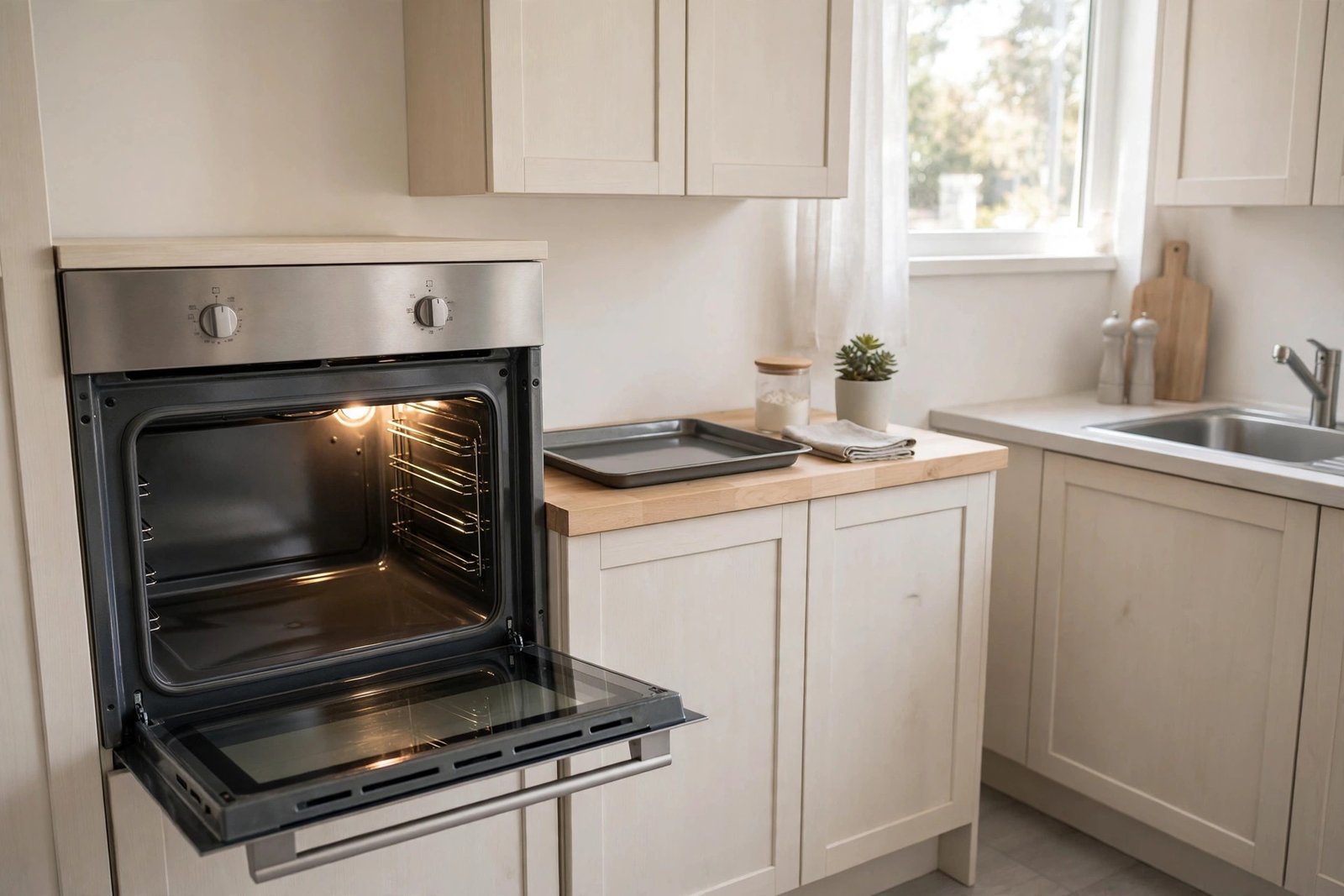
Weekly wipes never touch the oven interior, so grease bakes on in layers. Spread a paste of bicarbonate of soda and water on cool enamel, leave it overnight, then wipe and rinse. It lifts grease without harsh fumes or scratching. Never use a caustic spray on a landlord’s oven without checking the manual first.
Cost: ~$2–4 • Best for: ovens that smoke when they heat • Measure first: about 8 hours of paste time, mostly overnight • Watch out: keep paste off elements and the door seal; wipe fully before cooking.
2. Deep-clean inside the fridge, seals included
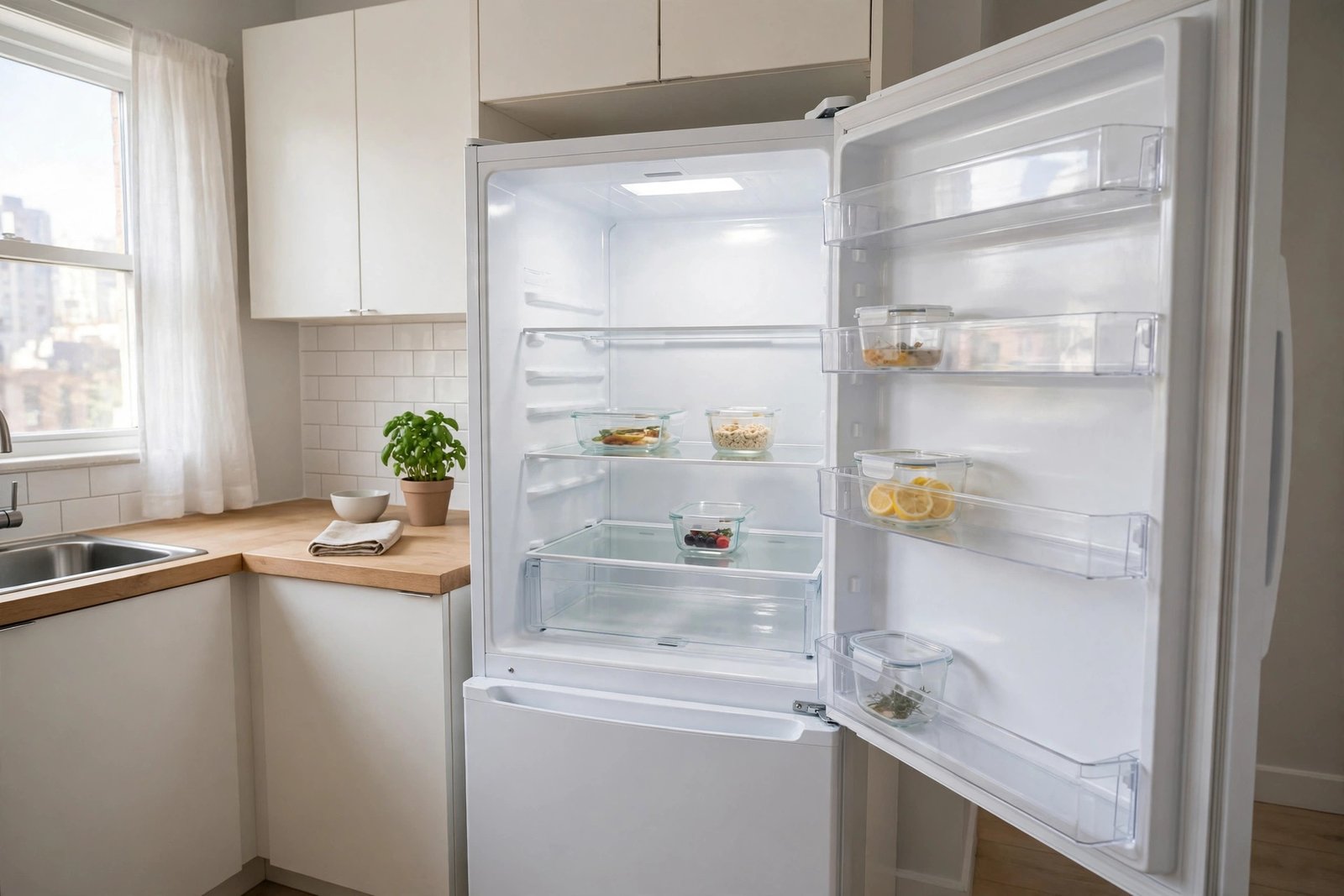
Empty one shelf at a time into a cool bag, wash shelves and drawers in warm soapy water, and wipe the door seals, where crumbs and mould gather. Dry everything before it goes back. This is cleaning, not sorting: once clean, our small fridge organization ideas puts it back in order. Check the drip tray if reachable, and leave coils alone.
Cost: ~$0–2 • Best for: fridges with sticky shelves or a stale smell • Measure first: shelf width before washing • Watch out: never chip ice with a knife; let glass shelves warm before hot water.
3. Degrease the range hood filter

The hood filter fills with grease until the fan stops clearing steam. Slide it out, soak it in hot water with washing-up liquid for 20 minutes, rinse and dry it fully before refitting. Wipe the hood underside while it soaks. A clean filter is also safer: grease near a hob is a fire risk.
Cost: ~$0–1 • Best for: kitchens where steam no longer clears • Measure first: 20 minutes soaking, plus full drying before refitting • Watch out: if the filter will not slide out easily, stop; a fixed hood is a landlord item.
4. Descale the kettle and coffee maker, then wash the bin

Limescale slows a kettle and taints coffee. Descale both with citric acid solution, rinse well, and boil fresh water once before drinking. Then wash the kitchen bin inside and out and dry it before the new liner goes in: five minutes that removes the smell surviving every bag change. Our kitchen drawer organization ideas keeps the tools for jobs like this in one drawer.
Cost: ~$2–5 • Best for: hard-water rentals and slow kettles • Measure first: kettle capacity, usually 1.5 to 1.7 litres, to cover the scale line • Watch out: never mix descaler with other cleaners; rinse the coffee maker twice.
Week 2: bathroom deep
5. Scrub the grout, gently

Grout darkens because weekly wipes skim over it. Work bicarbonate paste along the lines with a grout brush, leave it 15 minutes, then rinse, one small section at a time. Stop if grout is cracked or crumbling: regrouting is a landlord repair, and scrubbing damaged grout makes it worse.
Cost: ~$2–4 • Best for: shower grout that has greyed • Measure first: about 1 square metre per session, so paste stays damp • Watch out: patch-test coloured grout; avoid acid cleaners on stone tiles.
6. Descale the taps and showerhead
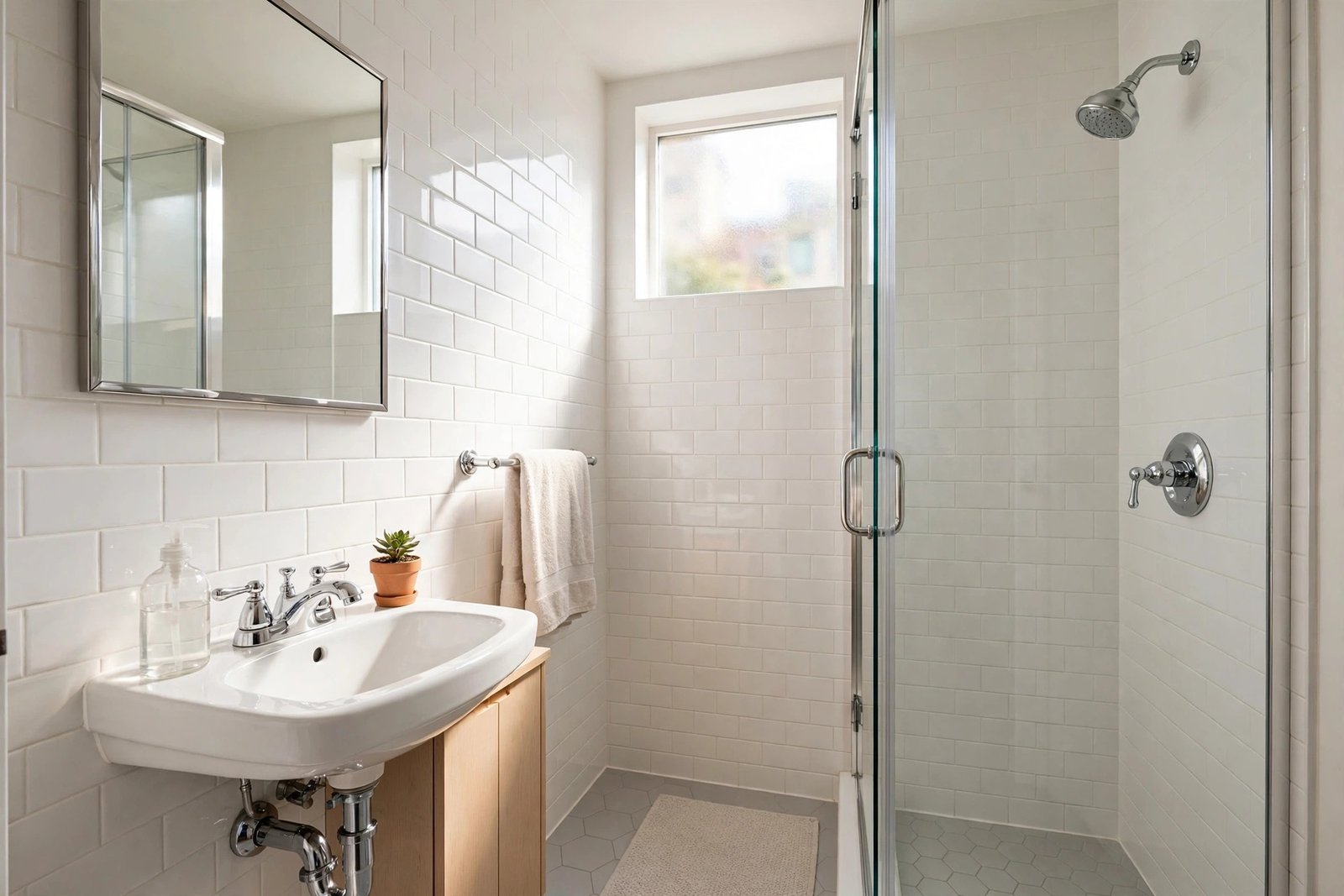
Scale chokes a showerhead into a crooked spray. Tie a bag of vinegar solution around the head for an hour, or soak it if it unscrews by hand. Wipe tap bases with the same solution, then rinse and buff dry. A clear spray makes the whole room read cleaner for almost no money.
Cost: ~$1–3 • Best for: weak shower spray in hard-water areas • Measure first: about 60 minutes soaking; do task 5 while you wait • Watch out: hand-tight only when refitting; a head needing tools is a landlord item.
7. Wash the shower curtain and liner
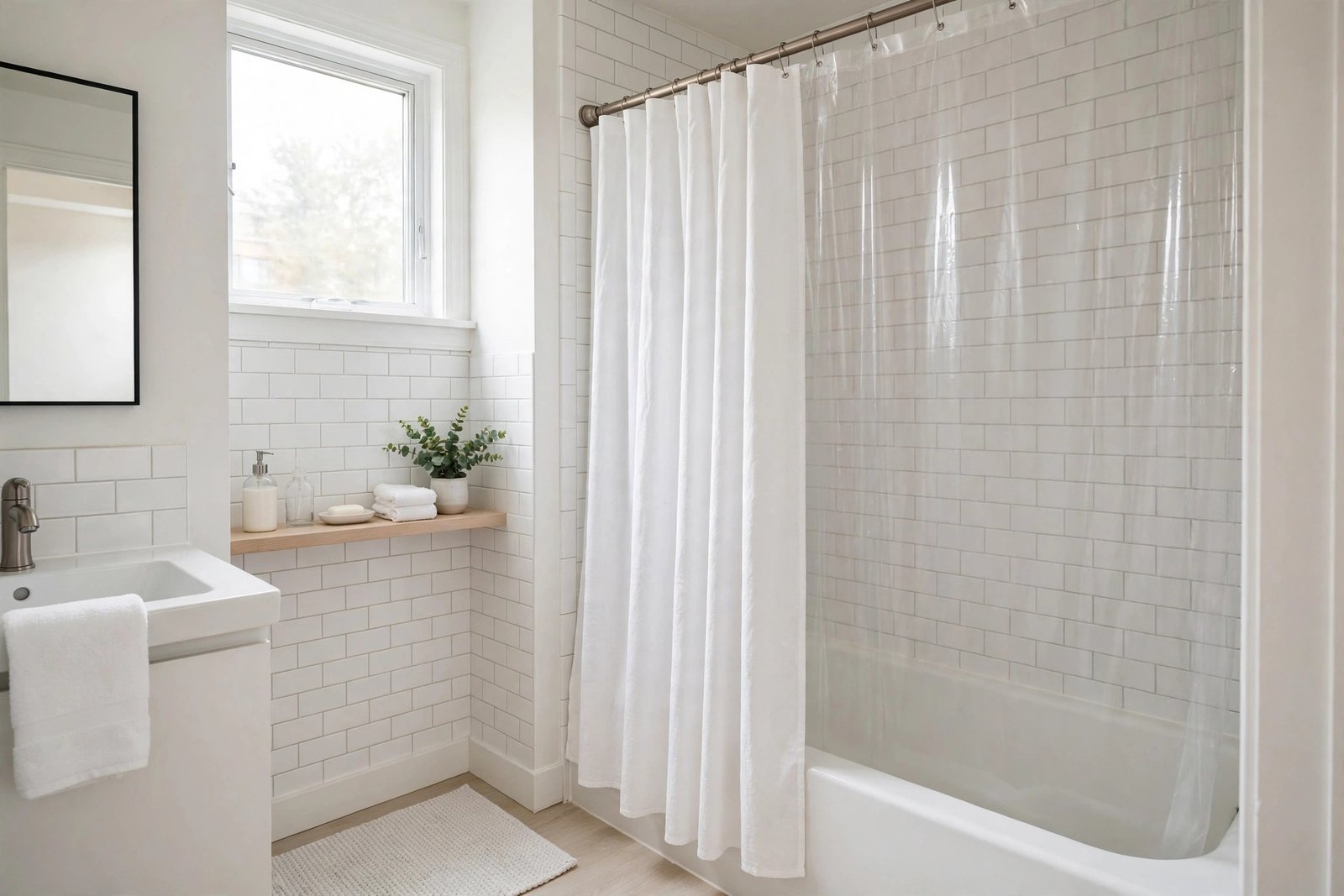
The liner mildews from the bottom up while the tiles get the attention. Wash curtain and liner on a gentle cycle with two towels for friction, or soak and rinse them in the bath. Hang them straight back up to dry fully. If the liner stays stained, replace it: the cheapest refresh in the bathroom.
Cost: ~$0–10, top end only if the liner is replaced • Best for: liners marked along the hem • Measure first: curtain width and drop, usually about 180 by 180 cm, before replacing • Watch out: check the care label; some curtains are hand-wash only.
8. Clean the fan cover and rotate bathroom supplies

A clogged extractor fan leaves steam to feed mildew. Vacuum the cover with a brush attachment, or wipe it if it does not come off by hand. Then rotate supplies: refills forward, empties out, spares where our small bathroom storage ideas keeps them. Do not open the fan unit itself.
Cost: ~$0 • Best for: bathrooms that stay steamy after a shower • Measure first: 10 minutes airing after, door or window open • Watch out: never wash a wired fan unit; switch it off before wiping.
Keeping the rotation going? Print it. Four weeks, sixteen tasks, one page per week, in our Free Renter Printables hub.
Week 3: floors, windows and air
9. Clean the window tracks, sills and inside glass

Tracks collect grit that grinds every time the window slides. Vacuum the track with a crevice tool, lift the rest with a damp cloth wrapped round a blunt knife, then clean the inside glass and sill. Inside glass only: exterior glass above the ground floor is not a tenant job.
Cost: ~$0–2 • Best for: sticky sliding windows and gritty sills • Measure first: track width against your crevice tool • Watch out: keep water minimal in wooden frames; dry tracks fully.
10. Wipe skirting boards, handles and light switches

These are the surfaces hands touch and eyes skip. Walk the home with a damp microfibre cloth: skirting boards first, then door handles, then light switches, wiped with a cloth that is damp, never wet. About 20 minutes in a small apartment, and it lifts the greyness that makes a clean room look tired.
Cost: ~$0 • Best for: homes that look dull a day after cleaning • Measure first: 20 minutes total; one cloth for boards, a clean second for switches • Watch out: no liquid into switches or sockets; damp cloth only.
11. Vacuum under the furniture you never move

Monthly, move what you safely can: sofa forward, rugs lifted, bed vacuumed beneath with help. Vacuum the floor weekly cleaning goes around, and mop hard floors there too. Dust under furniture is what keeps a small home feeling dusty however often the open floor gets done.
Cost: ~$0 • Best for: allergy-prone homes and under-bed dust • Measure first: furniture weight honestly; if it needs more than two people, use a crevice tool instead • Watch out: lift with bent knees and protect the floor from scrapes.
12. Rinse the filters your lease lets you touch

Washable extractor and air-conditioning filters clog slowly, then suddenly. If your lease and manual allow it, rinse the filter in warm water, dry it completely, and refit it. If it is disposable or the unit is sealed, note it for the landlord instead. Clean filters keep a small rental feeling fresh.
Cost: ~$0 for a rinse • Best for: extractors and air units with washable filters • Measure first: 12 to 24 hours drying before refitting; a damp filter grows mould • Watch out: boiler and fixed HVAC servicing is never a tenant job.
Week 4: sleep and soft things
13. Rotate and vacuum the mattress

Strip the bed, vacuum the mattress with an upholstery tool, and rotate it head to foot, flipping only if the maker says it is double-sided. Leave it airing while the bedding washes. Monthly vacuuming lifts trapped dust, and rotation evens out the dip where you sleep.
Cost: ~$0 • Best for: mattresses developing a dip • Measure first: about 30 minutes airing before fresh bedding goes on • Watch out: most modern mattresses are rotate-only; flipping a one-sided one ruins it.
14. Wash the pillows and the duvet

Bedding gets washed weekly; what sleeps inside it often goes a year. Wash pillows two at a time to balance the drum, and take the duvet to a laundromat’s large machine if yours is small. Dry everything fully before it goes back on the bed; a damp core smells within days.
Cost: ~$4–8 in laundry fees • Best for: pillows gone flat or yellowed • Measure first: drum size against the duvet; one that fills the drum cannot rinse properly • Watch out: feather and memory foam often cannot be machine-washed; check labels.
15. Vacuum the sofa and wash what comes off
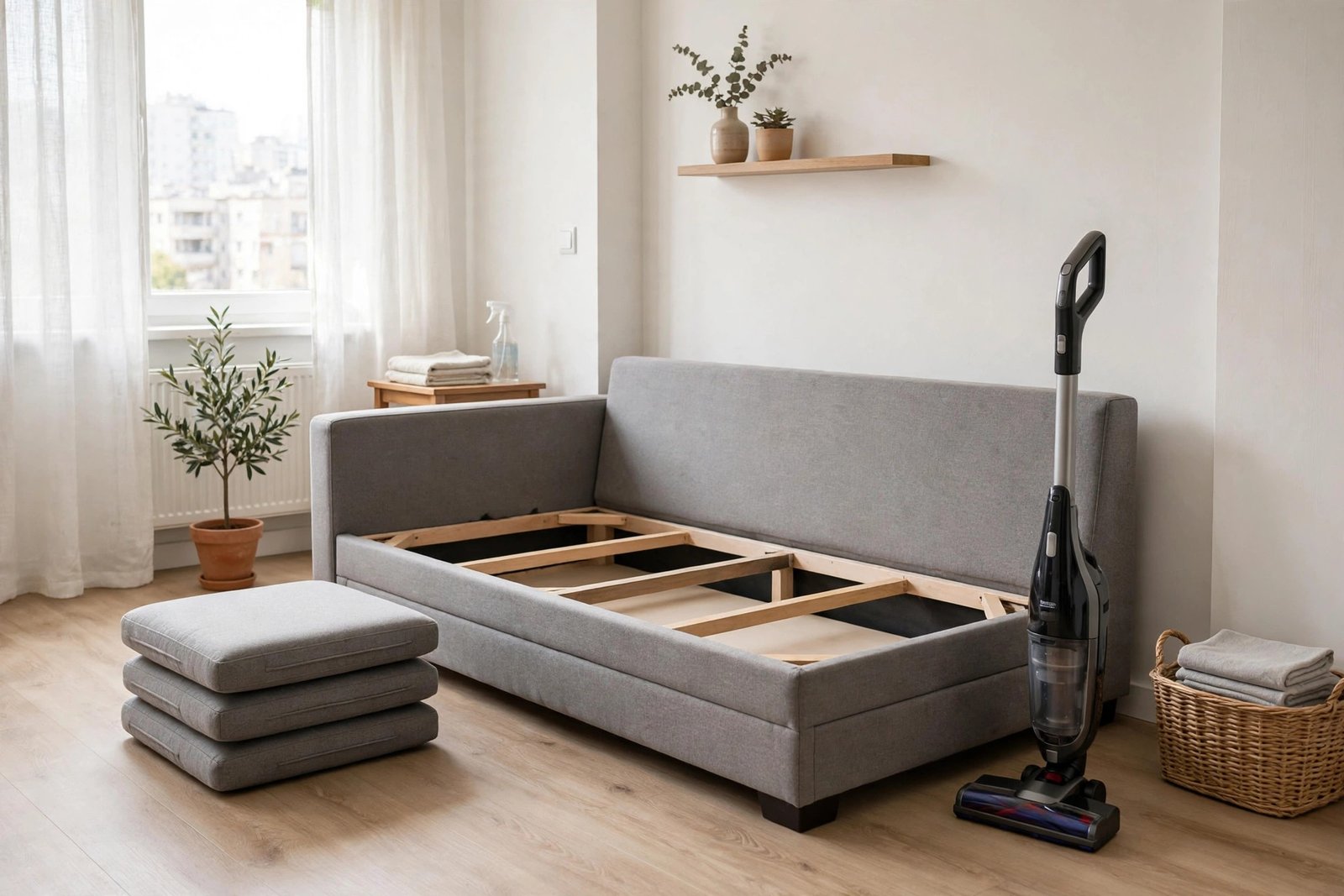
Take the cushions off, vacuum the base and crevices where crumbs collect, and vacuum the cushions themselves. Wash any covers the label allows, cool and gentle, and refit them slightly damp so they pull smooth. Plump and rotate them as they go back: the living room version of task 13.
Cost: ~$0–3 • Best for: sofas that shed crumbs • Measure first: cover care labels first; wash one unlabelled cover cool as a test • Watch out: never force a zip; a torn cover costs more than vacuuming saves.
16. Dust or wash the curtains, and clear the ceiling corners

Finish the month at the edges. Shake or vacuum curtains with a brush tool, or wash them if the label allows, then take a long-handled duster to ceiling corners and door-frame tops. Cobwebs collect where weekly cleaning never looks up, and clean curtains change the light in a small room.
Cost: ~$0–3 • Best for: rooms that feel dusty despite clean floors • Measure first: curtain drop before and after washing; shrinkage shows at the sill • Watch out: test one unlabelled panel first; a long duster reaches without ladders.
Common mistakes we’d skip
- Doing all sixteen tasks in one day. That is a moving-in clean, not a rotation. Each week asks for one zone and under an hour.
- Re-listing weekly jobs as deep ones. If the weekly reset does it, this schedule leaves it there.
- Taking on landlord jobs. Boiler servicing, sealed units, high exterior windows and regrouting are not tenant tasks. Report them; clean what is yours.
- Using the strongest chemical first. Bicarbonate, vinegar and citric acid handle most of this list. Harsh sprays on enamel, stone or seals can cost deposit money.
The short version
One zone a week: kitchen deep in week 1, bathroom deep in week 2, floors, windows and air in week 3, sleep and soft things in week 4. Under an hour a week, and the weekly reset stays light because the deep layer is handled.
Questions renters ask
How is this different from the weekly reset?
Depth. The weekly reset cleans surfaces and open floors. This rotation cleans insides, filters, tracks and fabrics: oven interior, fridge seals, grout, mattress. The lists share almost no tasks, on purpose.
What if I miss a week?
Do the missed zone the following week and shift the rest. Never stack all four into one weekend. The rotation is a loop, not a deadline.
Which jobs should I never do as a renter?
Boiler and fixed HVAC servicing, anything inside a sealed unit, exterior windows above the ground floor, and repairs like regrouting. Clean covers, filters and surfaces you can reach safely, and report the rest to the landlord in writing.
What kit covers the whole rotation?
Bicarbonate of soda, vinegar or citric acid, washing-up liquid, microfibre cloths, a grout brush, a spray bottle and your vacuum’s crevice and upholstery tools. About $15 to $30 once, then small refills.
📌 Pin this post for later
Save it to Pinterest for later, or tell us your smallest-space problem in the comments — the best posts here started as a reader’s awkward cabinet.