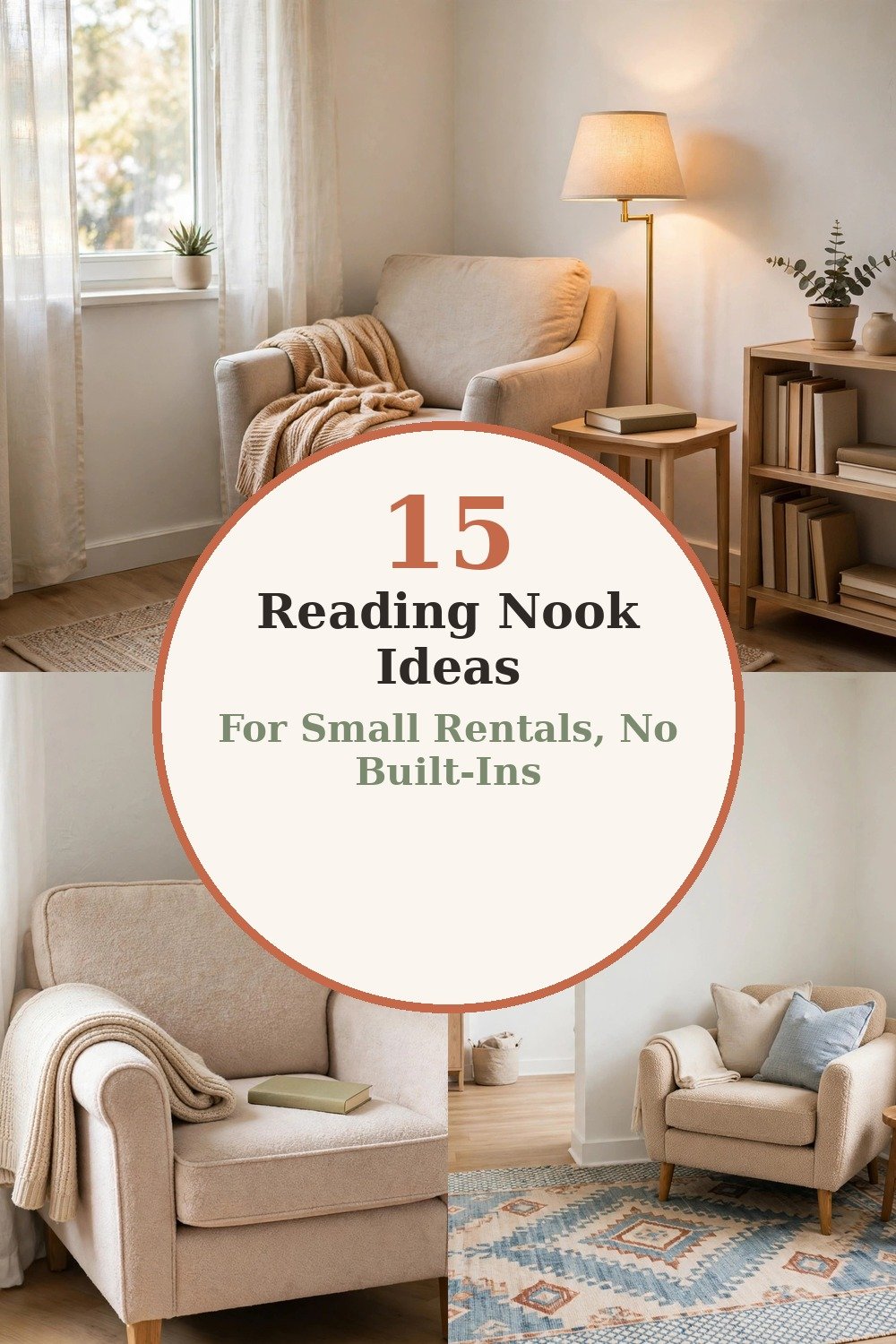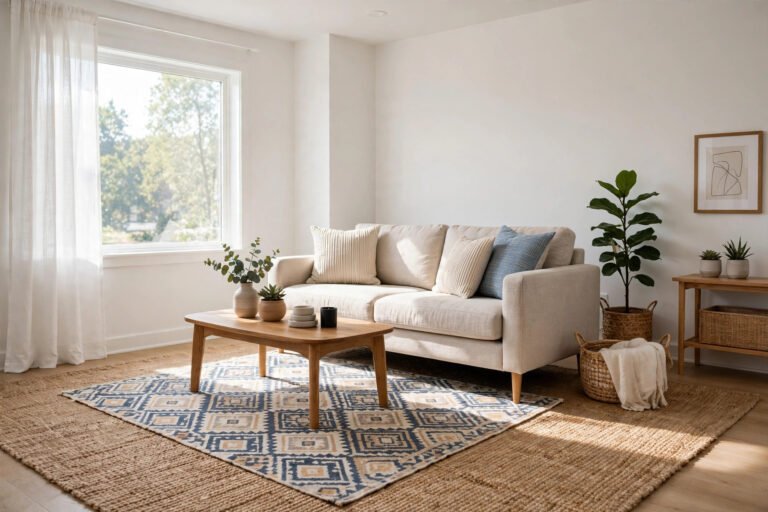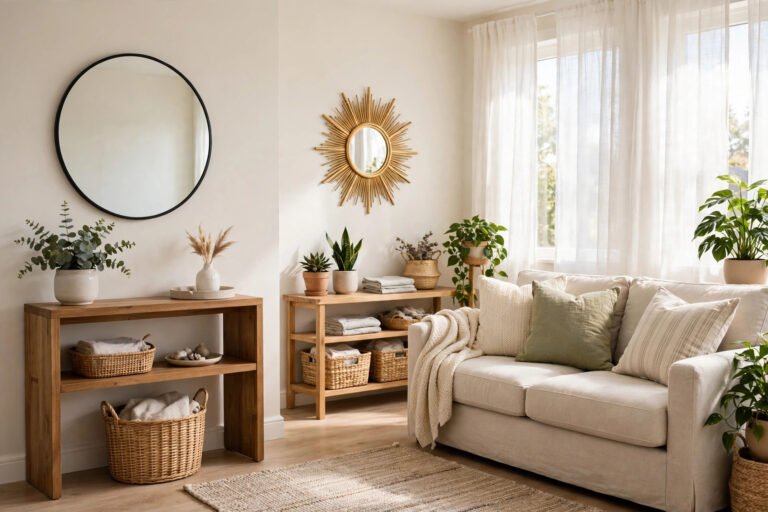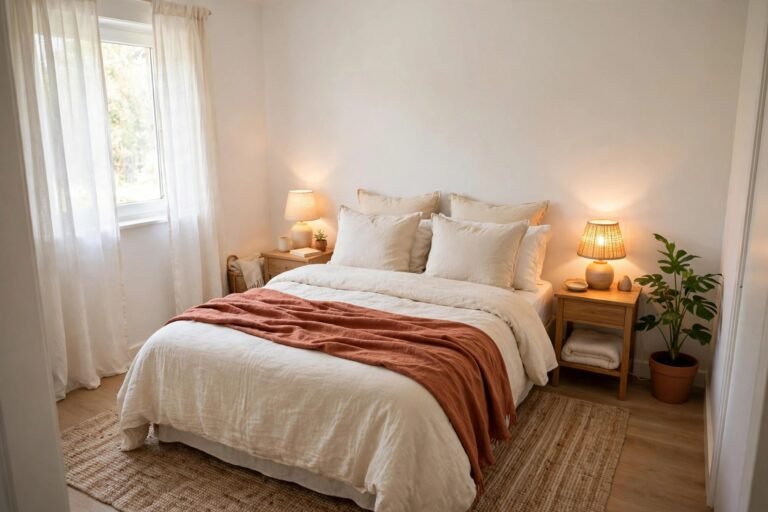


A reading nook does not need a spare room or anything built in. It needs a seat you like, light at the right height, and a surface for a book and a drink. These small reading nook ideas for renters build that corner from movable pieces only, so the nook can move rooms, move home, or pack away.
Measure the corner before you buy the chair. Most nooks here fit a square about 120 by 120 cm (about 4 by 4 ft), and several fit half that. See also our rental-friendly living room ideas and plug-in lighting ideas.
In this post
About 9 min read · 100% renter-friendly — no drills, no nails, no paint.
The 30-second version
- Do these 3 first, in order: an angled corner chair (idea 1), a plug-in floor lamp behind it (idea 5), then a C-table for your book and drink (idea 7). About $95 to $170 together.
- 15 ideas, zero built-ins, zero drills. Everything is freestanding, folding, rolling, or layered on the floor, and leaves with you.
- Typical cost: most renters need three or four pieces, about $80 to $180 in total. Measure the corner first; our Free Renter Printables hub has the worksheets.
Start with the seat
1. An armchair angled into the corner

Turning a chair at about 45 degrees into a corner makes a nook out of dead space, because the angle creates a clear front that feels claimed. Choose a chair about 70 to 85 cm (28 to 33 in) wide, with arms low enough to tuck a throw over. It is the anchor every other idea builds around.
Cost: ~$60-120 • Best for: living room corners and the wide end of a bedroom • Measure first: corner width both ways, and the chair width plus about 20 cm (8 in) to turn it • Watch out: deep lounge chairs eat the whole corner; measure seat depth, not just width.
2. A low floor cushion chair

A floor cushion with a firm back gives you a nook where a chair will not fit, under a slope or in front of a low window. A seat cushion about 60 by 60 cm (24 by 24 in) suits most readers, and the seat stacks in a cupboard when guests need the floor.
Cost: ~$25-45 • Best for: tiny corners, low windows, and renters who read on the floor anyway • Measure first: cushion footprint, and wall height if it sits under a slope or shelf • Watch out: soft fill flattens fast; choose firm foam and a washable cover.
3. A storage ottoman as footstool and book box

A storage ottoman does two jobs: feet up while you read, and a closed box for the blanket and current book pile. Ottomans about 40 to 50 cm (16 to 20 in) wide and 35 to 45 cm (14 to 18 in) high suit most chairs, with the lid just below seat height.
Cost: ~$25-50 • Best for: chairs that need a footrest and nooks with no shelf nearby • Measure first: ottoman height against chair seat height, and lid clearance when it opens • Watch out: weak lids sag if visitors sit on them; check the weight rating before you buy.
4. A folding chair that packs flat
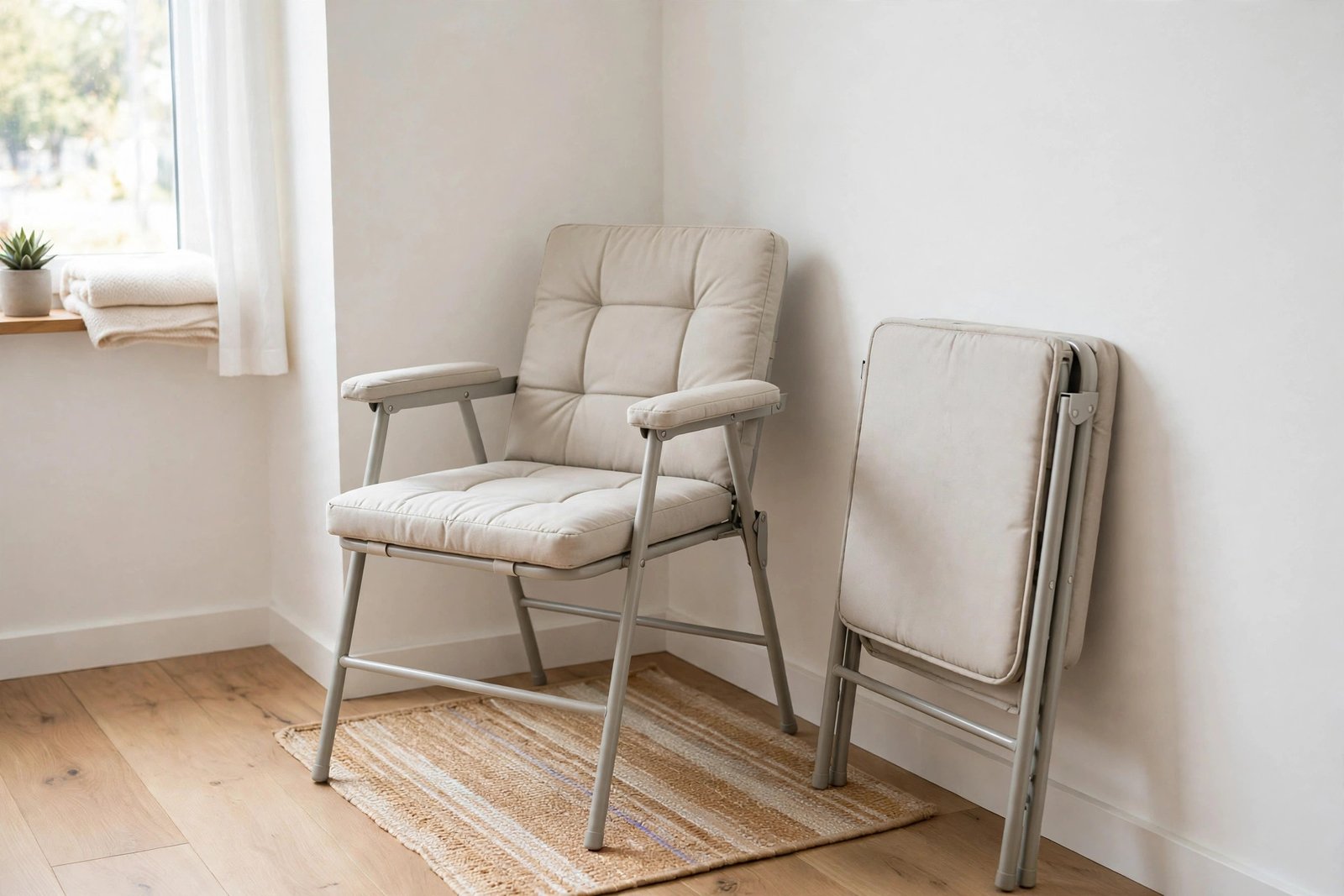
In a studio, the honest nook is one that can disappear. A padded folding chair, opened for the evening and folded to about 10 to 15 cm (4 to 6 in) deep behind a door, gives you a real seat without giving it the floor all day.
Cost: ~$30-60 • Best for: studios and shared rooms where the nook must pack away daily • Measure first: folded depth, and where it will stand when folded • Watch out: hard folding seats need a cushion after twenty minutes; budget for one.
Light and a place for the book
5. A plug-in floor lamp behind the chair
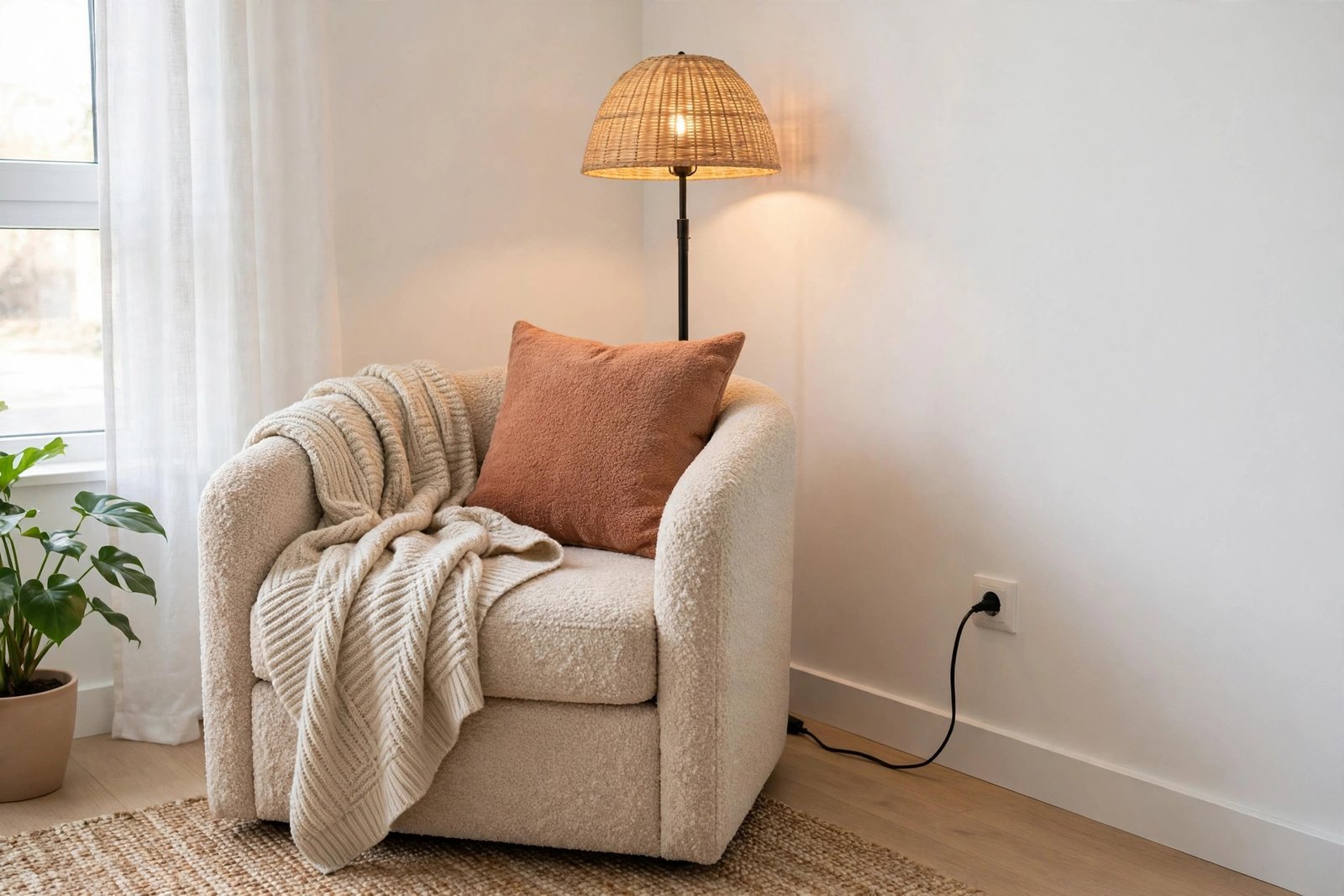
Light should fall over your shoulder onto the page. A plug-in floor lamp behind the chair, about 140 to 160 cm (55 to 63 in) tall with a warm bulb around 2700K, does that with no electrician. Run the cord along the skirting, as in our plug-in lighting ideas.
Cost: ~$25-50 • Best for: every chair nook in this post • Measure first: lamp height against the chair back, and cord reach to the nearest socket • Watch out: a lamp in front of the chair glares; behind and to one side is the position that works.
6. A clip-on light on a shelf edge
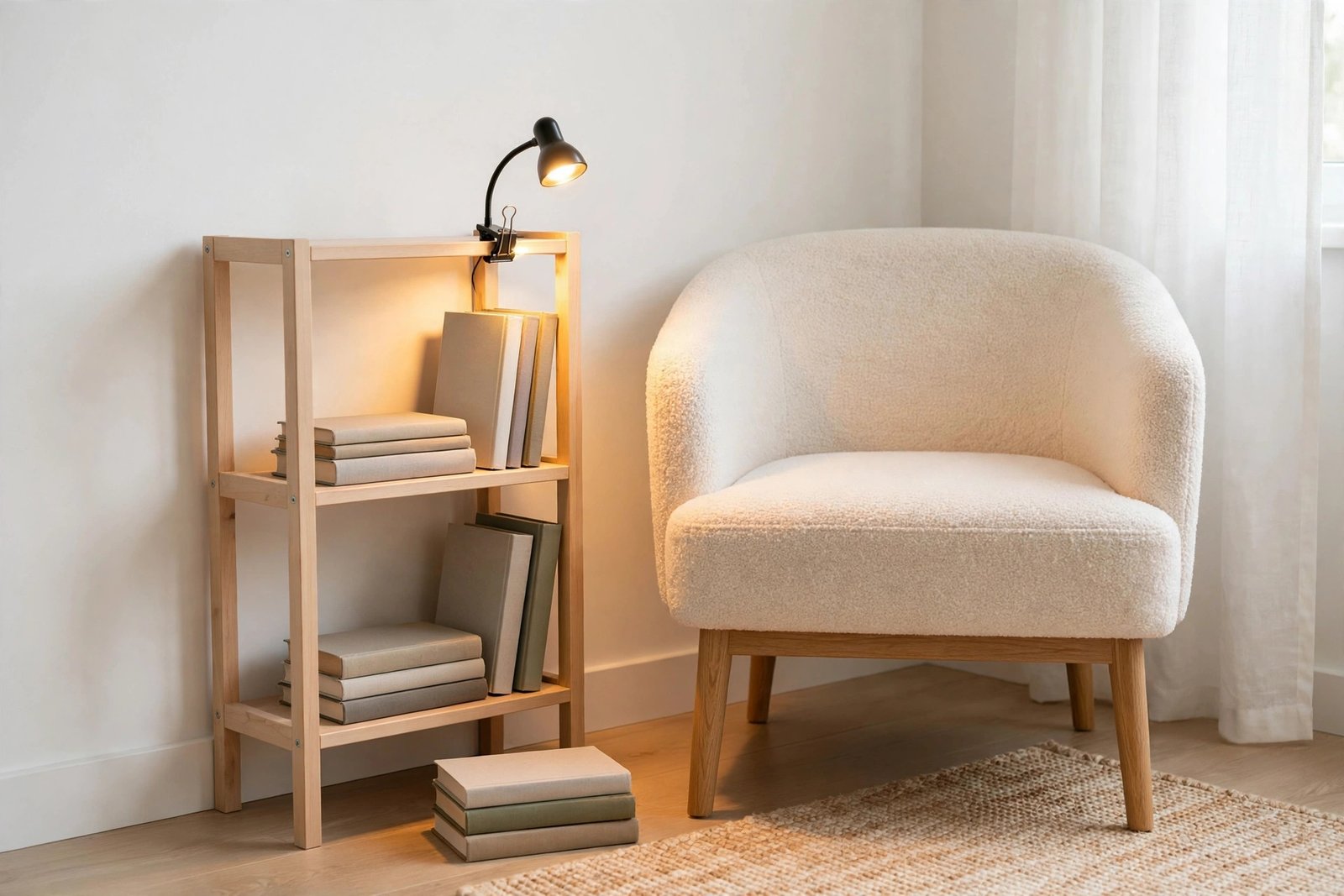
Where there is no floor for a lamp, clip the light to a shelf edge about 30 to 50 cm (12 to 20 in) above and behind the seat. It takes no surface at all, and rechargeable models remove the cord problem entirely.
Cost: ~$12-22 • Best for: floor cushion nooks, bunk-style corners, and shelves above a chair • Measure first: shelf edge thickness for the clip, commonly 2 to 4 cm (about 1 to 1.5 in) • Watch out: cheap clips slip on glossy shelves; add a small felt pad inside the jaws.
7. A C-shaped side table that slides in

A C-table solves the nook problem of nowhere to put a drink. Its base slides under the chair, its top cantilevers over the arm, and a book plus a mug fit on a top about 35 by 25 cm (14 by 10 in) or larger.
Cost: ~$20-40 • Best for: chair nooks with no wall space for a side table • Measure first: base height clearance under your chair, and top height against the chair arm • Watch out: light C-tables tip with a heavy hardback at the edge; keep weight near the spine of the C.
8. A rolling book cart beside the chair

A three-tier rolling cart, about 40 cm (16 in) wide and 30 cm (12 in) deep, holds the current pile and glasses in one movable tower. It rolls out for cleaning and holds far more than a side table. Our no-closet bedroom storage ideas use the same carts.
Cost: ~$22-38 • Best for: readers with a rotating pile and no bookcase near the corner • Measure first: gap beside the chair, and door widths if the cart will travel between rooms • Watch out: top-heavy carts wobble on thick rugs; load the heaviest books on the bottom tier.
Make it feel enclosed, without building anything
9. A washable rug that draws the boundary

A rug turns a chair in a corner into a place. A rug about 120 by 180 cm (4 by 6 ft) under the chair, lamp and table gives the nook an edge and protects the floor. Choose washable low pile, with a non-slip underlay on hard floors.
Cost: ~$30-65 • Best for: hard floors and open-plan rooms where the nook needs a border • Measure first: the full nook footprint, with at least the chair front legs on the rug • Watch out: thick pile under a rolling cart or C-table base stops both sliding properly.
10. Layered throws and cushions you can wash

Two throws and two cushions are warmth and back support, not decoration. Keep one throw over the chair back and one cushion, about 40 by 40 cm (16 by 16 in), behind your lower back. Choose covers that unzip, as in our Sunday reset routine.
Cost: ~$20-45 • Best for: hard chairs, cold corners, and making a second-hand chair feel yours • Measure first: cushion size against the chair back width • Watch out: five cushions leave nowhere to sit; two is the working number for one chair.
Shopping for these? Measure first.
Corner width, chair depth and socket distance decide the nook. Our Free Renter Printables hub has the worksheets.
11. A low bookshelf as the nook divider
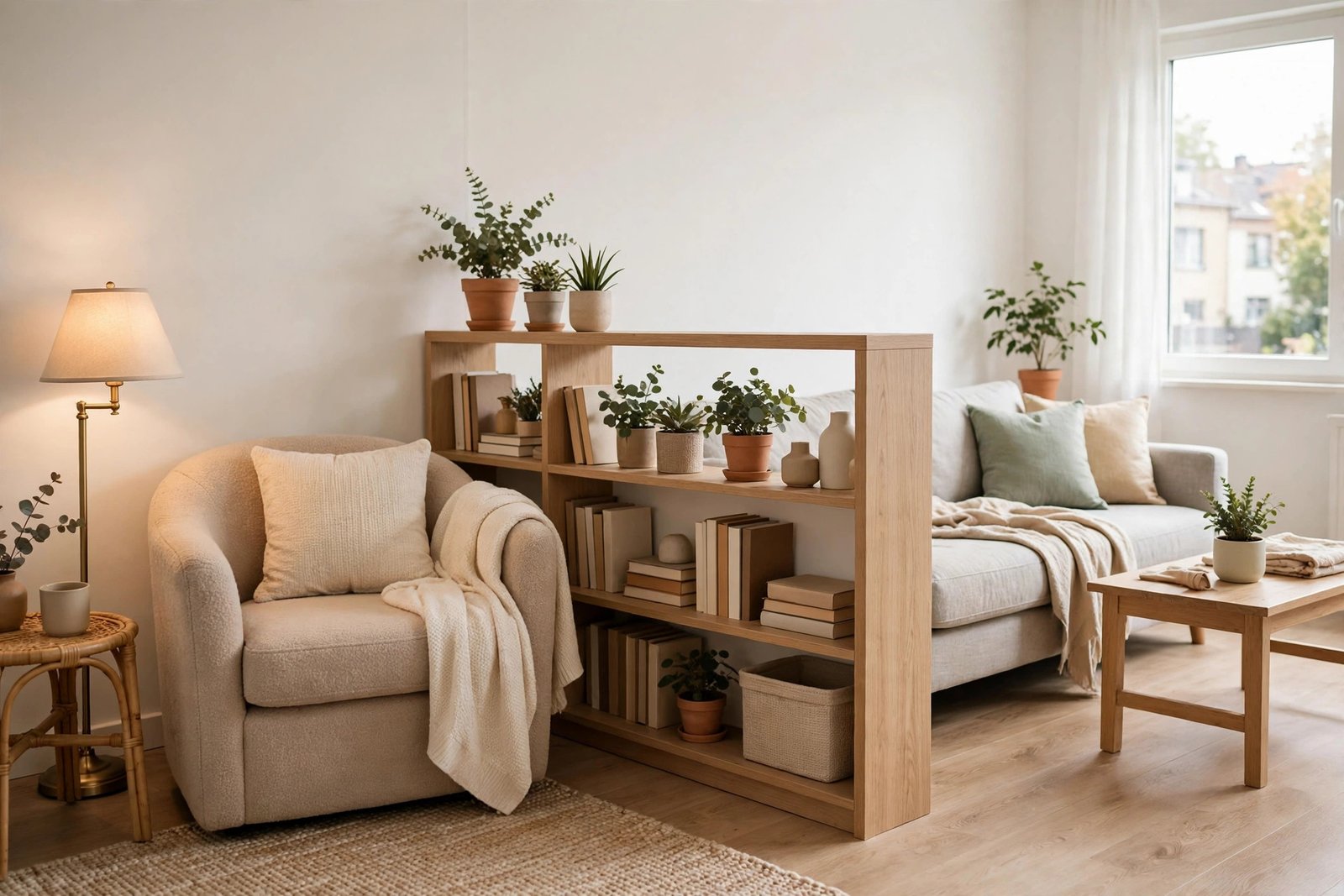
A low bookcase, about 80 to 100 cm (31 to 39 in) high, placed side-on beside the chair, gives the nook a back wall you can move. Books face the chair, and the room stays open. It pairs well with a gallery wall above it.
Cost: ~$35-70 • Best for: open-plan rentals where the nook shares space with a sofa or desk • Measure first: bookcase height against sight lines from the sofa, and its depth across your walkway • Watch out: tall or loaded cases must not wobble; keep a low case low and load the bottom shelf heaviest.
12. A sheer curtain on a tension rod
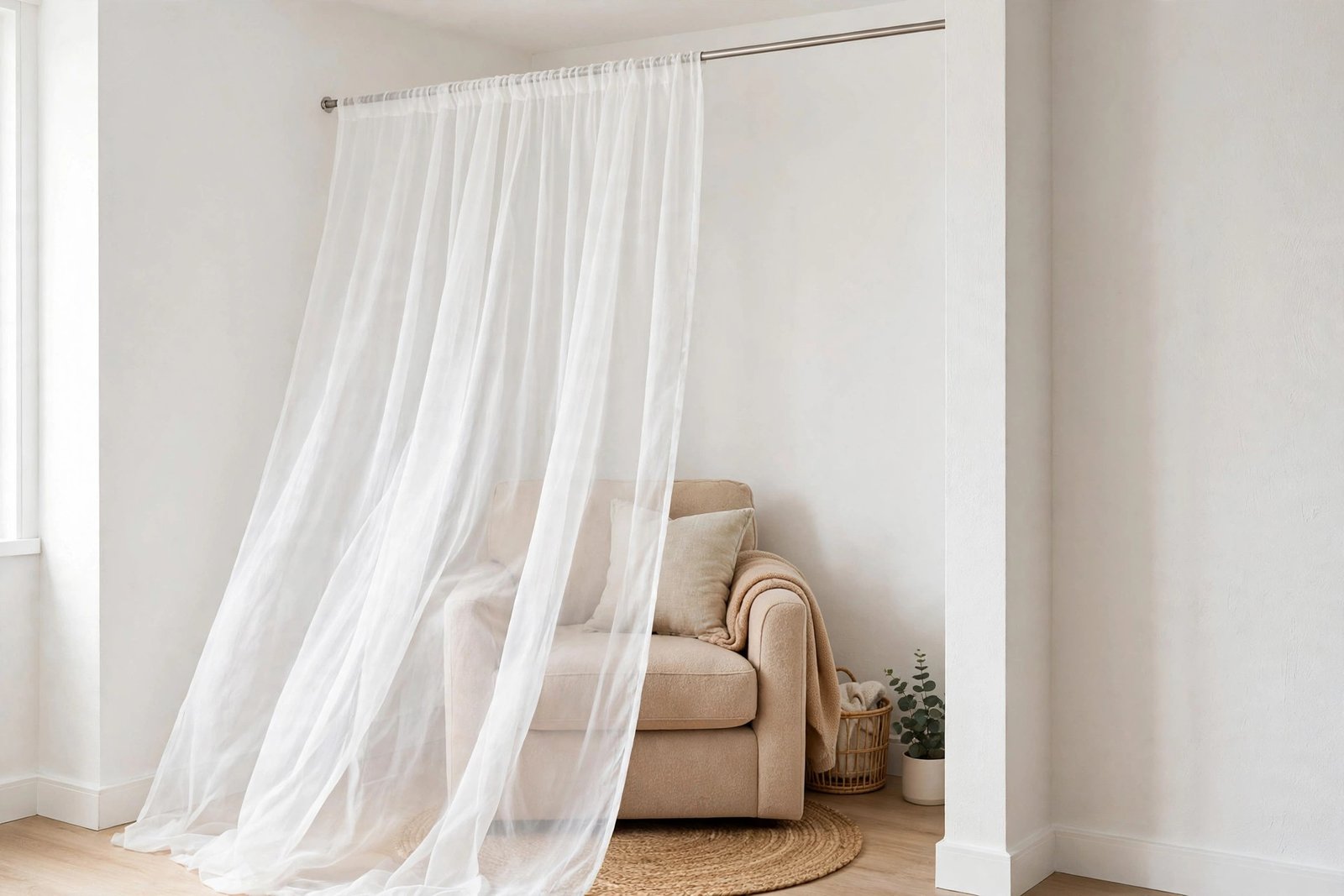
In an alcove or wide doorway, a sheer curtain on a tension rod inside the frame gives the nook a soft door that leaves no mark, the same fitting used in our no-drill decor ideas. Panels about 140 cm (55 in) wide gather best.
Cost: ~$18-35 • Best for: alcoves, wide doorways, and studio sleeping corners • Measure first: inside width of the frame for the rod, and curtain drop to just above the floor • Watch out: tension rods slip on glossy paint; test the hold before you hang a heavier fabric.
Nooks where there is no spare corner
13. An alcove filled with floor cushions
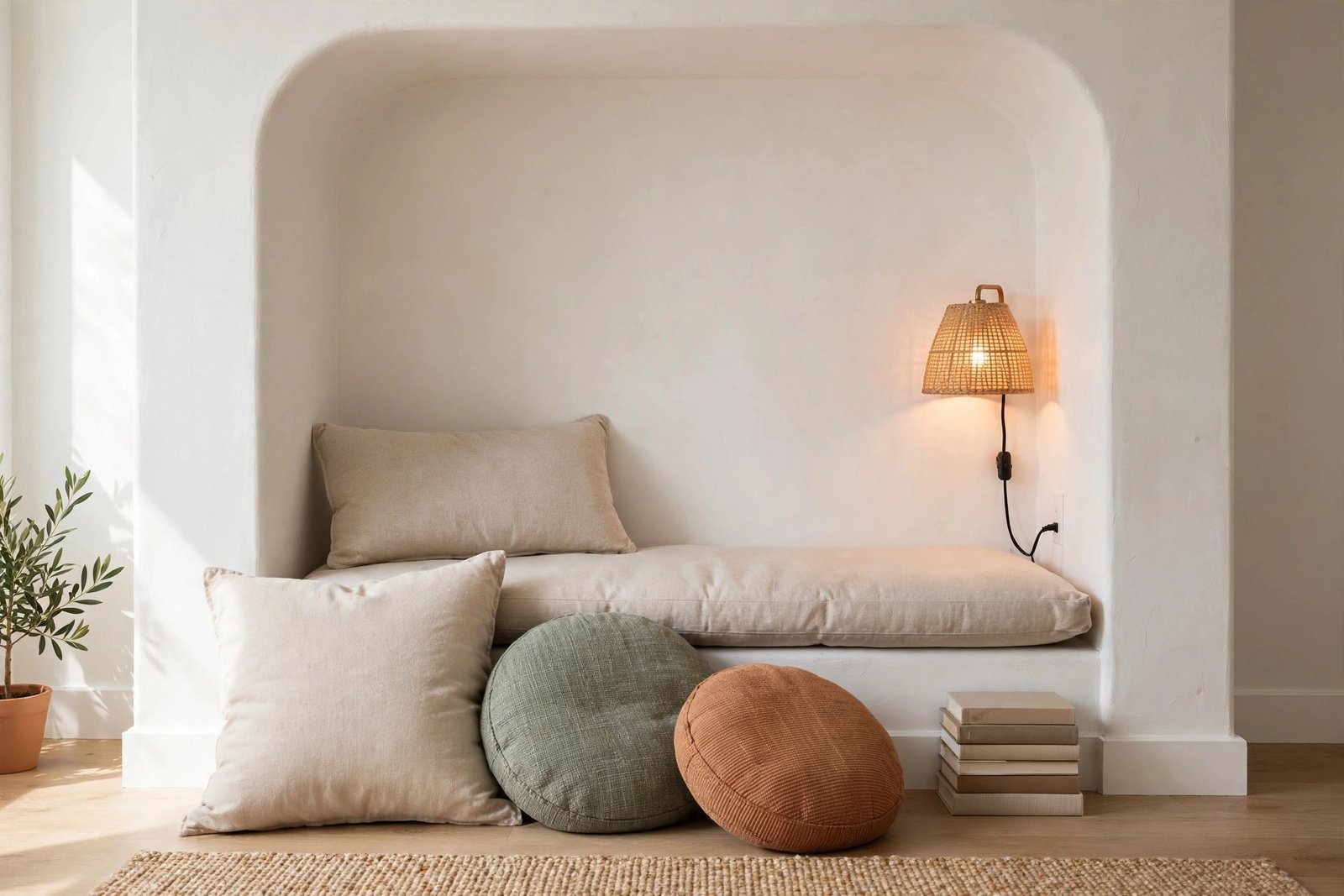
Alcoves and eaves spaces are nooks already, they just have nothing soft in them. Two large floor cushions, a stack of books and one light turn most alcoves about 100 cm (39 in) wide into the best seat in the home. Add a throw (idea 10) and stop there.
Cost: ~$30-60 • Best for: alcoves, eaves corners, and under-stairs spaces with no chair access • Measure first: alcove width and head height when seated on a cushion, about 90 cm (35 in) minimum • Watch out: check for damp or cold draughts first; a cold alcove stays cold under cushions.
14. A bed-corner reading pillow setup

If the bedroom is the only quiet room, make the bed corner work instead of stacking pillows that slide. A firm wedge pillow against the headboard, a throw, and the bedside lamp turned to the page gives a nook about 60 cm (24 in) wide.
Cost: ~$20-40 • Best for: small bedrooms and renters whose living room is a shared room • Measure first: pillow width against your side of the bed, especially in a shared bed • Watch out: soft bed pillows alone will not support a long read; the firm wedge is the piece that matters.
15. A fold-away balcony reading spot

On fine evenings the best nook is outside. A folding chair with a cushion, a small stool for a book and drink, and a plant make a spot that folds flat against the rail. Our small balcony ideas cover the furniture in full.
Cost: ~$28-55 • Best for: balconies about 90 cm (35 in) deep or more, and warm evenings • Measure first: balcony depth with the chair open and your legs out, not just folded size • Watch out: cushions and books do not live outside in wet weather; store them just inside the door.
Common mistakes we’d skip
- Buying the chair before measuring the corner. Depth is the trap. A deep chair in a shallow corner leaves no room for feet or a lamp.
- Lighting from the ceiling only. One low, warm light at shoulder height is what makes it a place to stay.
- No surface within reach. If there is no table, cart or stool, the nook will not get used. Surface first, cushions second.
- Filling the corner until it cannot be cleaned. Keep every piece movable so the corner can be emptied in a minute.
The short version
Pick the seat that fits the corner you have, put warm light behind your shoulder, give the book a surface, then draw a boundary with a rug, shelf or curtain. Nothing is fixed, and the whole nook can move out with you.
Questions renters ask
How small can a reading nook be and still work?
About 90 by 90 cm (3 by 3 ft) is the floor for a cushion, clip light and stool. A chair nook wants about 120 by 120 cm (4 by 4 ft). Measure depth as carefully as width.
Will any of this damage walls, floors, or my deposit?
No. Nothing here drills, nails, paints or builds in. Chairs, carts and shelves are freestanding, the curtain rod is tension fitted, and a rug protects the floor. Add felt pads under feet on hard floors.
I have no spare corner at all. Where does a nook go?
Use a space that changes job during the day: the bed corner (idea 14), a folding chair (idea 4), or the balcony (idea 15). A nook can be a time of day, not only a piece of floor.
What should I buy first if my budget is small?
Light, then a surface, then softness. A clip-on light (idea 6) and a C-table (idea 7) turn a chair you already own into a working nook for about $35 to $60.
Found this useful?
Save it to Pinterest for later, or tell us your smallest-space problem in the comments — the best posts here started as a reader’s awkward room.
📌 PIN THIS FOR LATER